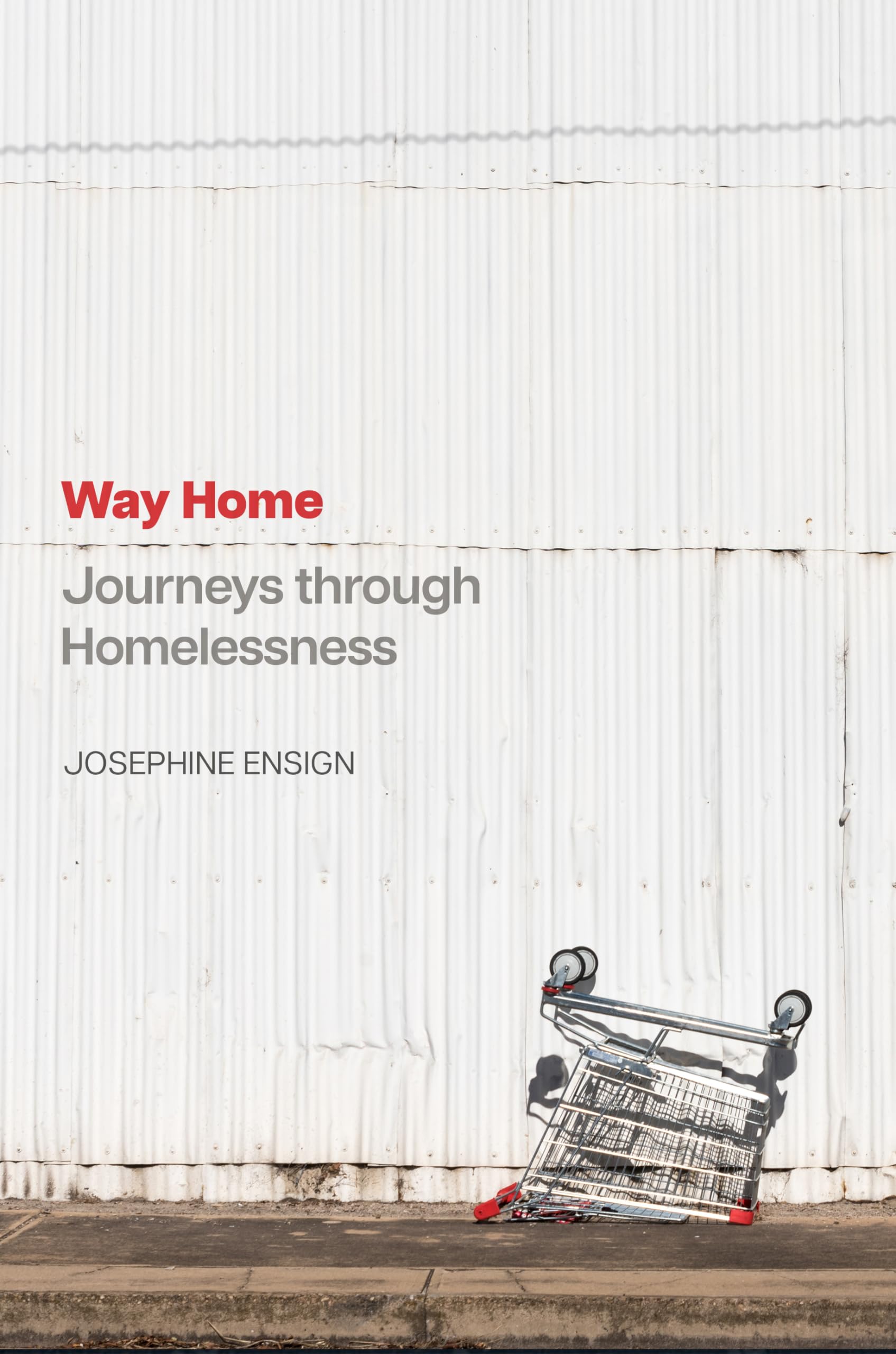



Can one city's solutions to homelessness help the United States face the issue nationally? The United States grapples with a solution for the unhoused by employing a patchwork of uneven rhetoric and policy. How can policymakers and public health professionals address this urgent problem in more innovative and sustainable ways? In Way Home , Josephine Ensign explores the contemporary landscape of homelessness by focusing on Seattle in King County to assess how their innovative local solutions can be scaled up nationally. From consumer-led shelter programs to the expansion of the Housing First model of care, Seattle-King County is a leader in this area. Ensign assesses the effectiveness of policies such as child tax credits, rental subsidies, eviction moratoriums, and programs for vehicle residents. As an expert in the field who has also experienced homelessness, Ensign draws from an extensive oral history project to share poignant firsthand accounts that inform and enrich her storytelling. This narrative incorporates human rights, support services, public health issues, and a path forward that acknowledges the true realities of people living unhoused. Amid the rapidly evolving public health and political landscape accelerated by the COVID-19 pandemic, Way Home deepens our understanding of the historical roots of homelessness and highlights innovative public policy and program efforts at the national, state, and local levels to address it. What Ensign accomplishes in her new book is remarkable. Way Home is one of the most important books on homelessness I've read, and I couldn't put it down. ―Sara Rankin, Seattle University School of Law As a nurse, researcher, advocate, and person with lived experience of homelessness, Josephine Ensign invites us into the lives of people experiencing homelessness with this beautifully written, exhaustively researched, and evidence-based work. Way Home emphasizes the need for individual and societal empathy in any successful and durable solution to homelessness. ―Gregg Colburn, University of Washington, coauthor of Homelessness Is a Housing Problem: How Structural Factors Explain U.S. Patterns Ensign masterfully and memorably portrays individuals and their homelessness in the larger context of societal structures and policies. I will never forget the tragedy or the strength of her subjects. Way Home is valuable for practitioners, policymakers, and students in understanding the causes, effects, and solutions that can help us end homelessness. ―Bobby Watts, National Health Care for the Homeless Council Way Home explores Seattle's homelessness crisis through the lives of those who have experienced it. With depth and empathy, and drawing on decades of experience working with homeless communities as a nurse practitioner, Ensign examines causes and promising solutions such as safe parking programs and the Housing First model, while sharing stories of those affected. Through deep research and evocative prose, she sheds much-needed light on this complex issue and its human cost. ―Tony Sparks, San Francisco State University, author of Tent City, Seattle: Refusing Homelessness and Making a Home Can one city's solutions to homelessness help the United States face the issue nationally? Josephine Ensign (SEATTLE, WA) is a professor in the School of Nursing and an adjunct professor in the Department of Gender, Women, and Sexuality Studies at the University of Washington, Seattle. She is the author of Catching Homelessness: A Nurse's Story of Falling Through the Safety Net and Skid Road: On the Frontier of Health and Homelessness in an American City .