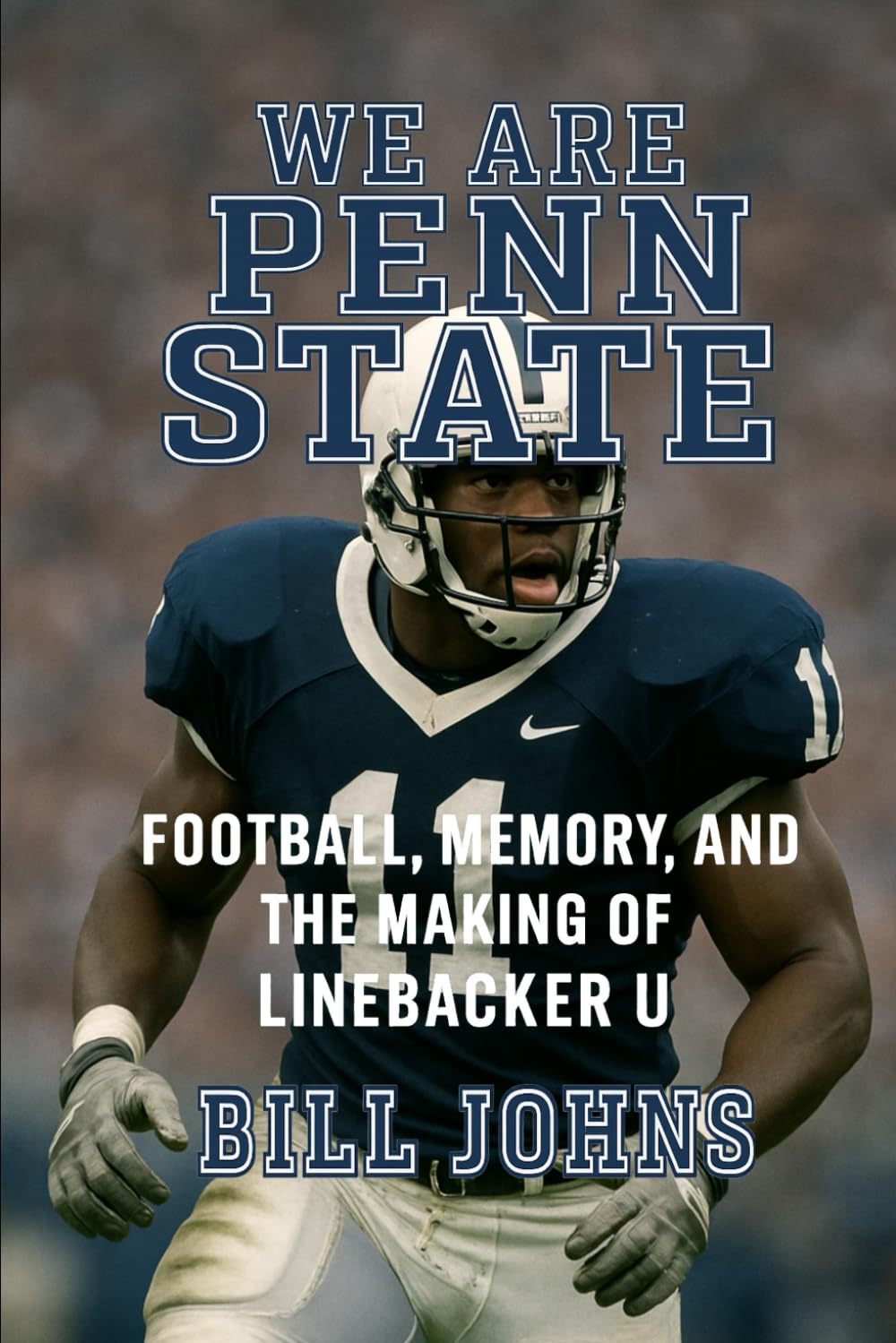
We Are Penn State: Football, Memory, and the Making of Linebacker U (Saturdays of Legend)
$19.99
by Bill Johns



We Are Penn State: Football, Memory, and the Making of Linebacker U is the definitive cultural history of the Nittany Lions, tracing the roar of Beaver Stadium, the White Out spectacle, and the chant that has become both creed and legacy. More than a story of wins and losses, it is an evocative meditation on Penn State football history, the rise of Linebacker U, and the enduring meaning of “We Are” as identity, inheritance, and paradox. From the 1940s stand of Wally Triplett and Dennie Hoggard against segregation to the modern brilliance of Saquon Barkley and Micah Parsons, this book uncovers how Penn State football has been shaped by defiance, resilience, and belonging. The phrase “We Are Penn State” was not born in marketing slogans or cheerleading rituals—it was forged in the choice of an integrated team that refused to divide itself. That decision, and the generations who have carried its echo, anchor a program that has come to symbolize both triumph and fracture. Bill Johns takes readers through the sweep of Penn State history, from the independent years marked by grievance and overlooked championships, to the Joe Paterno era when discipline and tradition became the program’s philosophy, to the spectacle of the White Out when Beaver Stadium emerged as one of the most intimidating environments in college football. Along the way, the book profiles legendary figures—Franco Harris, Kerry Collins, Ki-Jana Carter, LaVar Arrington, and Saquon Barkley—athletes whose brilliance illuminated not only the field but the culture of Penn State itself. The story does not avoid Penn State’s hardest chapters. The Sandusky scandal, and the shattering of the university’s image, reshaped the meaning of the chant itself. No longer could “We Are” be shouted in innocence; it became scarred creed, burdened by shame yet clung to by students, alumni, and survivors as fragile bond of identity. The book confronts this history with clarity, showing how chants and rituals can hold contradiction, carrying both pride and grief, belonging and fracture. What emerges is a portrait of Penn State football not as unbroken legend but as layered inheritance. The nameless jerseys, the roar of Beaver Stadium, the White Out’s ocean of white, the voices rising in unison—these are the rituals through which Penn State has told its story. The phrase “We Are” embodies central Pennsylvania’s ethos of loyalty and endurance, its contested identity, and its place within the national imagination of college football. Blue and white are not just colors; they are fabric of belonging, stitched across decades and across communities. We Are Penn State: Football, Memory, and the Making of Linebacker U belongs on the shelf of every reader who believes that sport is never only about sport. It is about culture, identity, and the stories we preserve in chants and traditions. It is about the endurance of a program that has carried both pride and shame, that has been defined as much by resilience as by victory. It is about the ways memory turns games into inheritance, stadiums into cathedrals, and two simple words into creed. This is more than football history; it is an exploration of how institutions build meaning, how chants carry identity, and how belonging survives fracture. It is the definitive account of Penn State’s cultural legacy, Linebacker U’s myth and reality, and the power of a phrase that refuses to die. Step into the echoes of Beaver Stadium. Hear the chant rise. Consider what it means to remember, to endure, and to belong. We Are Penn State.