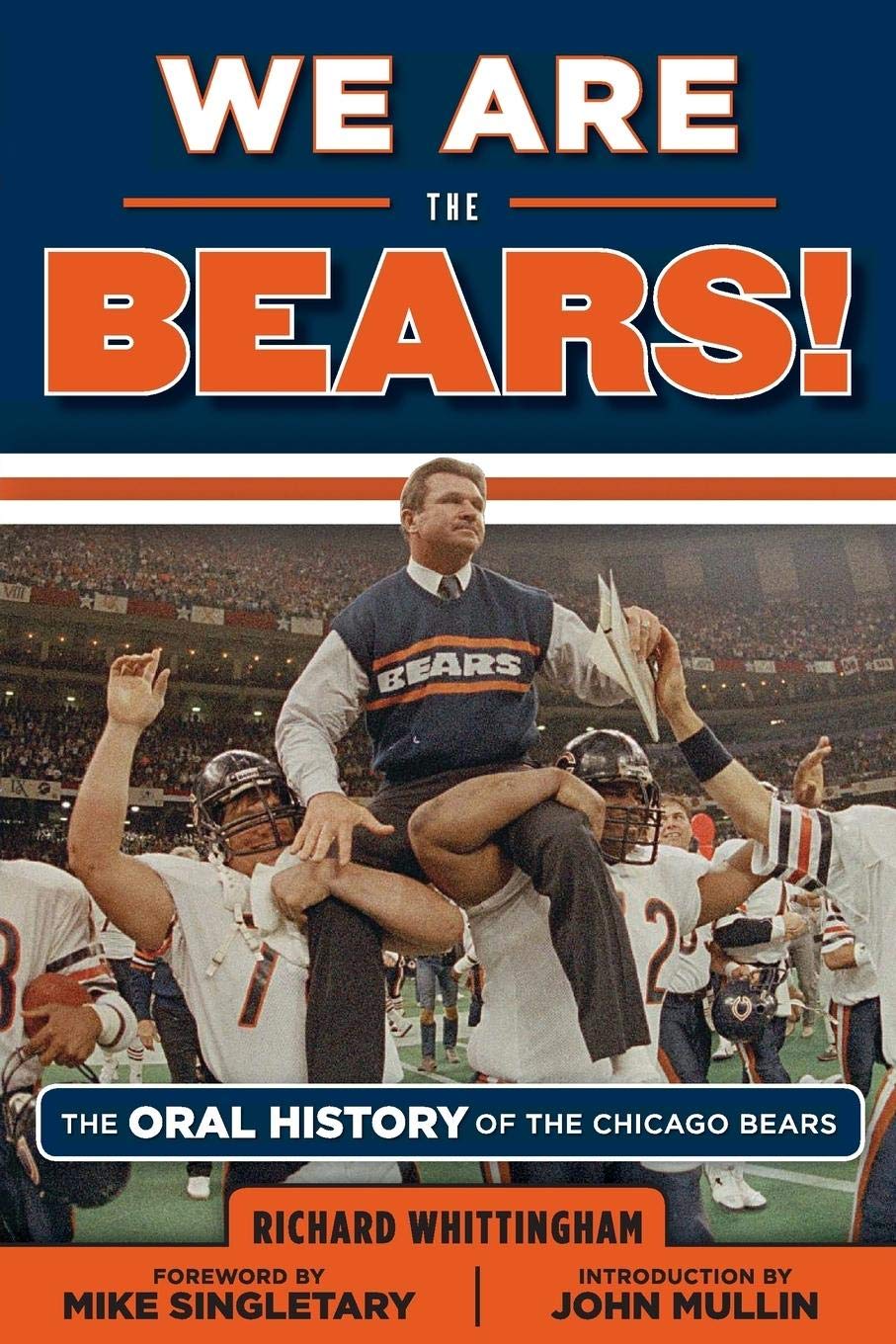



Featuring exclusive interviews with the greatest players in team history, Richard Whittingham’s We Are the Bears is the definitive story of this classic NFL franchise, told by the men who built it. This oral history of the team, which features numerous legends—including Mike Singletary, Mike Ditka, Gayle Sayers, Dan Hampton, and many others—will delight fans of all ages. Richard Whittingham is the author of more than 30 books, including the ESPN 10-part series tie-in Rites of Autumn and the definitive histories of the Dallas Cowboys, the New York Giants, and the Washington Redskins. He collaborated on projects with Joe DiMaggio, Sir Edmund Hilary, and Life magazine. He lives in Chicago. Mike Singletary is a former middle linebacker for the Chicago Bears and was inducted into the Pro Football Hall of Fame in 1998. John Mullin has covered the Chicago Bears for the Daily Herald , the Chicago Tribune , and CSN Chicago. He has won numerous awards from the Pro Football Writers of America in addition to an Emmy Award for his “Bears Insider” segment of the FOX-TV Bears pregame show. He is the author of several books, including The Rise and Self-Destruction of the Greatest Football Team in History: The Chicago Bears and Super Bowl XX . He lives in Chicago. We are the Bears! The Oral History of the Chicago Bears By Richard Whittingham Triumph Books Copyright © 2014 Richard Whittingham All rights reserved. ISBN: 978-1-62937-008-8 Contents Foreword by Mike Singletary, Introduction by John Mullin, 1. Joining the Bears, 2. They Were Monsters ... of the Midway, 3. Papa Bear, 4. Bears Remember Other Bears, 5. Special Memories, 6. Coaches, 7. Enemies Remembered, 8. The Champions, Acknowledgments, CHAPTER 1 Joining the Bears MIKE DITKA, Tight End, 1961–1966; Head Coach, 1982–1992 I was tremendously proud to put on the Bear uniform, and I say that in all honesty. I knew very little about the Bears until I was drafted by them in 1961 because I, of course, was from Pennsylvania and mostly followed the Pittsburgh Steelers and Philadelphia Eagles. But the more I found out about the Bears, the more I liked them; they played the kind of football that I believed in, and Coach Halas taught the kind of football I believed in. The Bears were the Monsters of the Midway, or the bullies, or whatever you want to call them, and that's the way I thought the game was supposed to be played. It was intriguing too when you look back and realize that I was a 21-year-old kid coming into the National Football League, and the head coach was 65 years old. Nobody ever assumed anything about his age, however; it did not matter, because we all knew he was the boss. To see him in action you would have thought George Halas was maybe in his 50s, but certainly not 65. I was with the College All-Stars in 1961, and we scrimmaged the Bears. I did not make any friends with them. I ran over a couple of guys, which did not sit well. We played the Philadelphia Eagles, who had won the NFL title the year before. We had some very good ballplayers. I think the first friend I made later was Bill George. Bill was a Pennsylvania kid from the coal mine area of western Pennsylvania. He kind of took me under his wing and helped me a little bit. And I remember Larry Morris and some of the guys. Harlon Hill was a lot of help to me. Harlon was a great guy. It was toward the end of his career, and he took a good amount of time to work with me. He was also playing, and I think they were planning on converting him to tight end. I think they even tried him on defense because his days as a wide receiver were over, but in his day he was one of the great wide receivers. I didn't have an agent when I came to Chicago. I don't believe in agents. I know what I'm worth and what I'm not worth, and I wouldn't fool anybody about that. My agent was my dad and myself. You know, it was kind of interesting, though, because you knew you were being taken, but you didn't really mind it. I guess that's the best way to put it. I was very flattered at the time to be drafted into the NFL when I was coming out of college. I didn't know if I would play in the National Football League. It was actually George Allen who signed me — he was the assistant defensive coach for them at the time. He said, "You know, I'm paying you more money than the Bears have paid any rookie since Red Grange," or something like that, and you knew he was lying, but still you had to laugh. It was terrible, but that's the way it went. I came to our first training camp pretty well ready. At Pitt we worked as hard as anybody. We had John Michelosen as our coach, and John was a stickler for hard work and tough training. So we were used to working hard, and therefore training camp was not that difficult for me. There was, of course, a difference from college football. At Pitt I'd played a lot of defense and blocked a lot. Catching passes was rarely on the agenda. With the Bears my