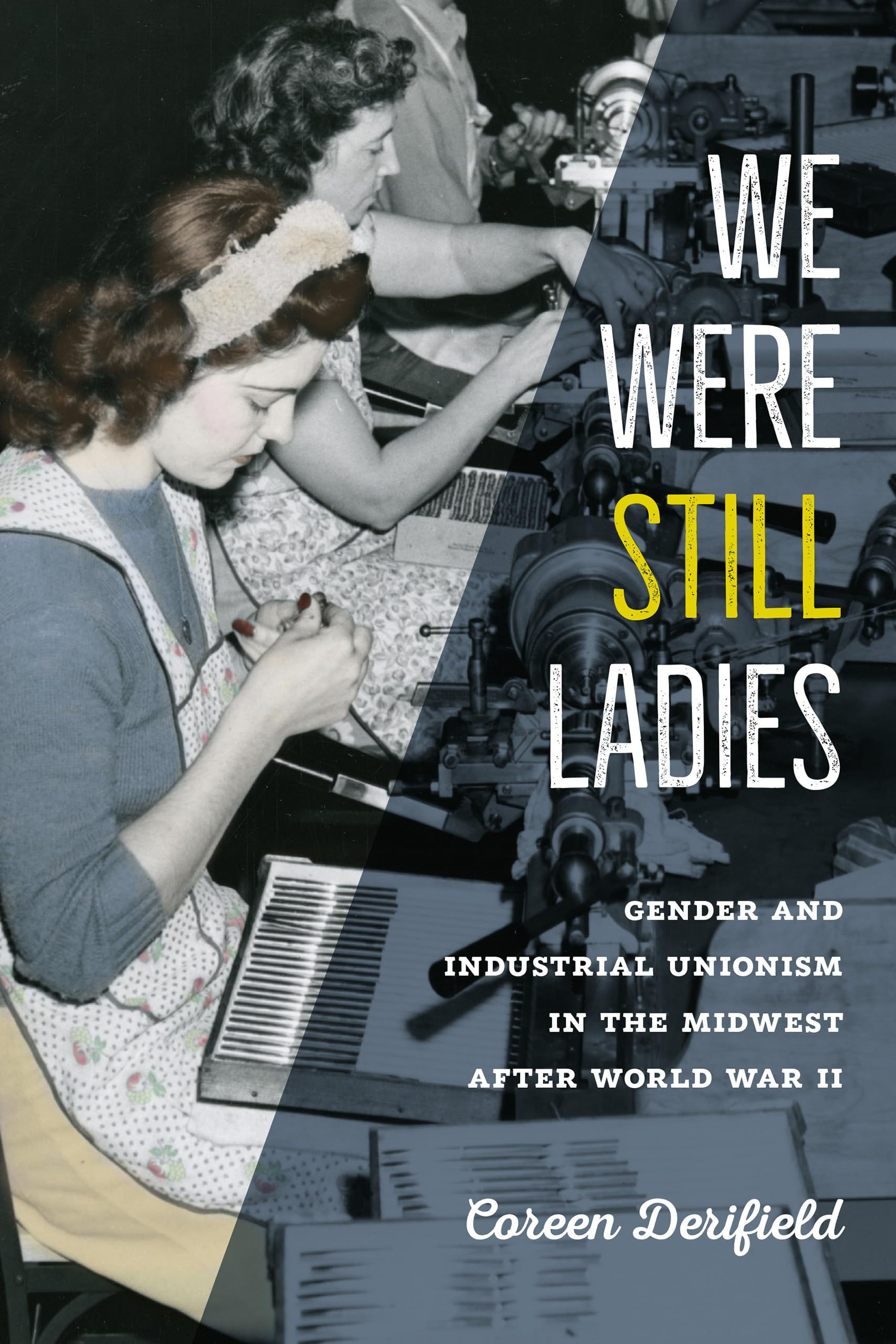
We Were Still Ladies: Gender and Industrial Unionism in the Midwest after World War II (Iowa and the Midwest Experience)
$66.82
by Coreen Derifield



Following World War II, women living in small towns and on farms across the Midwest woke every morning, packed their lunches, and headed out for a long day of work in a nearby factory. Many of these women never envisioned themselves as industrial workers, but the political and economic changes after World War II offered new opportunities and experiences for hundreds of women. How did this transition into industrial work affect a woman’s sense of self? How did this new workforce change the dynamic of families and communities? While women choosing to work outside of the home may seem to have been a mundane decision, it caused tremendous change within families and with household roles. These alterations in daily life rippled throughout midwestern culture and society, even changing the landscape of small towns into decentralized industrial centers. “Author and history professor Coreen Derifield dives deep into the everyday lives of women. . . . examining how the decision to work outside of the home transformed their sense of self, family dynamics, and even the environment of their towns. . . . illustrating a monumental rise in the autonomy, community, and working power of American women, as well as its inherent limits, a dichotomy essential to the development of feminist history and culture.”— Minnesota History “In this very focused examination of women workers in postwar Iowa . . . Derifield paints a vivid picture of ‘the formation of a gendered class consciousness.’ . . . and provides an excellent discussion of the ups and downs of the impact of the growing feminist movement in the late 1960s and into the 1970s on these rural, working-class women, who in the end remained ‘ladies.’”― Choice Coreen Derifield is an associate professor of history at East Central College in Union, Missouri. She grew up on a farm in southeast Iowa where she was inspired by the women in her life who worked tirelessly to support their families and farms. She holds a PhD in history from Purdue University and lives in Saint Clair, Missouri.