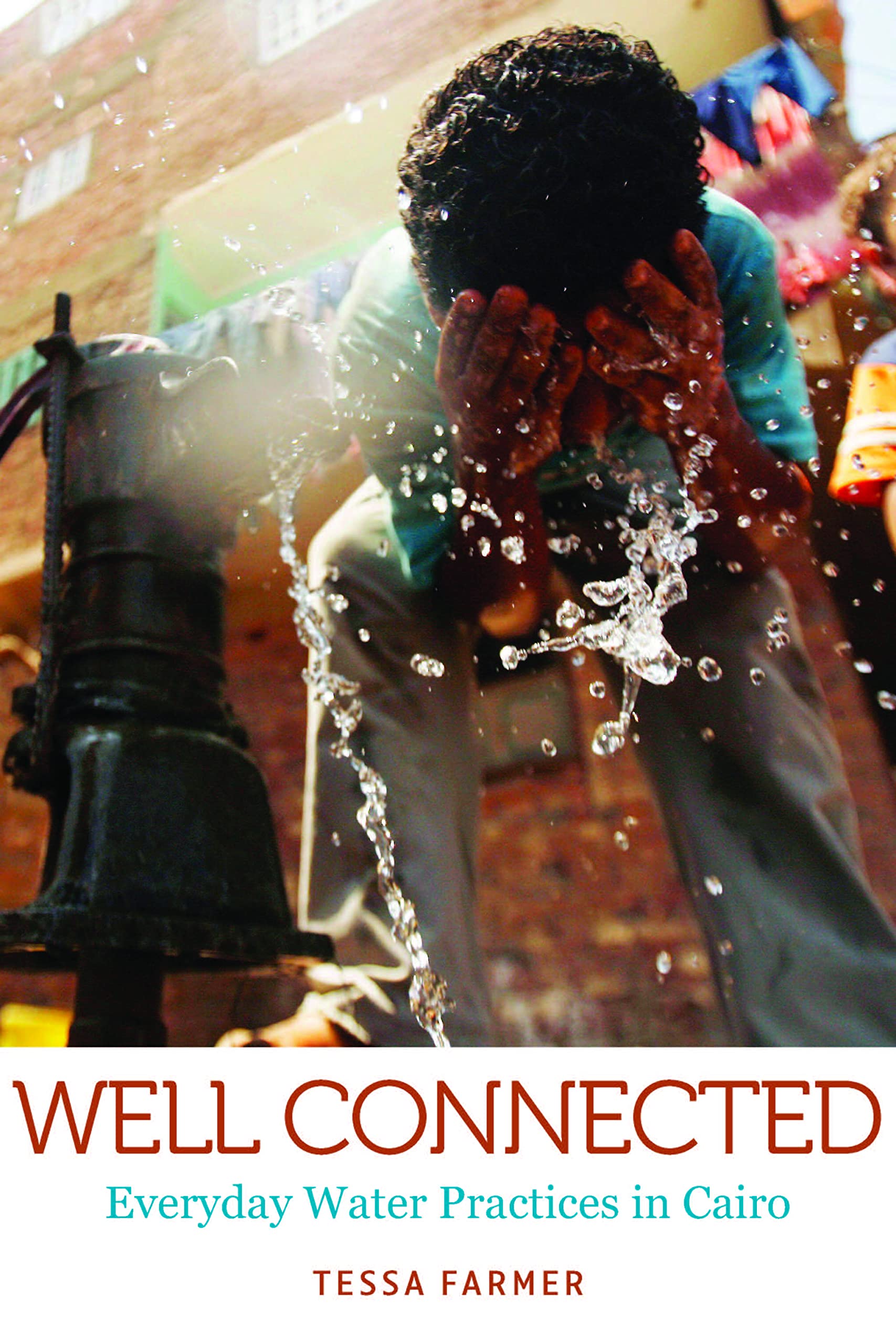
Well Connected: Everyday Water Practices in Cairo (Water and Society)
$35.72
by Tessa Farmer



How a community in Cairo, Egypt, has adapted the many systems required for clean water. Who is responsible for ensuring access to clean potable water? In an urbanizing planet beset by climate change, cities are facing increasingly arid conditions and a precarious water future. In Well Connected, anthropologist Tessa Farmer details how one community in Cairo, Egypt, has worked collaboratively to adapt the many systems required to facilitate clean water in their homes and neighborhoods. As a community that was originally not included in Cairo's municipal systems, the residents of Ezbet Khairallah built their own potable water and wastewater infrastructure. But when the city initiated a piped sewage removal system, local residents soon found themselves with little to no power over their own water supply or wastewater removal. Throughout this transition, residents worked together to collect water at the right times to drink, bathe, do laundry, cook, and clean homes. These everyday practices had deep implications for the health of community members, as they struggled to remain hydrated, rid their children of endemic intestinal worms, avoid consuming water contaminated with sewage, and mediate the impact of fluctuating water quality. Farmer examines how the people of Cairo interact with one another, with the government, and with social structures in order to navigate the water systems (and lack thereof) that affect their day-to-day lives. Farmer's extensive ethnographic fieldwork during the implementation of the Governorate of Cairo's septic system shines through in the compelling stories of community members. Well Connected taps into the inherent sociality of water through social contacts, moral ideology, interpersonal relationships, domestic rhythms, and the everyday labor of connecting. Tessa Farmer's intrepid fieldwork reveals the many ways potable and sewerage water connects people to place, to the state, to their neighbors, and to the moral order. One might add the profound connection this compassionate ethnography makes with its readers. This is anthropology at its finest. ―Steven C. Caton, Khalid bin Abdullah bin Abdulrahman Al Saud Professor of Contemporary Arab Studies, Harvard University Farmer paints a vivid portrait of how residents of an informal Cairo neighborhood access water and dispose of waste. Connection to drinking water and sewage systems, Farmer shows, both depends upon and helps constitute social, material, and moral relations. A brilliant and novel insight into the everyday dimensions of urban water in the Middle East. ―Jessica Barnes, author of Staple Security: Bread and Wheat in Egypt Bringing together the material, the social, and the sensory in exciting ways, this wonderfully rich ethnography will quickly become part of the canon in the anthropology of Egypt. Beyond that, Well Connected speaks to so many other fields, including water and infrastructure studies, urban studies, and political and legal anthropology. The ethnographic vignettes in the book are so well-written and evocative that they truly capture everyday life in neighborhoods like Ezbet Khairallah in Cairo. ―Jessica Winegar, Northwestern University, coauthor of Anthropology's Politics: Disciplining the Middle East Well Connected is a masterful ethnographic analysis of the specific forms of sociality and everyday politics that emerge around water. Readers of this book will marvel at Farmer's ability to demonstrate the labors, significance, and ramifications of the minutiae of the everyday. And they will be forced to rethink what it means to do multi-scalar analysis around kin relations, speech, and embodiment in relation to water in urban Egypt and far beyond it. ―Sophia Stamatopoulou-Robbins, Bard College, author of Waste Siege: The Life of Infrastructure in Palestine How a community in Cairo, Egypt, has adapted the many systems required for clean water. Tessa Farmer (CHARLOTTESVILLE, VA) is an assistant professor at the University of Virginia in the Anthropology Department and the program in Global Studies, where she directs the Global Studies–Middle East & South Asia track within the Global Studies major.