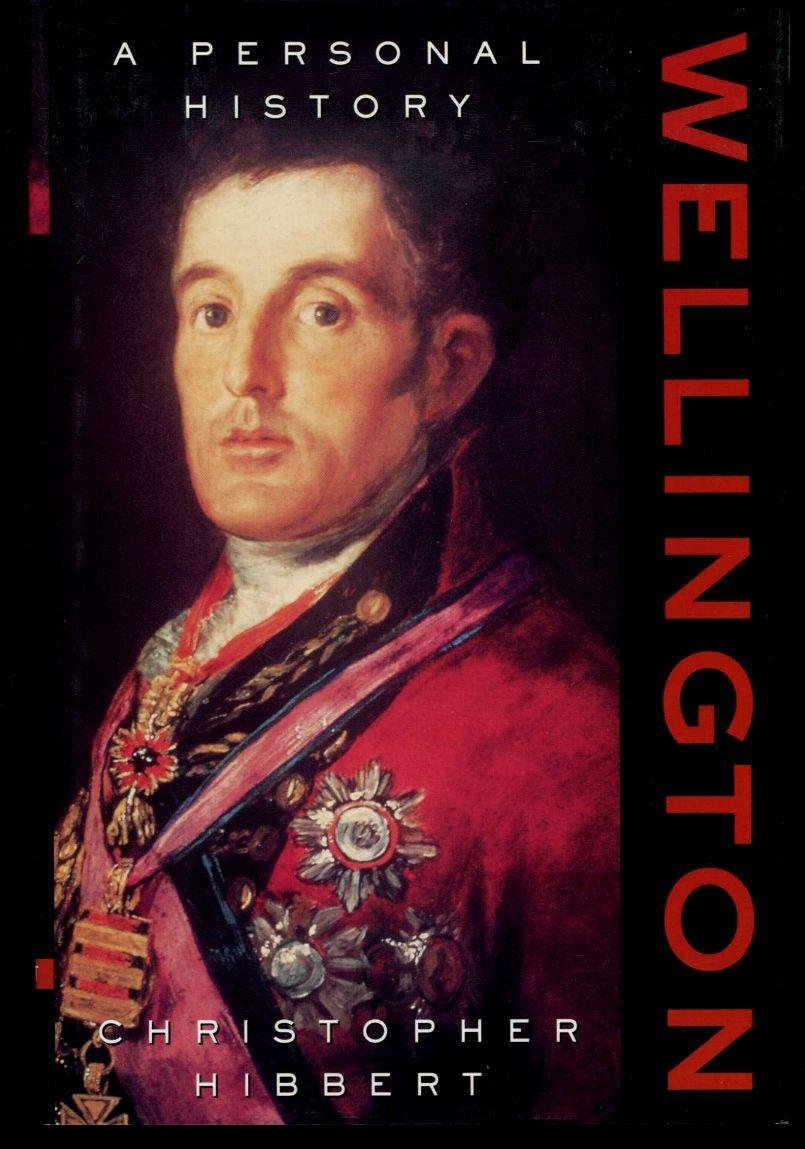



A brilliant general, remembered most for his defeat of Napoleon at Waterloo, Wellington was also a politician of commanding presence. Elected Prime Minister in 1827, he was an influential adviser to kings and queens, and became deeply involved in all the major scandals of the time, delighting in mixing himself up in other people's affairs. Celebrated for his sardonic humor and savage rages which alternated with irresistible charm, he concealed a deep humanity behind a veneer of aloofness that gained him the sobriquet, the Iron Duke.” Filled with fresh insights on aspects of Wellington's life and character, Christopher Hibbert has shown once again why he is one of our finest popular historians. The Iron Duke (1769-1852), Napoleon's greatest antagonist, finally ended his global ambitions at the battle of Waterloo in 1815. British historian Christopher Hibbert cogently chronicles Wellington's achievements as a military strategist and Tory prime minister, but his probing biography is even more notable for its shrewd and subtle assessment of the duke's layered personality. Famous for his sardonic wit and towering temper, an indifferent husband and severe father, forbiddingly aloof yet capable of enormous charm, Wellington the private man is as fascinating as the public one in this smoothly written, solidly researched account. The prolific Hibbert (Nelson: A Personal History, 1994, etc.) offers a lively if unsurprising portrait of a contentious hero. Arthur Wellesley, later to become the duke of Wellington, took to the trade of soldiering with alacrity, rising to prominence during his long, careful campaign against Napoleon's forces in Spain, and becoming enshrined as a national hero for his victory against the emperor himself at Waterloo. He then chose to plunge into politics, eventually becoming prime minister, in 1827. For several decades Wellington, alternately irascible and charming, arrogant and solicitous, and almost always imperious, dominated the national scene. Hibbert covers Wellington's campaigns with speed and clarity but plunges with enthusiasm into Wellington's years at the center of British politics. It's likely that most readers do not need to know quite so much as they are told here about the nasty particulars of political life in the 1820s and '30s in England. Still, Hibbert does a deft job of marshaling facts and anecdotes. A useful introduction to a complex, powerful figure. (b&w illustrations, not seen) -- Copyright ©1997, Kirkus Associates, LP. All rights reserved. The narrative pace is at once spanking and smooth. There are no inaccuracies to offend the historian, no solecisms to irritate the fastidious and no longeurs to weary the general reader. All the old anecdotes are there (which is right, for they, like the old songs, are mostly the best ones), although they are sometimes indulgently recalled and then austerely rejected as being apocryphal. -- The New York Times Book Review, Roy Jenkins