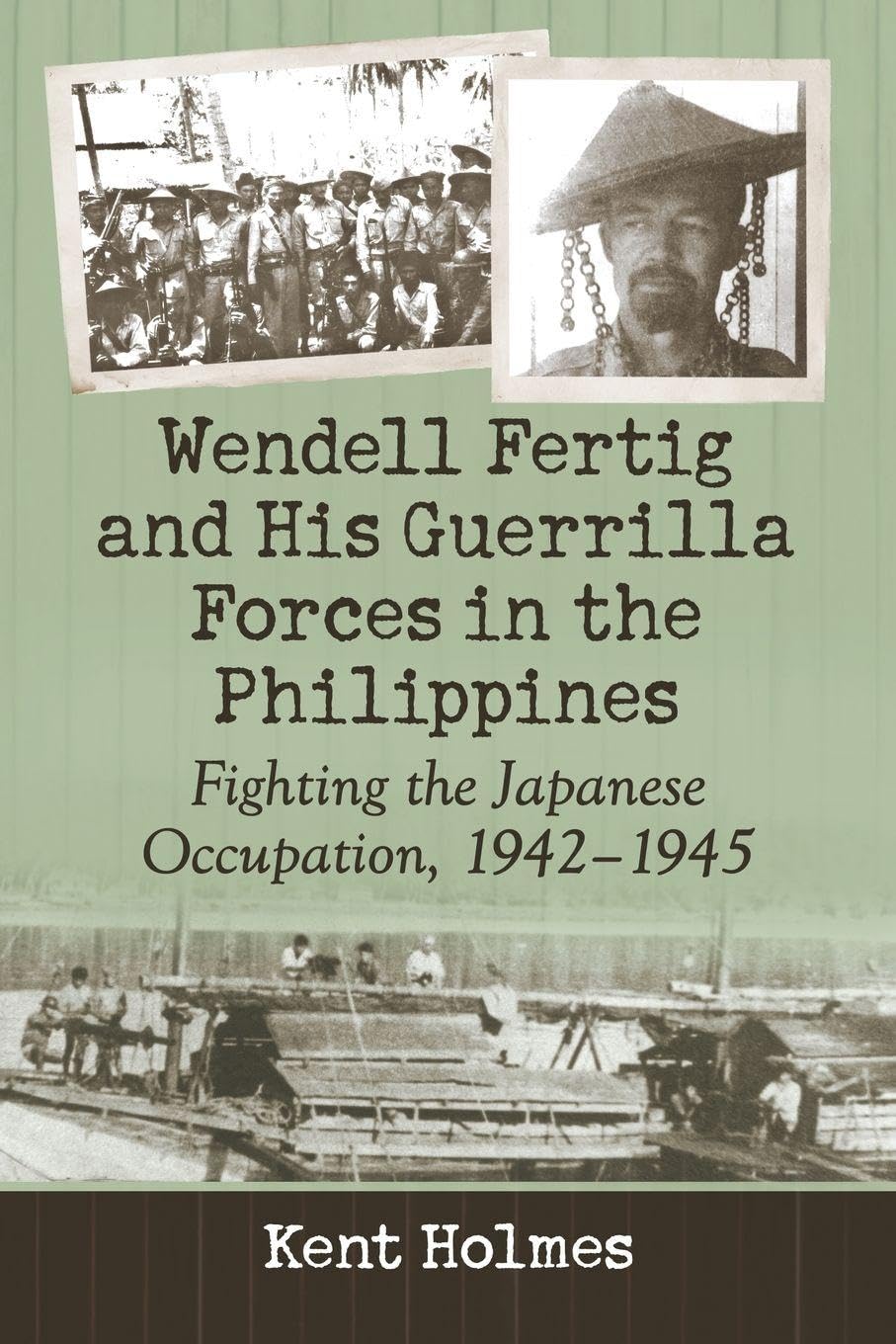
Wendell Fertig and His Guerrilla Forces in the Philippines: Fighting the Japanese Occupation, 1942-1945
$26.99
by Kent Holmes



Creating a guerrilla movement to fight the Japanese occupation of the Philippines (1942-1945) presented Colonel Wendell Fertig with some formidable challenges. Unlike the other islands in the archipelago, Mindanao had a large Moslem (Moro) population. Using Moro and American leadership he brought the Moro people into the movement. Fertig lacked good communication with MacArthur's headquarters in Australia. With ingenuity and talented technical personnel he solved this problem, and increased the logistical support for the guerrillas by submarine from Australia. As the force expanded, Fertig was fortunate to recruit leadership from 187 Americans--military and civilian--who had not surrendered to the Japanese. The resulting force, with its intelligence from coastal watch stations, added six guerrilla divisions to U.S. military strength for the 1945 liberation of Mindanao, a contribution unique in the history of unconventional warfare. “provides a wealth of information on how Americans and others creatively responded to a situation where they were outmanned and outgunned...a welcome addition to the literature on Mindanao in the twentieth century”― H-Net Reviews . The late Kent Holmes was a retired Central Intelligence Agency officer and a member of CIA's Senior Intelligence Service. He served overseas for 15 years in six countries, including two years in Laos supervising paramilitary operations in northwest Laos. He lived in Baker, West Virginia.