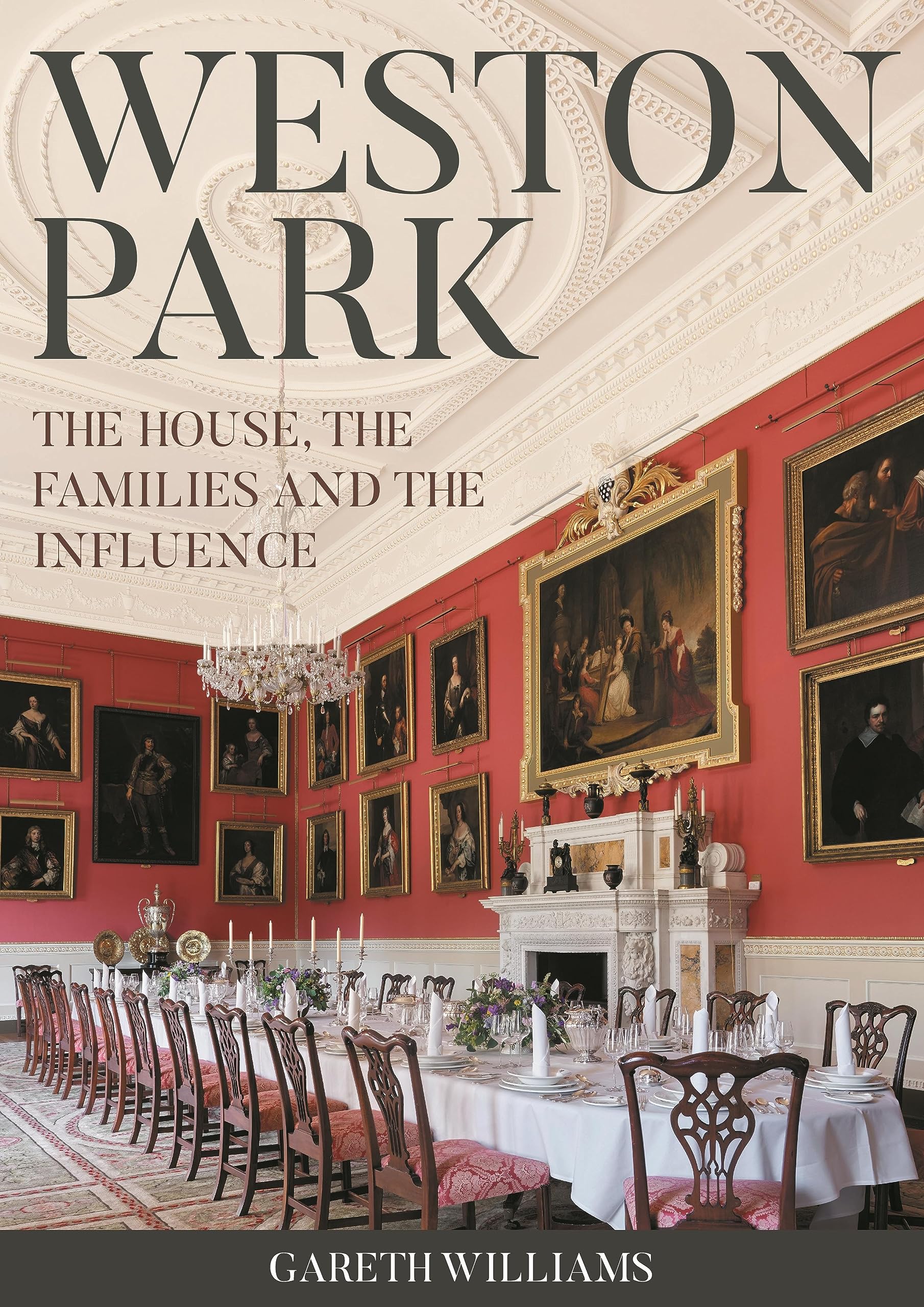



Considering its territorial and social influence and the superlative nature of its furnishings and collections, Weston Park is not as well known as one might expect. The house and contents, with its thousand acre landscape park, was gifted to the nation in 1986 by Richard, 7th Earl of Bradford. Until then, the house had always passed by descent, often through the female line, and it had stood at the centre of an estate with a wide geographical spread, linking it with neighbouring counties and with the urban centres of Walsall, Bolton and Wigan. Weston Park's owners and staff had a pivotal role in the development of these places, whilst the family were involved in national affairs, in politics, the legal profession, and the military. Their seat at Weston Park provided not only a fitting home, visited by royalty and politicians, but also became a repository of important patronage and of collections. These included, in 1735, the highly significant late seventeenth and early eighteenth century collection of paintings that had been assembled by Francis Newport, 1st Earl of Bradford and his younger son, Thomas. Meticulously researched and beautifully illustrated, this book seeks to tell the story of the house, its setting, extraordinary collections, and the influence that it has had on wider communities through the history of those who have owned and cared for it. Authoritative and richly illustrated this account tells not only the story of the House, its setting and extraordinary collections, but also the influence that it has had on wider communities. ― Shropshire Parks & Gardens Trust Williams' beautiful new book, complete with copious illustrations, photographs, and architectural drawings, traces the history of both the house and its inhabitants. It is particularly refreshing to see the female contribution to Weston Park's history fully explored and acknowledged. -- Historic Houses Gareth Williams' book is more than an architectural history. Much is a family history, concluding with an admirably clear account of the transformation of an agricultural and industrial estate (or rather several estates) into the charity of 1986. This transformation has engendered deeper knowledge of the house and particularly of its exceptional contents, so that the book is as much the history of a top-quality collection, pictures, furniture, and porcelain, as anything else. Gareth Williams is the Curator, and his book is consequently the authoritative account. -- The Georgian At first sight Gareth Williams' publication on Weston Park is a delightful coffee table book: large, well-illustrated with a multitude of attractive colour photographs, all suitably captioned. Further examination shows that it is much more. The text is an extraordinarily detailed narrative of the history of Weston Park and its families, in terms of both local and wider contexts, from medieval to present times. -- Pamela Sambrook ― The Local Historian Considering its territorial and social influence and the superlative nature of its indigenous collections - which since 1735 has included one of the most significant late seventeenth century London art collections - Weston Park is not as well known as one might expect. The House, with its thousand acre landscape park and contents, was gifted to the nation in 1986 by Richard, 7th Earl of Bradford and was vested by the NHMF in the Weston Park Foundation, an independent charitable trust. Until then, the house had always passed by descent, often through the female line, and it had stood at the centre of an estate with a wide geographical spread, with tentacles linking this quintessential English country house not only with the adjacent counties of Shropshire and Staffordshire but with more distant estates which included the urban centres of Walsall, Bolton and Wigan. Weston Park's owners and staff had a pivotal role in the development of these places, whilst the family's involvement in politics, the legal profession, and the military brought them to the forefront of national affairs on frequent occasions. Their seat at Weston Park provided not only a fitting home, visited by royalty and politicians, but also became a repository of important patronage and of collections. These included not only important Regency and pre-Revolutionary French decorative arts but, in 1735, the highly significant late seventeenth and early eighteenth century collection of paintings that had been assembled by Francis Newport, 1st Earl of Bradford of the first creation and his younger son, Thomas, Baron Torrington. Meticulously researched and beautifully illustrated, this book seeks to tell the story of the House, its setting, extraordinary collections, and the influence that it has had on wider communities through the history of those who have owned and cared for it. GARETH WILLIAMS has been a regional director of Sothebys and a curator for the National Trust at Nostell Park. He is now curator at Weston Park, one of the major