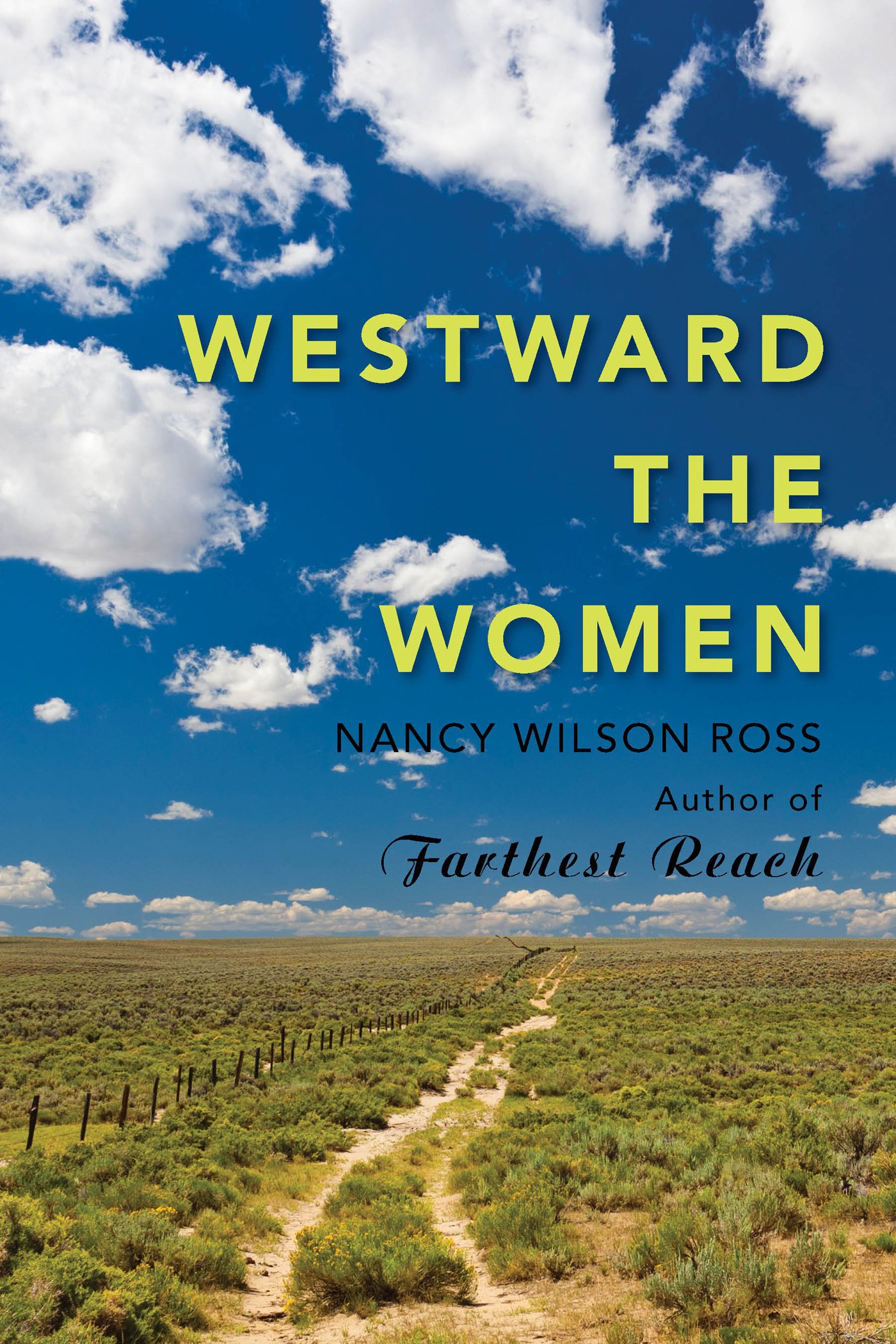



WESTWARD THE WOMEN is a book about women of every kind and sort, from nuns to prostitutes, who participated in the greatest American adventure―pioneering across the continent. Not only does the material represent half-forgotten history―which the author garnered from attics, libraries, state historical museums, and the reminiscences of Far Western Old-timers―but it is unique in presenting the woman’s side of the story in this major American experience. With dramatic clarity the author of FARTHEST REACH has written the intimate and human stories of certain outstanding personalities among these pioneer women; the Maine blue-stocking pursuing her studies of botany and taxidermy in frontier solitude; the gentle nuns from Belgium teaching needlework and litanies to “children of the forest”; the little ex-milliner who performed the first autopsy by a woman; the suffragette who established a newspaper for Western women and rode plushy river boats and the dusty roads preaching her gospel of Equal Rights; hurdy-gurdy girls from Idaho boomtowns; and many another martyr, heroine, diarist, gun moll, missionary, feminist, and mother in this turbulent era of pioneering. “A dramatic and entertaining book.”―NEW YORK HERALD TRIBUNE “Poignant stories of women who risked everything for the great Western adventure.”―SATURDAY REVIEW “I know of no other book devoted to the distaff side of pioneering that is at once so vivid and authentic.”―Bernard de Voto, NEW YORK HERALD TRIBUNE “It is a charming and lively book. . . . No work of pure fiction could equal this amazing true record of women’s indomitable passage across the continent.”―CHICAGO SUN BOOK WEEK Nancy Wilson Ross was a popular writer of both fiction and nonfiction. She was born in Olympia, Washington, in 1901, and she attended the University of Oregon. Her book FARTHEST REACH (1941) profiles Oregon and Washington. She traveled extensively―in England, France, China, Korea, and Japan―and later became known as an expert on Eastern religions. She died on January 18, 1986. EXCERPT 1: Some of the names of the women who endured the hardships of the westward trip with fortitude and cheerfulness have come down to us. There was an Aunt Pop, “one of the Woolery women” who relieved the growing despair of the Naches Trail party by her drolleries in the face of death by starvation. Her gaiety often followed on a brief spell of crying over their plight, and these shifts of mood enlivened the terrible monotony of that famous and almost fatal “short-cut” across the Cascade Mountains. The unfortunate emigrants who took the Naches Trail in 1853 found it nearly impassable, with bluffs so precipitous that they had to kill their cattle, dry the hides, and let the wagons down over the steep cliffs, while men, women, and children scrambled to safety as best they could. The story is told of how Mrs. Longmire, of the same party, walking ahead in the midst of the untouched coastal forest carrying a babe and leading a three-year-old child, came suddenly upon a grizzled woodsman who blanched to the beard at sight of her and cried: “Good God Almighty, woman, where did you come from? Is there any more of you? You can’t get through this way. You’ll have to turn back. There ain’t a blade of grass for fifty miles.” But Mrs. Longmire simply walked past him with her face set to the west and, as she passed, said only: “We can’t go back, we’ve got to go forward.” High-strung women exhausted themselves on the long trek with the necessity for constant watchfulness of their children. Over and over again diaries and letters speak briefly of a child fallen into the campfire or under the wagon wheels. “All four wheels passed over his body. Small hope is held of his recovery.” “Little Agness B. fell into the fire today. Poorly.” One of the famous injured children of the wagon train of ’43 was Catherine Sager, whom the missionary Whitmans adopted along with her six orphaned brothers and sisters. It was Catherine who left one of the most moving accounts of the last day of the Whitmans, and of the terrible massacre in 1847 in which these famous Western forerunners and fourteen other residents of the Waiilatpu mission―including two of Catherine’s brothers―lost their lives. Blessed was the wagon train that numbered a doctor among its members. Those few doctors who traveled west―particularly during the cholera epidemics that piled up the bodies along the wheel tracks―were worked to the point of exhaustion. Women, of necessity, had to learn the practical details of nursing and bone-setting, the simple herbal and home remedies with which people relieved their miseries in the middle of the nineteenth century. One-day stopovers for the birth of a child were deemed sufficient. Time was pressing and women in labor, or weak from the birth, were expected to endure without complaint the agony of the racking motion of clumsy wagons on rough land.