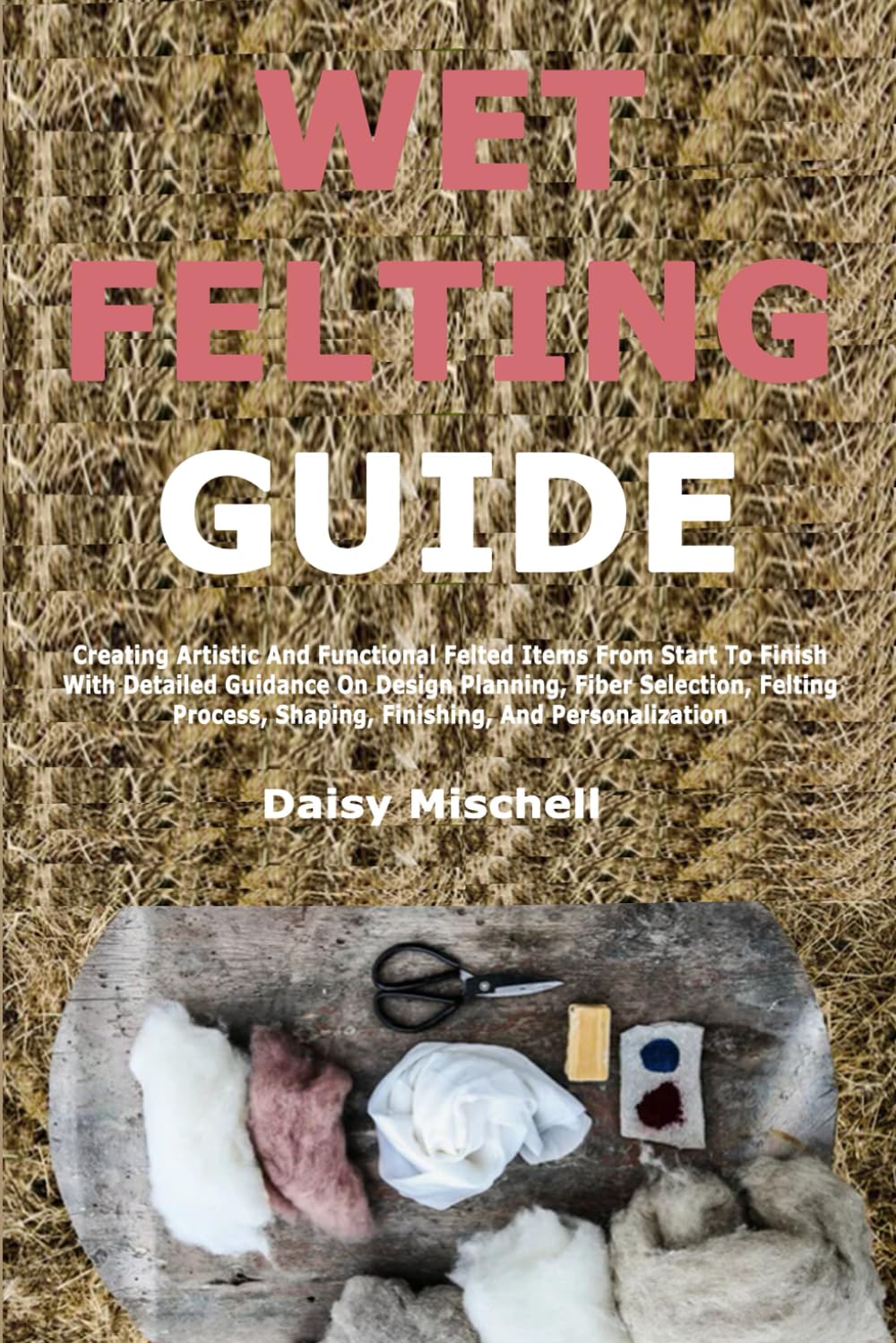
Wet Felting Guide: Creating Artistic And Functional Felted Items From Start To Finish With Detailed Guidance On Design Planning, Fiber Selection, ...
$18.87
by Daisy Mischell



With wet felting, every time you grab some wool, it’s like starting something new. Doesn’t really matter if you’re just messing around for the first time or if you’ve already made a few things. It’s more than just crafting. It gets your hands moving, keeps your mind focused, and lets your ideas come out in ways you didn’t expect. You will end up learning a ton about wool, too. It’s wild how those fibers change just by adding a bit of water and soap, and then whatever you do with your hands totally shapes how it turns out. Got questions about setting up your space or picking the right wool? That’s all sorted. There’s a step for everything—making flat pieces, or even building up something with a bit more shape. Inside, you will learn how to: Understand wool fibers, roving, and batts, and how to choose the best types for your projects. - Prepare your workspace and essential felting tools, ensuring safety and efficiency. - Layer, wet, roll, and full fibers to create strong, cohesive felt sheets or three-dimensional objects. - Incorporate colors, textures, and mixed materials like silk, threads, and embellishments to develop unique designs. - Shape and mold flat and 3D pieces, including hats, slippers, bowls, bags, and decorative items. - Apply finishing techniques that enhance durability, structure, and aesthetic appeal. This whole guide is all about helping you improve every time you take on a new project. You start feeling a bit more sure of yourself, maybe picking up a few tricks along the way. After a while, you’re not just following steps—you’re messing around a bit, testing stuff out, fixing things your own way. Wet felting sort of stops feeling like just a hobby at that point. It grows into something else, something that feels real and personal. You end up making things that actually matter to you—stuff that looks good, works well, and, best part, is totally yours. You can scroll over to the BUY button to get started.