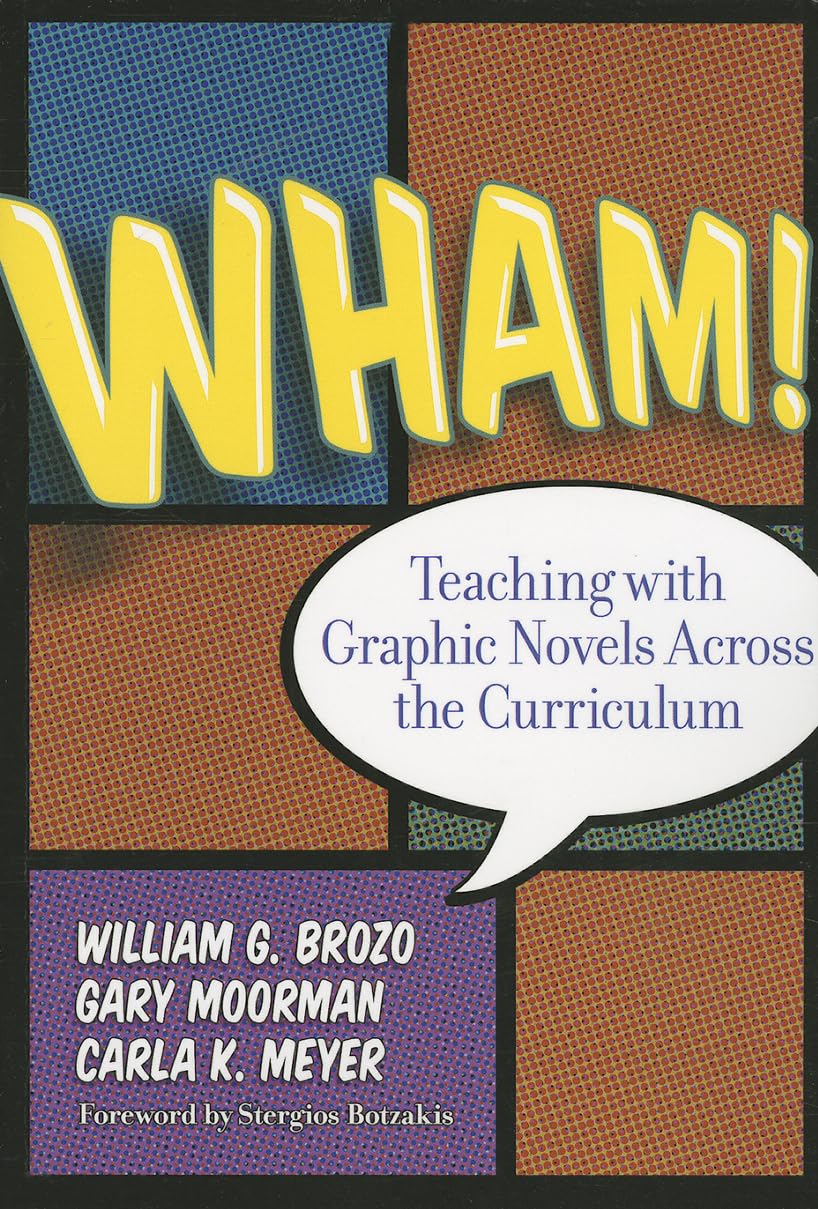
Wham! Teaching with Graphic Novels Across the Curriculum (Language and Literacy Series)
$30.95
by William G. Brozo



Graphic novels are an excellent medium to motivate today’s youth to become independent learners and thinkers. This practical guide shows secondary school teachers how to incorporate graphic novels into content area instruction as a tool for meeting the needs of diverse learners and achieving the goals of the Common Core State Standards. The authors provide instructional guidelines with classroom examples that demonstrate how graphic novels can be used to expand content knowledge and literacy in science, social studies, math, and English/language arts. Teachers will appreciate the book’s specific suggestions for selecting graphic novels and for employing responsive practices that will build students’ reading, writing, speaking, listening, and media competencies. Book Features: Advice for selecting and evaluating graphic novels. - Teaching strategies for each of the four major content domains. - Guidance for aligning instruction with the Common Core State Standards. - A list of educational graphic novels organized by content area. - Study group questions. - And more! "A wonderful contribution to the field of content area literacy studies." ― Michael D. Boatright , Western Carolina University “I feel this book effectively breaks down the major barriers to using graphic novels, pointing out how they can indeed be substantive, substantial, and meaningful as texts and teaching tools.” ―From the Foreword by Stergios Botzakis , The University of Tennessee "A wonderful contribution to the field of content area literacy studies." ― Michael D. Boatright , Western Carolina University “I feel this book effectively breaks down the major barriers to using graphic novels, pointing out how they can indeed be substantive, substantial, and meaningful as texts and teaching tools.” ―From the Foreword by Stergios Botzakis , The University of Tennessee ?I feel this book effectively breaks down the major barriers to using graphic novels, pointing out how they can indeed be substantive, substantial, and meaningful as texts and teaching tools.? ?From the Foreword by Stergios Botzakis , The University of Tennessee William G. Brozo is a professor of literacy in the Graduate School of Education at George Mason University in Fairfax, Virginia, and author of RTI and the Adolescent Reader . Gary Moorman is professor emeritus at Appalachian State University in Boone, North Carolina. Carla K. Meyer is an assistant professor in the Reading Education and Special Education Department at Appalachian State University.