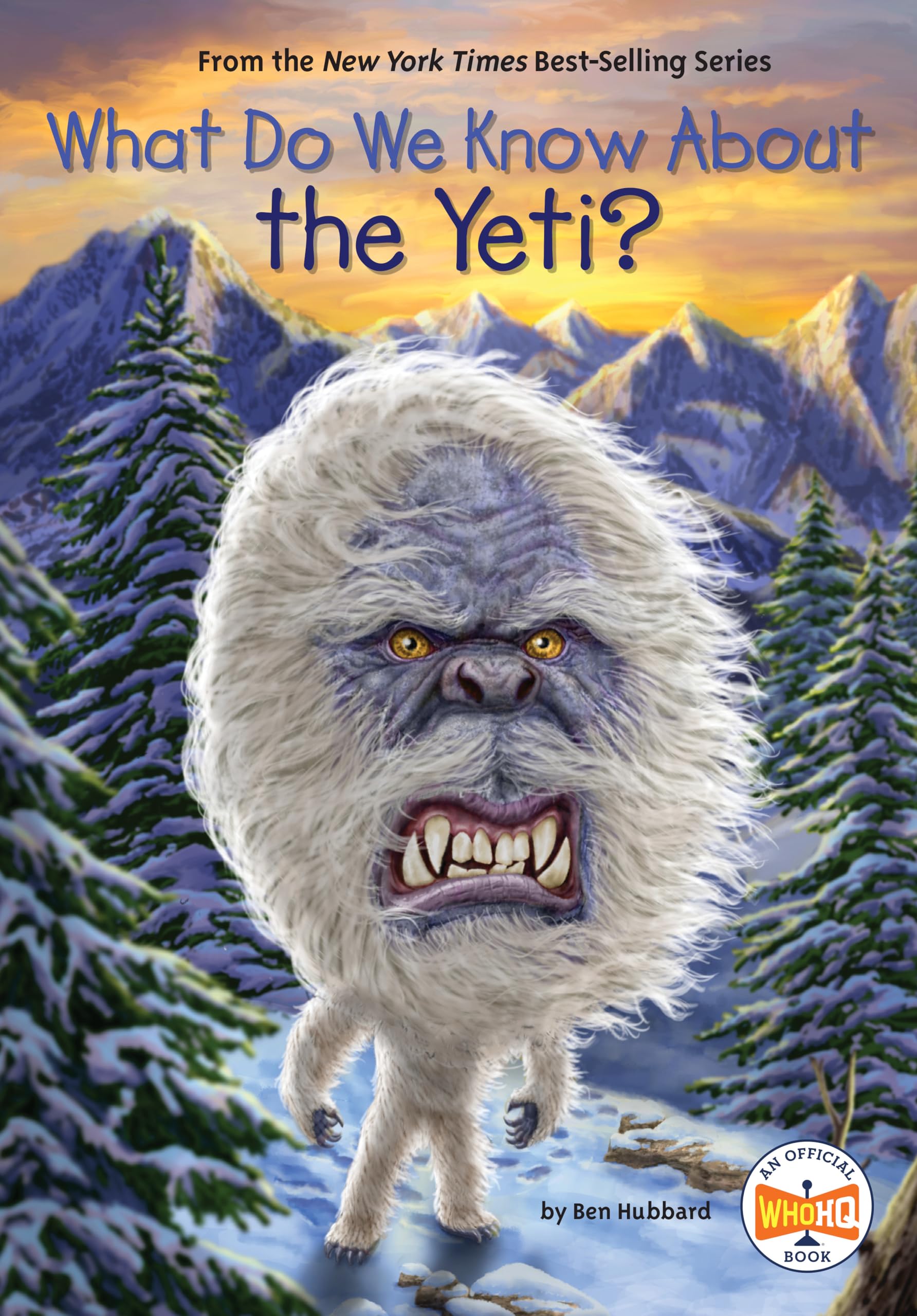



The What Do We Know About? series explores the mysterious, the unknown, and the unexplained. Does the ape-like Yeti really roam the Himalayan mountain range? Not quite human and not quite an animal, the Yeti has been the subject of speculation for centuries. In modern times, the Yeti has become a popular cryptid, appearing in movies, books, and TV shows. Although there are many claimed sightings of the Yeti, there is no real evidence that it exists. This elusive cryptid, also known as the Abominable Snowman, remains a mystery. Does the Yeti truly live in the snowy Himalayas? Have the Sherpa who live there spotted him at the highest altitudes? Here are the facts about what we really know about Yeti sightings, research, and lore. Ben Hubbard is an accomplished nonfiction author for children and adults with more than 130 titles to his name. He has written about many subjects, from space, the samurai, and sharks to poison, pets, and the Plantagenets. His books have been translated into over a dozen languages and can be found in libraries around the world What Do We Know About the Yeti? At around 4 a.m. on September 22, 1921, explorers found mysterious footprints near the world’s highest mountain. By the light of a bright moon, the tracks were large, and led up a snowy pass ahead. The team was high in the Himalayan mountains, close to 21,000 feet above sea level. Few animals were known to live at this altitude (height)—especially ones with such big feet! The climbers wondered if the tracks had been made by a gray wolf. The explorers were part of a British expedition to find a way up Mount Everest. At 29,032 feet above sea level, Mount Everest has the highest peak on Earth. It is a dangerous place. The mountain is made up of dizzying slopes of rock and ice, where temperatures can drop to minus seventy-six degrees and winds gust at over 100 miles per hour. That’s like the South Pole in winter. No one had yet found a way to the top of Everest. However, the mountaineers in 1921 believed they had discovered a new route. It was a snowy pass called Lhagba La that was located along the southern border of Tibet. This was a remote place that few people knew existed. It made the discovery of the footprints even more curious. But the British team had no animal experts. They wondered what creature could exist in a place that was so cold and isolated. Not everyone was puzzled by the footprints, however. Sherpas, expert climbers in Tibet and Nepal, were working as the expedition’s guides and support team. They were skilled mountaineers who knew the area well. The team’s Sherpas explained that the footprints belonged to a type of creature few had heard of outside the Himalayan mountain range. This creature lived in the mountains, walked on two legs like a human, and had long, matted hair. When the team descended from the mountains, the Sherpas spoke to British journalist Henry Newman about the creature. Newman said that they called it Metoh-kangmi (say: MI-toe KANG-me), which means “humanlike bear of the snow.” However, Newman decided to call it the “Abominable Snowman” (abominable means something unpleasant or horrifying). This was the moment that the legend of the Abominable Snowman was born. When British newspapers reported on the footprints, the story became highly exaggerated. One article in the Times of London had the headline “Tibetan Tales of Hairy Murderers.” But the climbing Sherpas had not described the creature as “abominable,” or a “murderer.” To them, it was simply a wild mountain creature that everyone in the Himalayas knew about. For people outside the region, what was now being called the Abominable Snowman was a brand--new discovery, even though there was very little proof that it actually existed. The only evidence was the Sherpas’ stories and some large footprints in the snow. Was it real? Explorers would spend more than one hundred years trying to uncover the truth. Many have searched far and wide to find the mysterious creature we know today as the Yeti. Chapter 1 The Local Yeti After the 1921 newspaper reports, the Abominable Snowman developed a reputation as a savage, murderous monster with superhuman strength. It has held this reputation ever since. After all, it was right there in the name: “abominable,” a word often used to mean brutal and beastly. But the people living in and near the Himalayas had a very different view. Their Yeti was certainly real, but not necessarily a violent people--killer. The Himalayan mountains stretch for around 1,550 miles through Afghanistan, Pakistan, India, China, Bhutan, Nepal, Tibet, and Myanmar. Nepal and Tibet are the places most associated with the Yeti. The Himalayas contain ten of the world’s fourteen highest mountains! At altitudes above 16,000 feet, the tops of the mountains are covered in snow and ice year--round. This freezing environment is difficult to survive. Only a few animals, such as snow leopards, brown bears, and y