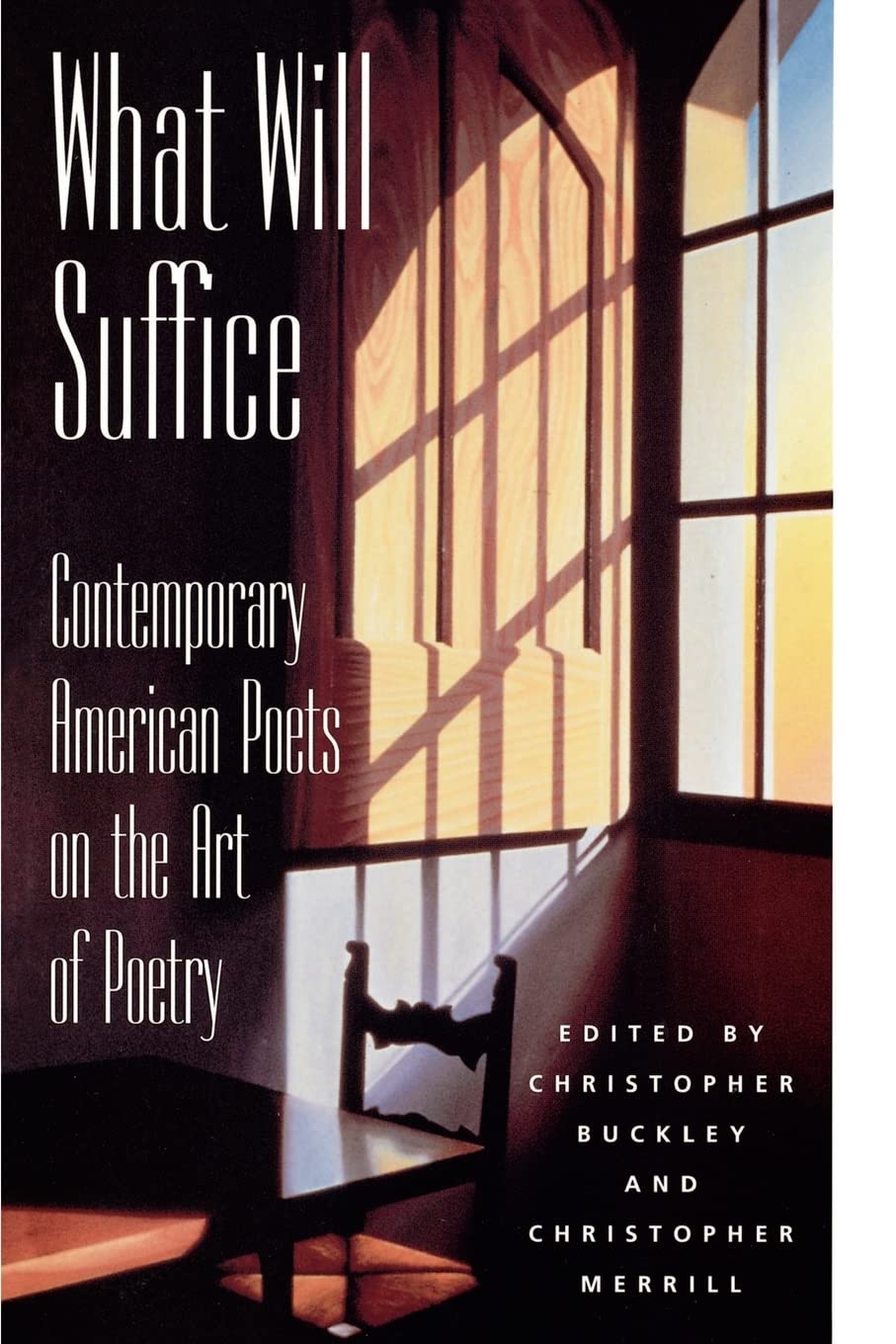
What Will Suffice: Contemporary American Poets on the Art of Poetry
$17.95
by Christopher Buckley



6X9 In, 200 Pp Poets are generally at ease discussing the works of other poets and discussing the work of poetry in general. But rarely do we find them so quickly predisposed to explicating their own poems, preferring instead to let their poems speak for themselves (otherwise, why write them?). In What Will Suffice , poets Christopher Buckley and Christopher Merrill, following up on Wallace Stevens's assertion that "poetry is the subject of the poem," have culled ars-poetica poems from more than 100 contemporary poets. These investigations into the art of poetry range from the oblique to the obvious, and nearly all of them are accompanied by textual explications by the poets that touch on topics such as faith, irony, mystery, music, imagination, language, curiosity, inspiration, religion, magic, grace, passion, observation, memory, and myth. This generous gesture on the part of the poets could have been accompanied by a greater generosity on the part of the publisher: the comments are set in puny type with cramped leading. A poem is a moral and mythic construct. Each decision the writer makes concerning the subject matter, form, diction, and tone reveals something about his or her vision of the world. Nowhere is that vision more on display than in an ars poetica, which is where a poet takes stock, writing down his or her articles of faith. An ars poetica is also a barometer for the cultural climate of one's times, and what the "readings" contained in this book suggest about post-Cold War America is that there are countless ways to interpret and transform our experiences. In the new world order the theater has changed yet again: the rise of ethnic conflict, neofascism, nationalism, and religious fundamentalism; the depletion of the earth's resources and devastation of innumberable ecosystems; continuing economic problems in both the developed and developing parts of the world; overpoplulation, the spread of AIDS and other communicable diseases;--these are dangers everyone faces. And poets are finding, in small ways and large, what will suffice for the next act. --Christopher Merrill Redwing Blackbirds by Fred Dings This morning they came like the dying reclaiming their old lives, delirious with joy right on the seam of spring, streaming in by the tattered thousands like black leaves blowing back onto the trees. But the homeless know what's expected by now, and whent he farmer fired into their body, they rose all around me like trembling black wound gaping red at the shoulders, a river of pain draining into the sky. Tonight, as I look at the cold sky and its flock of blue-white scars, I can't yet turn from Orion's red star whose trembling red light has travelled for years to die now into any eyes that will hold it. Used Book in Good Condition