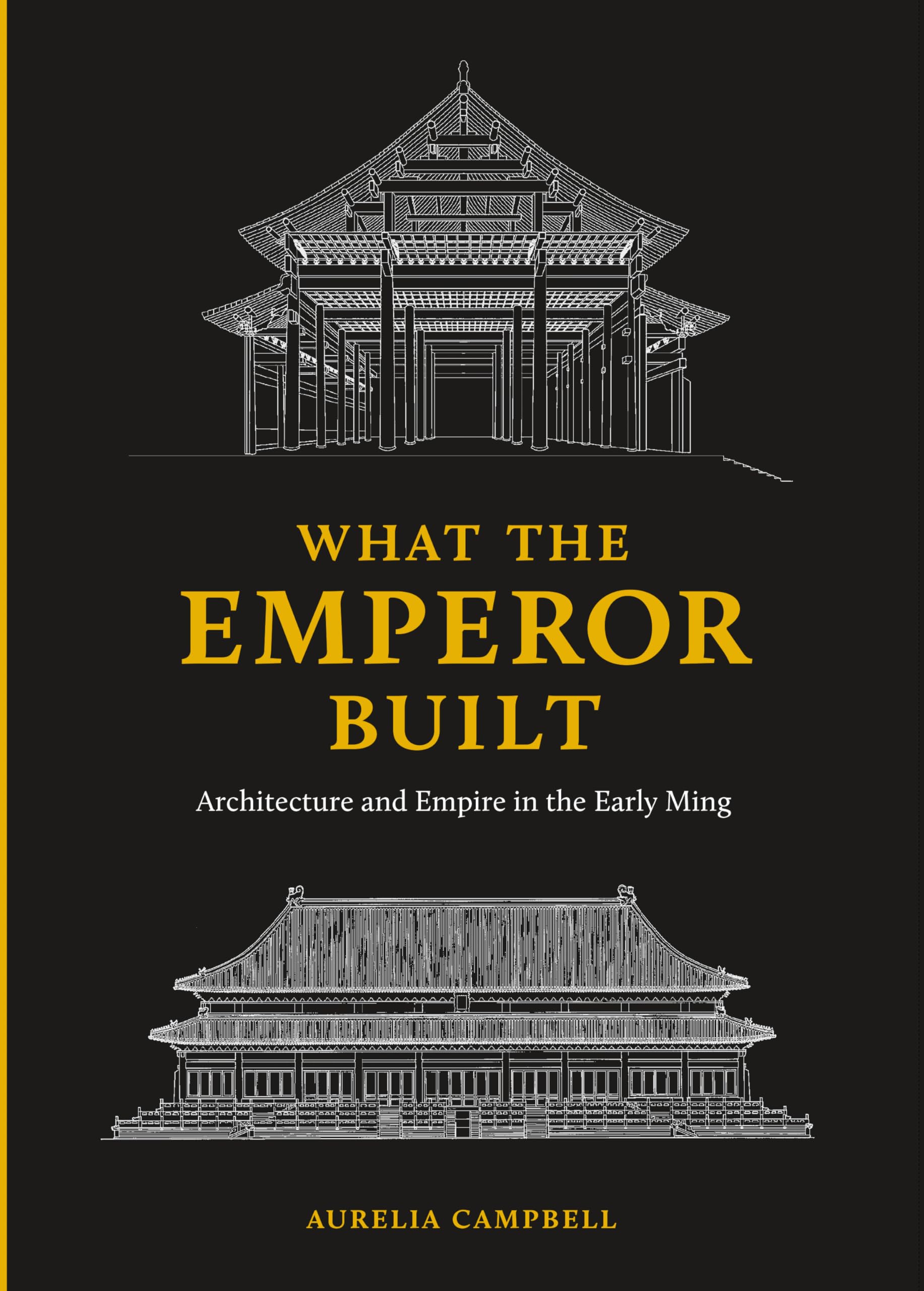
What the Emperor Built: Architecture and Empire in the Early Ming
$25.98
by Aurelia Campbell



Winner of the 2023 Bei Shan Tang Monograph Prize, sponsored by the Association for Asian Studies How imperial ideology is given shape in built space One of the most famous rulers in Chinese history, the Yongle emperor (r. 1402–24) gained renown for constructing Beijing’s magnificent Forbidden City, directing ambitious naval expeditions, and creating the world’s largest encyclopedia. What the Emperor Built is the first book-length study devoted to the architectural projects of a single Chinese emperor. Focusing on the imperial palaces in Beijing, a Daoist architectural complex on Mount Wudang, and a Buddhist temple on the Sino-Tibetan frontier, Aurelia Campbell demonstrates how the siting, design, and use of Yongle’s palaces and temples helped cement his authority and legitimize his usurpation of power. Campbell offers insight into Yongle’s sense of empire―from the far-flung locations in which he built, to the distant regions from which he extracted construction materials, and to the use of tens of thousands of craftsmen and other laborers. Through his constructions, Yongle connected himself to the divine, interacted with his subjects, and extended imperial influence across space and time. Spanning issues of architectural design and construction technologies, this deft analysis reveals remarkable advancements in timber-frame construction and implements an art-historical approach to examine patronage, audience, and reception, situating the buildings within their larger historical and religious contexts. "Should be on the reading list of everyone interested in the history of Chinese imperial politics and culture."―Timothy Brook, author of The Troubled Empire: China in the Yuan and Ming Dynasties "This thoroughly researched study―engagingly written, effectively illustrated, and cogently argued―is a significant and very welcome contribution to Ming architectural and social history."―Craig Clunas, University of Oxford " What the Emperor Built will make even those familiar with the city’s ancient buildings feel that while they may have looked, they perhaps did not entirely see."― South China Morning Post "An indispensable study on one of the most important emperors in Chinese history. This is an essential read for anyone interested in the institution of emperorship in China and the relationship between the politics and architecture of China that remains ever so relevant today."―Jianfei Zhu, Newcastle University "Makes architectural construction, patronage, and presence integral to our understanding of imperial authority in the early Ming."―Stephen Whiteman, author of Where Dragon Veins Meet: The Kangxi Emperor and His Estate at Rehe "Reveals how imperial spaces reflected, and potentially helped to define, the connoisseurship and aesthetic sophistication that has long characterized Ming material culture."―Tracy Miller, Vanderbilt University "By sketching a complete story of each building project, Campbell offers a fresh and critical understanding of Ming imperial architecture."―Wei-cheng Lin, University of Chicago "[A] detailed study of the architecture created during the early Ming dynasty reign of Yung Lo."― Choice "One of [the] book's greatest strengths lies in the clarity of both the argument and the handsomely reproduced illustrations presented in its pages . . . the story of magnificent buildings and the millions involved in their construction is sure to inspire lively discussions about the profound impact of Yongle's architectural vision on global architectural history and global history as a whole."― Journal of the Society of Architectural Historians "The book is remarkable for its successful integration of architectural with political and economic history, disciplines that are usually practiced separately. . . . This is architectural history at its best, and sets a standard for future work in the field."― Journal of the American Oriental Society "State architecture is a transformative art of power and persuasion. In What the Emperor Built Aurelia Campbell employs this lens of Ming imperial architecture to capture how Yongle (r.1402–1424) mobilized a standardized architectural vision to project legitimacy and counter his problematic rise to power through nepoticide and civil war."― Chinese Historical Review How imperial ideology is given shape in built space ― University of Washington Press Aurelia Campbell is assistant professor of Asian art history at Boston College.