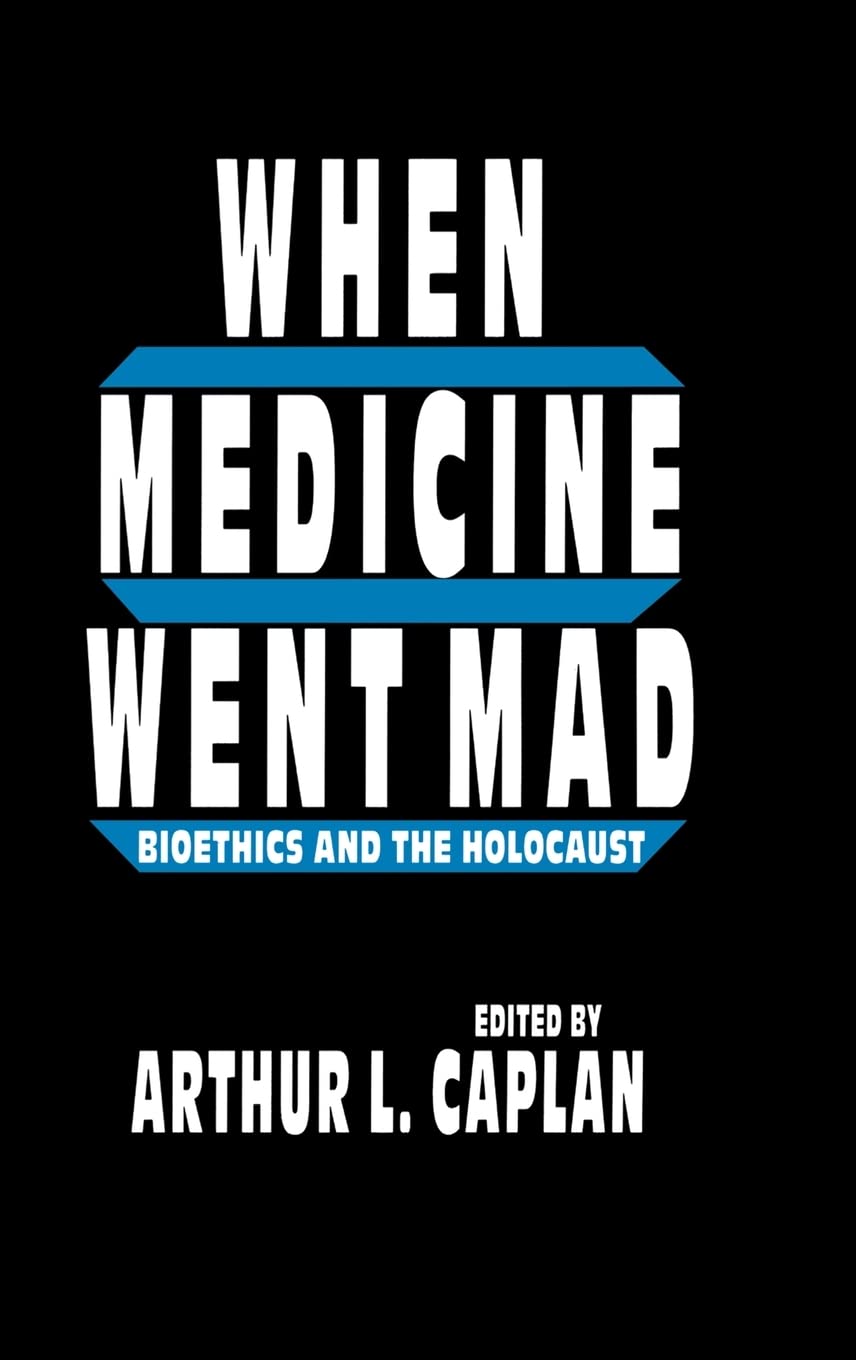
When Medicine Went Mad: Bioethics and the Holocaust (Contemporary Issues in Biomedicine, Ethics, and Society)
$45.12
by Arthur L. Caplan



In When Medicine Went Mad, one of the nation's leading bioethicists-and an extraordinary panel of experts and concentration camp survivors-examine problems first raised by Nazi medical experimentation that remain difficult and relevant even today. The importance of these issues to contemporary bioethical disputes-particularly in the thorny areas of medical genetics, human experimentation, and euthanasia-are explored in detail and with sensitivity. Despite its fiery and garish title, When Medicine Went Mad is a sober and scholarly analysis of the Nazi physicians who--in the name of science--carried out unspeakable atrocities upon countless victims. Caplan, a national leader in bioethics, has assembled outstanding experts on the subject, including actual research subjects of this ghastly experimentation. Contributors include well-known bioethicists such as George Annas, Ronald Cranford, Benjamin Freedman, Jay Katz, Ruth Macklin, and Caplan himself. Personal testimonies by Eva Kor, Susan Vigorito, and Gisela Konopka are particularly meaningful, forming an ideal background for vexing questions about why these atrocities happened and how to insure that they never recur. Of particular value to researchers are the essays by Katz and Annas, who boldly confront the implications of Nazi medicine for today's research into the Human Genome and various other fields of study. Recommended for academic and medical school libraries. - David A. Buehler, Charlton Memorial Hosp., Fall River, Mass. Copyright 1992 Reed Business Information, Inc. "Many of the essays are excellent: informative, persuasive, and foundational to any debate about the Holocaust's relevance to contemporary bioethical concerns. "-Choice Used Book in Good Condition