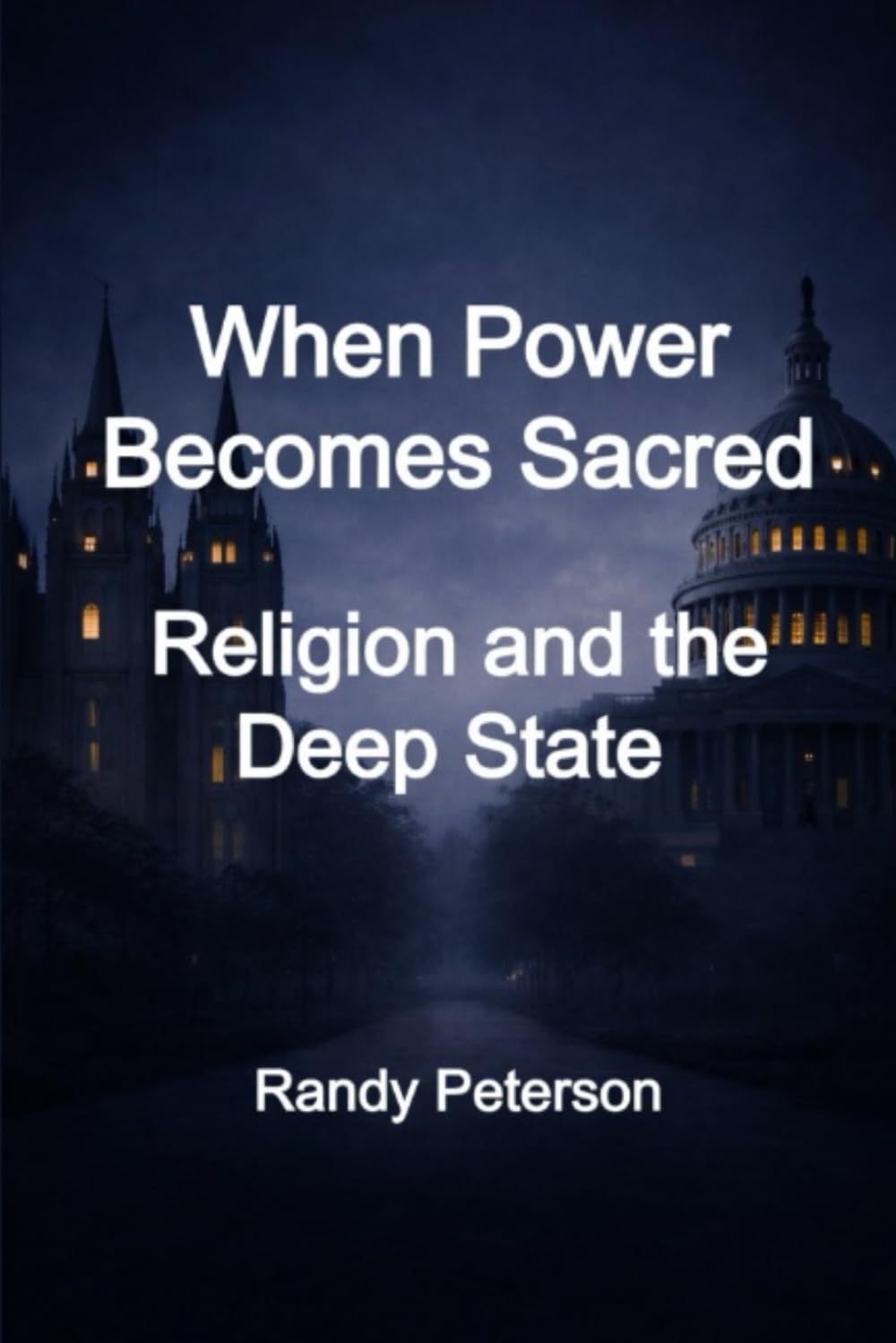
When Power Becomes Sacred: How Religion and the Deep State Converge at the Highest Levels
$8.99
by Randy Peterson



When Power Becomes Sacred examines how authority and belief converge structurally inside modern institutions shaped by Religion and the Deep State. It exposes how obedience and legitimacy are produced, stabilized, and internalized. This book reveals how religious logic reshapes secular power and why institutional dominance persists when it is treated as inevitable. When Power Becomes Sacred is a structural examination of how Religion and the Deep State converge at elite levels of influence without requiring secret coordination or centralized control. Rather than advancing speculative claims, the book analyzes predictable institutional behavior shaped by preservation, legitimacy, and obedience. Readers are introduced to Deep State and religious power convergence through moral authority obedience legitimacy narrative control and institutional survival incentives operating across modern governance systems , providing a framework for understanding how sacred framing stabilizes authority over time. Across history, Religion has supplied moral justification, while the Deep State has supplied continuity, enforcement, and insulation from accountability. When these functions intersect, power no longer relies solely on law or force. It is reinforced through righteousness, duty, and moral necessity. The book explains how religious institutions and Deep State governance align through shared hierarchy preservation narrative management and obedience reinforcement rather than explicit coordination , showing why compliance becomes internalized and dissent is framed as danger. Instead of focusing on belief or ideology, this work focuses on structure. It demonstrates why large institutions behave similarly once continuity becomes their primary objective. Readers will recognize institutional obedience systems shaped by Religion and Deep State power to preserve legitimacy suppress dissent and normalize compliance across generations , revealing why dominance often feels inevitable rather than imposed. Authority becomes insulated from scrutiny when it is treated as sacred, whether that sanctity is expressed through doctrine, patriotism, or moral language. The analysis presents structural analysis of authority legitimacy, obedience and moral framing across religious systems and Deep State power formations without conspiracy narratives , clarifying why accountability weakens as moral framing strengthens. The convergence examined here is not accidental and not rare. Wherever Religion and the Deep State operate at scale, similar pressures produce similar outcomes. Narratives are managed. Loyalty is rewarded. Reform is promised but rarely delivered. The book explains why power becomes sacred when Religion and Deep State institutions intersect creating systems that persist beyond leadership belief doctrine and political ideology , grounding the argument in observable institutional behavior. Seen together, these patterns explain why authority often feels permanent even when leadership changes and policies fail. Stability is preserved not through effectiveness, but through legitimacy reinforced by moral language, ritualized obedience, and institutional memory that outlasts any single era or crisis. When Power Becomes Sacred is written for readers who sense that something is wrong not because Religion exists or governance exists, but because both increasingly demand moral obedience rather than consent. It does not attack faith or deny the need for order. It examines what happens when institutions claim authority over conscience itself. This book offers no solutions, no replacement systems, and no calls to action. It does not ask the reader to believe differently. It asks the reader to understand how Religion and the Deep State converge structurally, and why power weakens naturally once it is no longer treated as sacred.