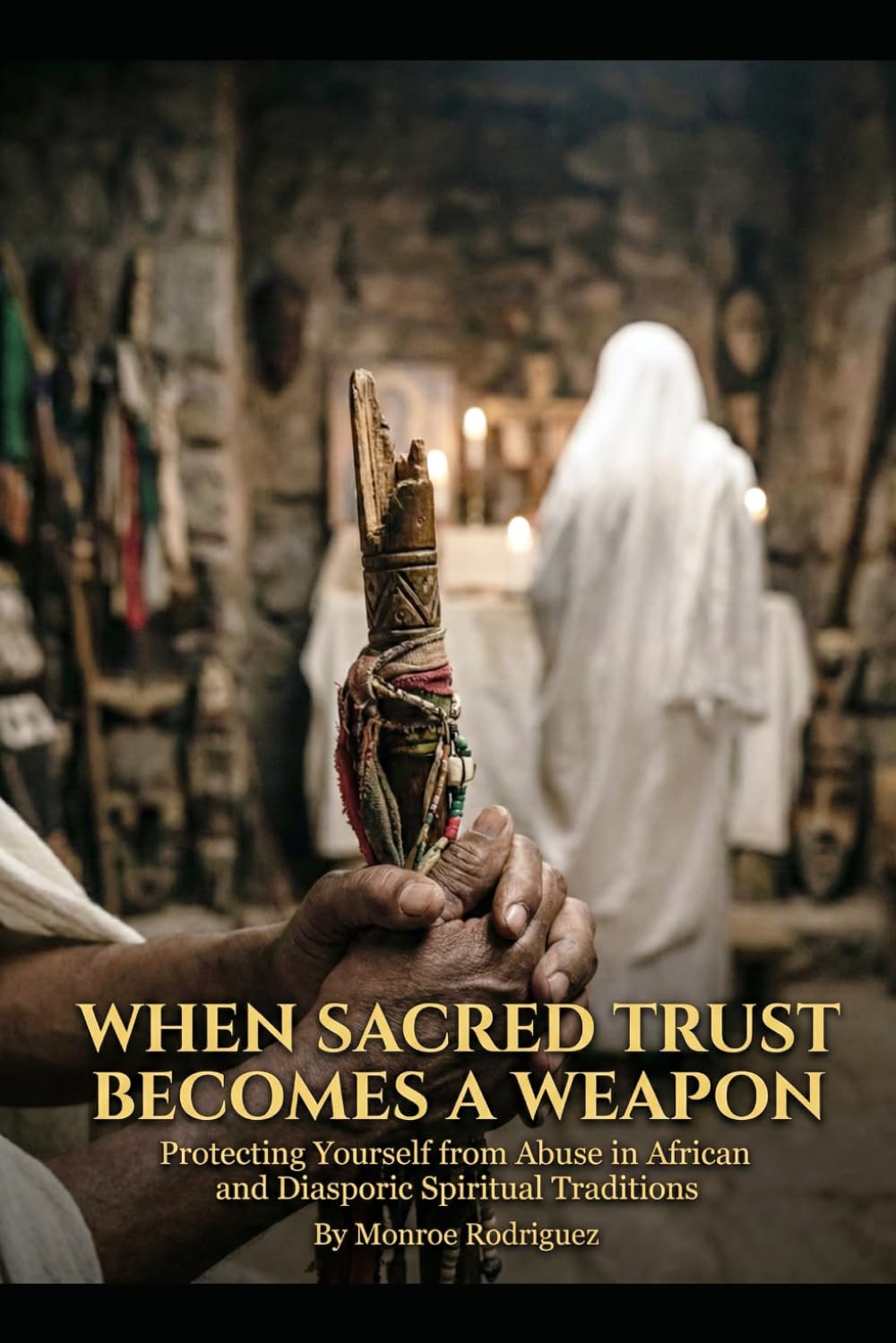
When Sacred Trust Becomes A Weapon: Protecting Yourself from Abuse in African and Diasporic Spiritual Traditions
$24.99
by Monroe Rodriguez



The resurgence of African Traditional Religions and their diasporic expressions represents one of the most significant spiritual movements of our time. Descendants of the African diaspora are reconnecting with ancestral heritage. Seekers worldwide are drawn to spiritual frameworks that Western religions cannot provide. The internet has made information about Ifá, Vodou, Santería, Candomblé, and related traditions more accessible than ever before. This expansion brings tremendous potential for cultural reclamation, spiritual development, and community building. It has also created opportunities for exploitation. Where there is spiritual hunger, there are those who will exploit it. When Sacred Trust Becomes A Weapon: Protecting Yourself from Abuse in African and Diasporic Spiritual Traditions addresses a critical need that communities have long recognized but rarely discussed openly. Financial fraud disguised as spiritual obligation. Psychological manipulation leveraging genuine belief in spiritual forces. Physical harm justified through distorted interpretations of tradition. Sexual exploitation hidden behind claims of spiritual authority. Human trafficking concealed within frameworks of spiritual apprenticeship. This book provides practical, actionable guidance for identifying, avoiding, and responding to these forms of exploitation. It is not an attack on these traditions themselves, which contain profound wisdom and legitimate spiritual technology. Rather, it addresses what happens when individuals pervert these traditions for personal gain. These traditions emphasize community accountability, ethical conduct, proper transmission of knowledge, and genuine spiritual development. When someone violates these principles while claiming spiritual authority, calling out that violation strengthens rather than weakens the tradition. Abusers depend on community silence. They thrive when people are more concerned with protecting tradition's reputation than protecting actual human beings from harm. They count on the fact that calling out abuse will be treated as attacking the tradition itself. This book breaks that silence while honoring these sacred traditions. It provides the language, frameworks, and practical tools needed to recognize and resist exploitation. It demonstrates that protecting people from abuse and preserving authentic tradition are not opposing goals but complementary commitments. These traditions survived catastrophic oppression because they are powerful, necessary, and resilient. They will survive current challenges. But they will be healthier when communities actively work to distinguish authentic practice from exploitation, hold abusers accountable rather than protecting them, support survivors rather than silencing them, transmit genuine knowledge to new generations, and create structures that prevent rather than enable abuse. This work strengthens traditions by aligning practice with principles they actually teach.