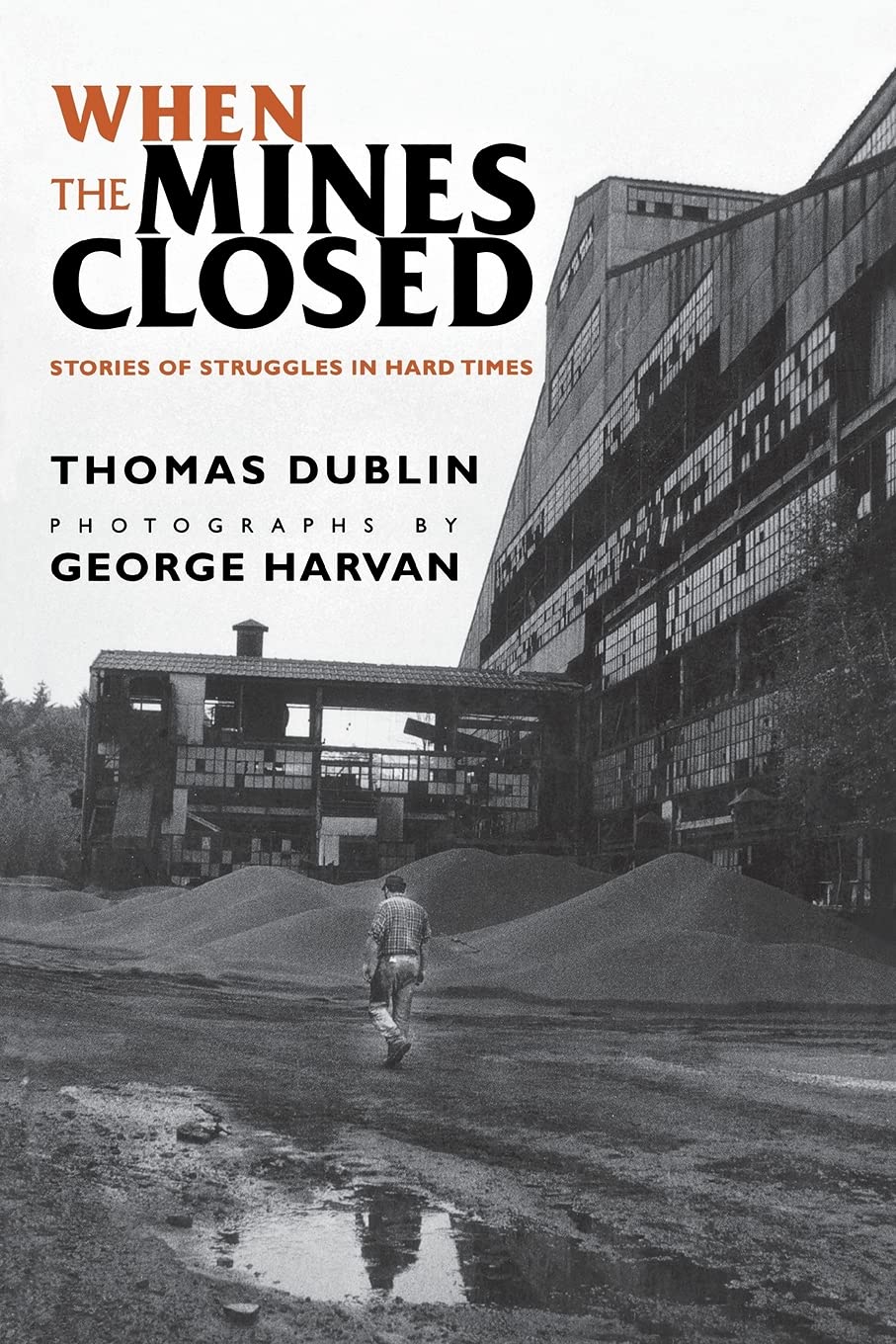



The anthracite region of northeastern Pennsylvania, five hundred square miles of rugged hills stretching between Tower City and Carbondale, harbored coal deposits that once heated virtually all the homes and businesses in Eastern cities. At its peak during World War I, the coal industry here employed 170,000 miners, and supported almost 1,000,000 people. Today, with coal workers numbering 1,500, only 5,000 people depend on the industry for their livelihood. Between these two points in time lies a story of industrial decline, of working people facing incremental and cataclysmic changes in their world. When the Mines Closed tells this story in the words of men and women who experienced these dramatic changes and in more than eighty photographs of these individuals, their families, and the larger community. Award-winning historian Thomas Dublin interviewed a cross-section of residents and migrants from the region, who gave their own accounts of their work and family lives before and after the mines closed. Most of the narrators, six men and seven women, came of age during the Great Depression and entered area mines or, in the case of the women, garment factories, in their teens. They describe the difficult choices they faced, and the long-standing ethnic, working-class values and traditions they drew upon, when after World War II the mines began to shut down. Some left the region, others commuted to work at a distance, still others struggled to find employment locally. The photographs taken by George Harvan, a lifelong resident of the area and the son of a Slovak-born coal miner, document residents' lives over the course of fifty years. Dublin's introductory essay offers a brief history of anthracite mining and the region and establishes a broader interpretive framework for the narratives and photographs. Dublin (history, SUNY at Binghamton) is the author of a number of labor history titles, including Women at Work (1979). He focuses here on the coal mine closings in northeastern Pennsylvania, using oral history to "reconstruct how relatively ordinary residents in the region experienced economic decline." From 90 interviews, he selected 12 for this book. Dublin provides background on mining in the region, and he has done an excellent job of editing the interviews to bring these voices alive. While the miners and their wives have led hard lives, one is left with an impression of their great pride in work done well. The photographs by Harvan, a lifelong resident of the area, nicely complement the narratives. Highly recommended for labor history collections.?Linda L. McEwan, Elgin Community Coll., IL Copyright 1998 Reed Business Information, Inc. "A poignant and powerful testimonial in words and photographs to a vanished way of life."--Cathy N. Davidson, author with photographer Bill Bamberger of Closing: The Life and Death of an American Factory "An important contribution to the history of the coal industry and its economic and social impact. . . . Dublin's oral history is culled from 90 interviews that considered what it was like and what it meant to work in the anthracite mines of eastern Pennsylvania's Panther Valley and what life was like in a mining community. At their peak, the mines in this region employed nearly 175,000 workers, mostly immigrants; by the time Dublin began his interviews, only 1,400 persons were left working in these mines. Six men and women tell how they toiled in the mines or else how they struggled to help their families survive. Their moving stories are enhanced by a collection of nearly 100 photographs."--Booklist "An important title on social change."--Midwest Book Review "History professor Dublin's look at the anthracite coal region of northeastern Pennsylvania addresses important questions, not just for the beleaguered mining industry, but for American labor in general. By focusing on a largely unschooled, working-class population of former coal miners and their wives, he chronicles how people adapt to economic upheaval. . . . Framed by Dublin's excellent introduction, the book is made up of oral histories."--Publishers Weekly "One of Thomas Dublin's most striking qualities is his commitment to uncovering every possible shred of evidence in his pursuit of historical 'truth.' Another is the grace and clarity of his prose."--Jacquelyn Dowd Hall, University of North Carolina, Chapel Hill "The interviews are at times disjointed, yet the overall impact, augmented by photographs, is considerable. Recommended for undergraduates and above."--Choice "Thomas Dublin's When the Mines Closed, takes the reader inside the lives of several families within three mining communities of south-east Pennsylvania. . . This book provides much needed voices to the struggle of coal-mining families, and the economic and social fall-out of the coal industry's downsizing, mechanization and inability to provide job security for hardworking families and their communities . . . offers evidence of the often