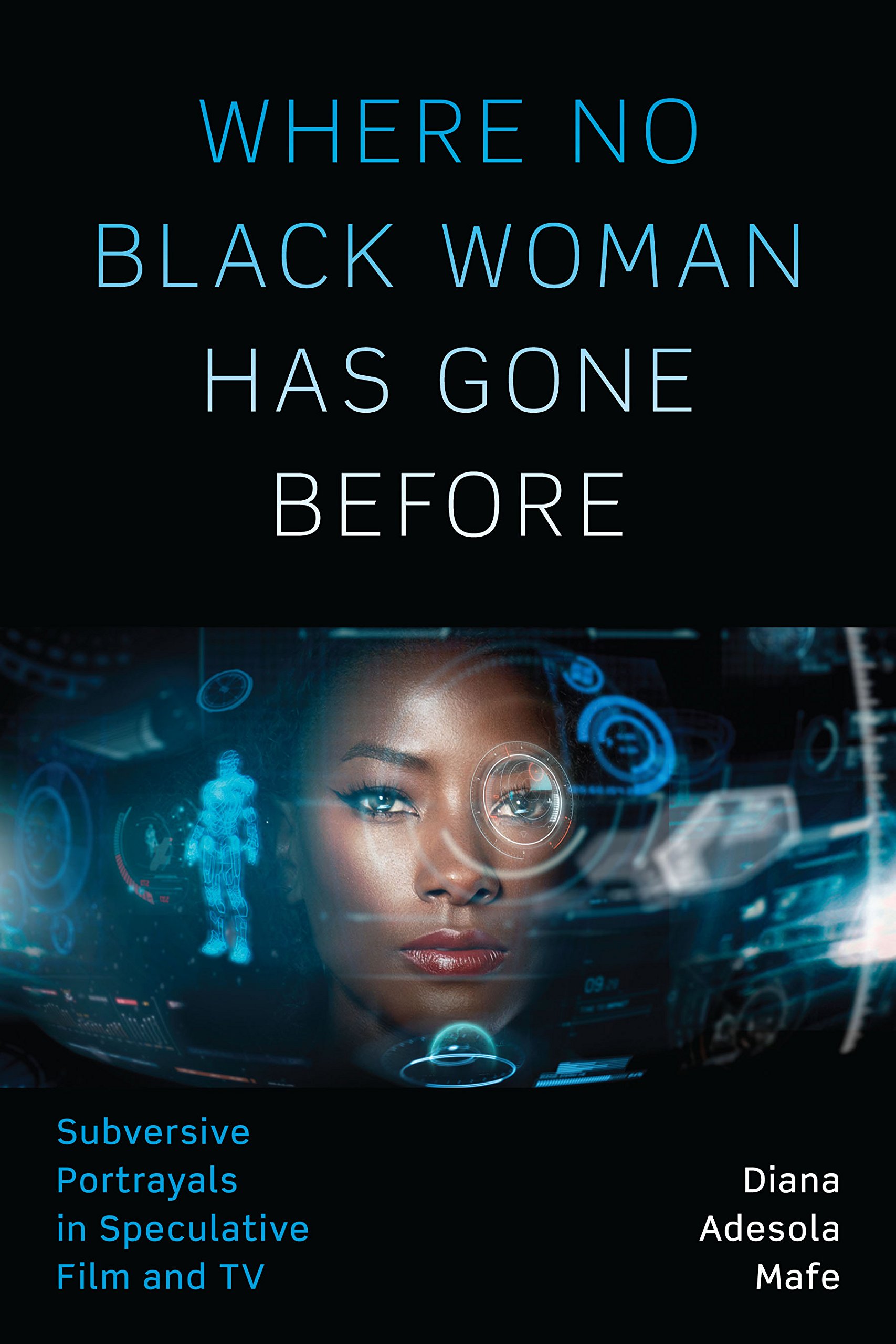
Where No Black Woman Has Gone Before: Subversive Portrayals in Speculative Film and TV
$27.95
by Diana Adesola Mafe



When Lieutenant Uhura took her place on the bridge of the Starship Enterprise on Star Trek , the actress Nichelle Nichols went where no African American woman had ever gone before. Yet several decades passed before many other black women began playing significant roles in speculative (i.e., science fiction, fantasy, and horror) film and television—a troubling omission, given that these genres offer significant opportunities for reinventing social constructs such as race, gender, and class. Challenging cinema’s history of stereotyping or erasing black women on-screen, Where No Black Woman Has Gone Before showcases twenty-first-century examples that portray them as central figures of action and agency. Writing for fans as well as scholars, Diana Adesola Mafe looks at representations of black womanhood and girlhood in American and British speculative film and television, including 28 Days Later , AVP: Alien vs. Predator , Children of Men , Beasts of the Southern Wild , Firefly , and Doctor Who: Series 3 . Each of these has a subversive black female character in its main cast, and Mafe draws on critical race, postcolonial, and gender theories to explore each film and show, placing the black female characters at the center of the analysis and demonstrating their agency. The first full study of black female characters in speculative film and television, Where No Black Woman Has Gone Before shows why heroines such as Lex in AVP and Zoë in Firefly are inspiring a generation of fans, just as Uhura did. " Where No Black Woman Has Gone Before does not pretend to be a comprehensive account of black women in speculative film and television, as Mafe makes clear, but it is the first book-length study of black femininity in this area...By attending to the visual and linguistic coding of black and female characters, Mafe exposes biases less explicit than plain exclusion. " ( Times Literary Supplement 2018-08-17) " Where No Black Woman Has Gone Before initiates a dialogue about black women in speculative film and television...a compelling contribution to the scholarship on speculative cinema and television, and will serve well scholars, students, and teachers in the field." ( Journal of American Culture 2018-09-01) "Mafe's coda strikes a good balance between reflection and optimism while pointing to possible future directions black women in television and film may go. Mafe's goal of bringing light to subversive portrayals in speculative film and television is laudable and well executed." ( Popular Culture Studies Journal 2018-10-01) "Mafe unveils the tremendous contributions black women have made in the genre of speculative fiction in visual culture. She skillfully blends excitement for the subject matter with intellectual rigor. The close readings of each visual text are intellectually stellar, and speak to Mafe’s respect for the audience." (Kwakiutl L. Dreher, University of Nebraska–Lincoln, author of Dancing on the White Page: Black Women Entertainers Writing Autobiography) "A fresh and much-needed examination of the representation of black women in the speculative tradition in film. Very exciting." (Esther L. Jones, Clark University, author of Medicine and Ethics in Black Women’s Speculative Fiction) Where No Black Woman Has Gone Before does not pretend to be a comprehensive account of black women in speculative film and television, as Mafe makes clear, but it is the first book-length study of black femininity in this area...By attending to the visual and linguistic coding of black and female characters, Mafe exposes biases less explicit than plain exclusion. ― Times Literary Supplement Published On: 2018-08-17 Where No Black Woman Has Gone Before initiates a dialogue about black women in speculative film and television...a compelling contribution to the scholarship on speculative cinema and television, and will serve well scholars, students, and teachers in the field. ― Journal of American Culture Published On: 2018-09-01 Mafe's coda strikes a good balance between reflection and optimism while pointing to possible future directions black women in television and film may go. Mafe's goal of bringing light to subversive portrayals in speculative film and television is laudable and well executed. ― Popular Culture Studies Journal Published On: 2018-10-01 Where No Black Woman Has Gone Before makes a genuine contribution as a pioneering effort in the study of race and gender in sf film and television. ― Science Fiction Studies Published On: 2019-11-01 Where No Black Woman Has Gone Before is concise and accessible with five well-written and theorized chapters…Mafe's narrow focus on representations of black women in non 'obvious block buster films' and in supporting roles raises insightful and useful points about the difference between superficial dismissible black female characters versus complex well-rounded black female characters...Mafe's arguments are sound and her reading of the