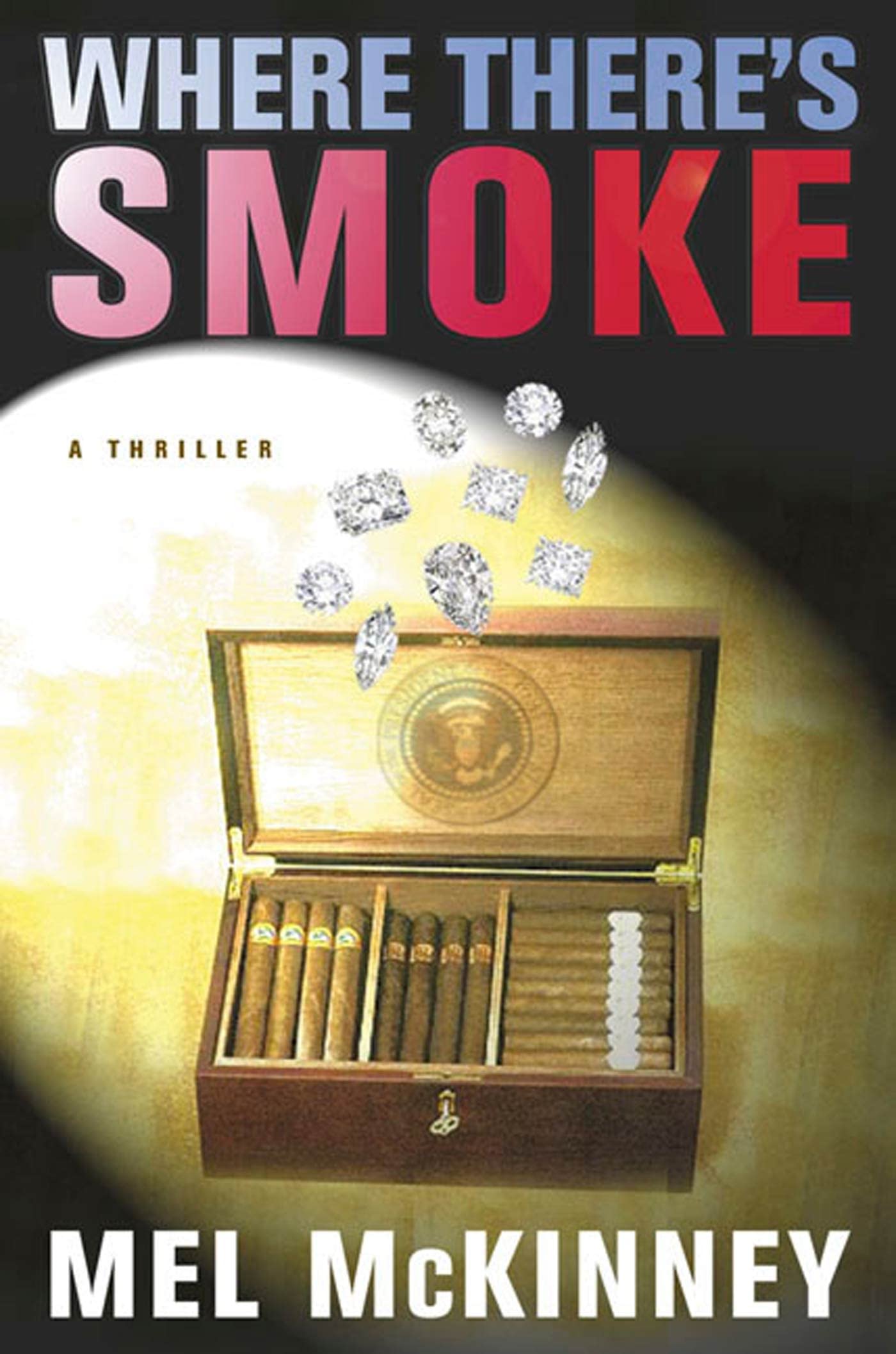



A lovesick expatriate Cuban, an unscrupulous Southern capitalist, and a sanitized Mafia heir scratching a mid-life itch come together in this barbed tale centered around a cache of Cuban cigars secured for JFK just before he tightened the embargo in 1963. Although McKinney begins with an interesting premise, his first novel soon devolves into a typical tale of trickery and deception, with an inordinate number of esoteric cigar references thrown in. The story begins in mid-1963 and centers on 1000 Cuban cigars that JFK has ordered for his personal collection shortly before placing an embargo on all things Cuban. When the cigars are stolen, a complicated tale of multigenerational revenge unfolds, taking the reader from Cuba to Miami to Hyannisport and somehow attaching the theft of said cigars to Kennedy's eventual assassination. While McKinney shows a deft touch in writing about family relationships, the story often seems disorganized, and he too often allows cigars to move from a complementary role in the tale to one of prominence. Overall, this is a rather disappointing effort, especially since the story shows promise in its early stages. Recommended only for large general fiction collections.ACraig L. Shufelt, Lane P.L., Hamilton, OH Copyright 1999 Reed Business Information, Inc. Just when you think you've heard every possible conspiracy theory, here's a nifty little mystery that presents a new version of the events surrounding the assassination of JFK. McKinney, a former trial attorney, begins with a single historical fact--just before clamping down the trade embargo against Cuba, JFK stocked up on Cuban cigars--and builds a surprisingly plausible story around it. It's a lighthearted tale, reminiscent of Donald E. Westlake (though not quite so obviously a spoof), with a large cast of crooked politicians, cops, Mafia henchmen, and other assorted ne'er-do-wells chasing a handful of particularly valuable cigars. The book's conspiracy theory is definitely not meant to be taken too seriously--one of the characters claims responsibility for JFK's assassination, but he might be lying--but it is, as conspiracy theories go, simple and surprisingly believable. Collectors of JFK lore will no doubt want to add this clever mystery to their collections. David Pitt Newcomer McKinney embroiders a gossamer criminal fantasy on a single historical fact: President Kennedy's purchase of 1,100 Cuban cigars the night before he ordered the embargo of Cuba in July 1963. What ever became of those cigars when the president was assassinated four months later? McKinney's giddy but logical premise is that they were stolen to sell to political kingmaker Cornelius Gessleman, who agreed to pay Raul Salazar $20,000 to create a diversion that would allow his team to break into Kennedy's Cape Cod complex. Gessleman's horrified when he hears Salazar talk blandly of how the ``diversion'' his men settled on in Dallas drove up the price of the theft because, accustomed to dealing with toadies and fools like his son-in-law, Rep. Wesley Cameron (R-Fla.), he doesn't recognize a bluff when he hears one. Nor is he capable of seeing that Salazar, having extracted a whopping premium for the cigars Gessleman had coveted, is planning to swindle him out of thempartly because Salazar, driven out of Cuba years ago by his tobacco-growing father's silent partners, the Bonafaccio family, has continued to regard the cigars as his own; partly because an unexpected twist has suddenly made them much more valuable; and partly because Salazar, who gradually emerges as the novel's hero, gets an energizing joy from scamming his enemies. Since those enemies, from petty Gessleman to brutal mob scion Joseph Bonafaccio, Jr., keep coming back for more, and since even the most minor functionaries, from the thugs Salazar sent to boost the cigars to the Yankee constable on their trail, are working their own angles, McKinney is able to keep his pot merrily bubbling long after you've lost track of who's double-crossing whom. The wildly far-fetched plot has its own internal logic, sharpened at every possible moment by the pungent aroma of fine cigars. -- Copyright ©1999, Kirkus Associates, LP. All rights reserved. MEL McKINNEY is a retired trial lawyer who has published a number of articles and essays. This is his first novel. He lives with his family on California's Mendocino Coast.