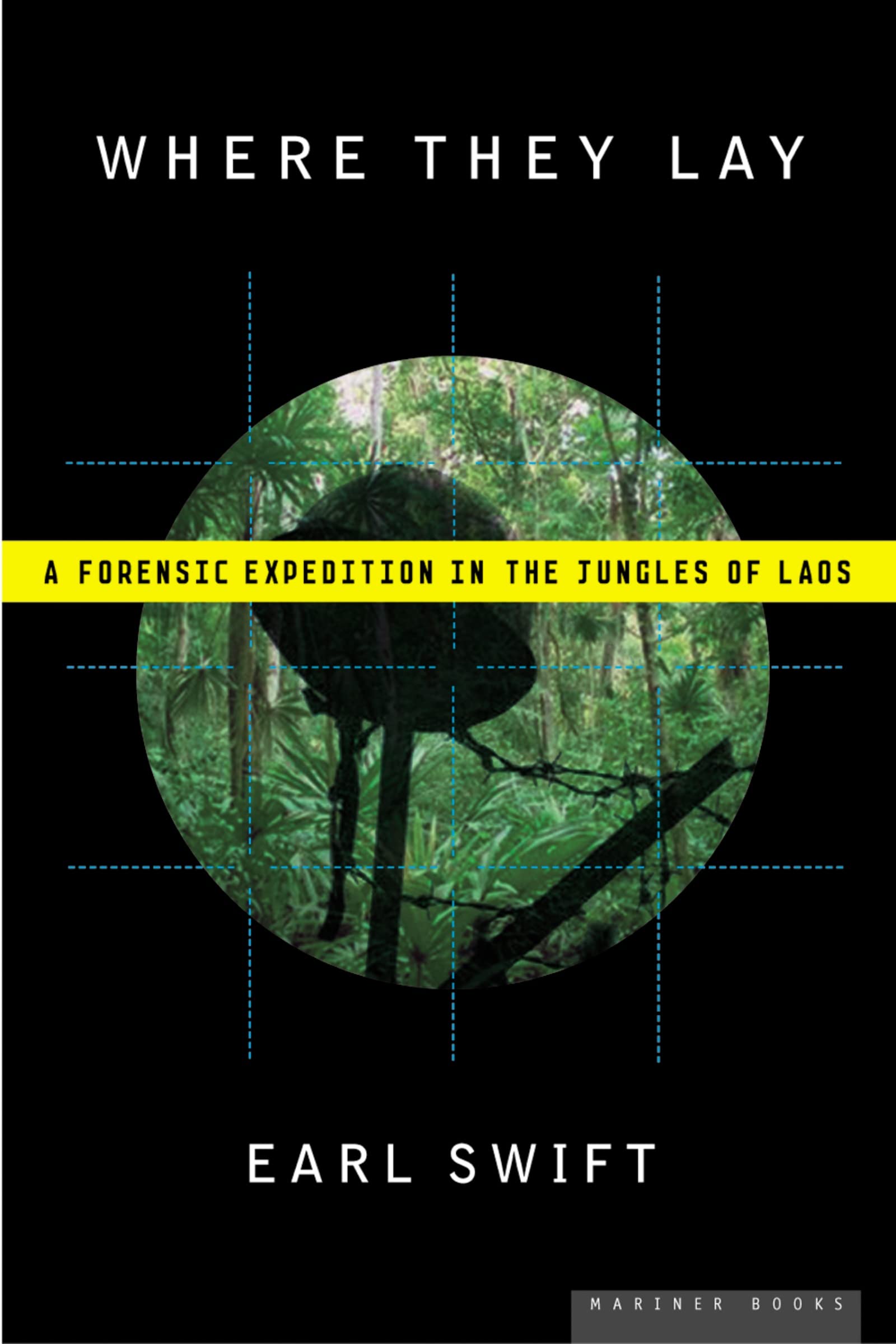
Where They Lay: A Forensic Expedition in the Jungles of Laos – History's Largest Helicopter Battle and the Mission to Recover Fallen Soldiers
$15.19
by Earl Swift



Where They Lay melds an account of an elite military team's high-tech, high-risk search for a Vietnam War pilot's remains with a remarkably immediate and poignant retelling of his final intense hours. In far-flung rain forests and its futuristic lab near Pearl Harbor, the Central Identification Laboratory (CILHI) strives to recover and identify the bodies of fighting men who never came home from America’s wars. Its mission combines old-fashioned bushwhacking and detective work with the latest in forensic technology. Earl Swift accompanies a CILHI team into the Laotian jungle on a search for the remains of Major Jack Barker and his three-man crew, whose chopper went down in a fireball more than thirty years ago. He interweaves the story of the recovery team's work with a tense account of Barker's fatal attempt to rescue trapped soldiers during the largest helicopter assault in history. Swift is the first reporter ever allowed to follow a recovery mission, as these unique archaeological digs are called, in its entirety, and he got his hands dirty, combing the jungle floor for clues amid vipers, monsoons, and unexploded bombs. Where They Lay resounds with admiration for those who fell and those who seek them. But Swift also raises hard questions about these recovery missions. Is it worth $100 million a year to try to bring home the lost from old wars? Is it worth the lives of today's soldiers? (Seven Americans died in the line of duty just months before Swift went in country.) And is the effort compromised by the corruption among native officials overseeing missions in their countries? As new conflicts draw our attention, Where They Lay throws brilliant light on war's cost to soldiers and to those they leave at home. "Solidly detailed amalgam of military history and contemporary archeology....An unusual tale of war and remembrance." Kirkus Reviews "This solid and informative study by a seasoned military journalist offers the first full-scale account of the work of the Central Identification Laboratory." Publishers Weekly EARL SWIFT is the author of three previous books, including Where They Lay , a 2003 PEN finalist. He lives in Virginia with his daughter Saylor. Where They Lay Searching for America's Lost Soldiers By Earl Swift Mariner Books Copyright © 2005 Earl Swift All right reserved. ISBN: 9780618562428 Excerpt 1 Their buddies called it suicide, and maybe it was. They climbed aboard the Huey knowing the enemy expected them. They did it knowing their guns were no match for the cannons that waited. They knew they"d be lucky beyond hope to get past them, and luckier still to get back. They climbed aboard the Huey just the same. Time was short. Just over the border, their allies were surrounded and outnumbered and taking heavy fire. They depended on the four aboard the helicopter to get them out. So on a Saturday in March 1971, the Huey skimmed over the mountains into the wide, wild valley beyond, following a rutted, two-lane highway into Laos. The country below was a tangle of splintered hardwoods and sheared bamboo, the jungle"s floor laid bare in wounds that stood fresh and red against the green. Off to starboard, a chain of low hills marked the northern edge of the Xepon River"s flood plain. Looming ahead was its southern boundary, an escarpment a thousand feet high that showed its bones in cliffs streaked pink and gray. Worn into the rock was a notch a kilometer wide. In it was the pickup zone. The flak started miles out. The Huey"s pilots slalomed the bird among arcing yellow tracers and blooms of brown smoke as it dropped toward the target. Its gunners opened fire with their M-60s, sweeping the trees on the helicopter"s final approach. The reply was overwhelming: Bullets raked the chopper"s thin metal skin, whistled into the cabin, tore into man and machine. Then came something worse — a blur, rising from the trees, a telltale plume — and a flash. Fire swallowed the Huey. It hit the ground in pieces. Other choppers circled low over the burning wreckage, crews marking the spot on their charts. None landed. North Vietnamese soldiers swarmed the bamboo thickets and forest around the smashed chopper, too many to risk a recovery mission. America was forced to leave the Huey, and the four, where they lay. Which is what brings me, on a gray summer morning thirty years later, to a vibrating seat in the cabin of a Russian-builtMi-17 helicopter. And why its course takes me from a former American air base beside the Mekong River into the same valley, toward the same rampart of cliffs, in the battered highlands along the Vietnam-Laos border. Somewhere down there is what"s left of Jack Barker, John Dugan, Billy Dillender, and John Chubb. For two generations their remains have lain in a remote corner of this remote land, as bamboo and hardwood saplings erupted into new jungle around them, as monsoon rains scoured the red-clay earth and swoon