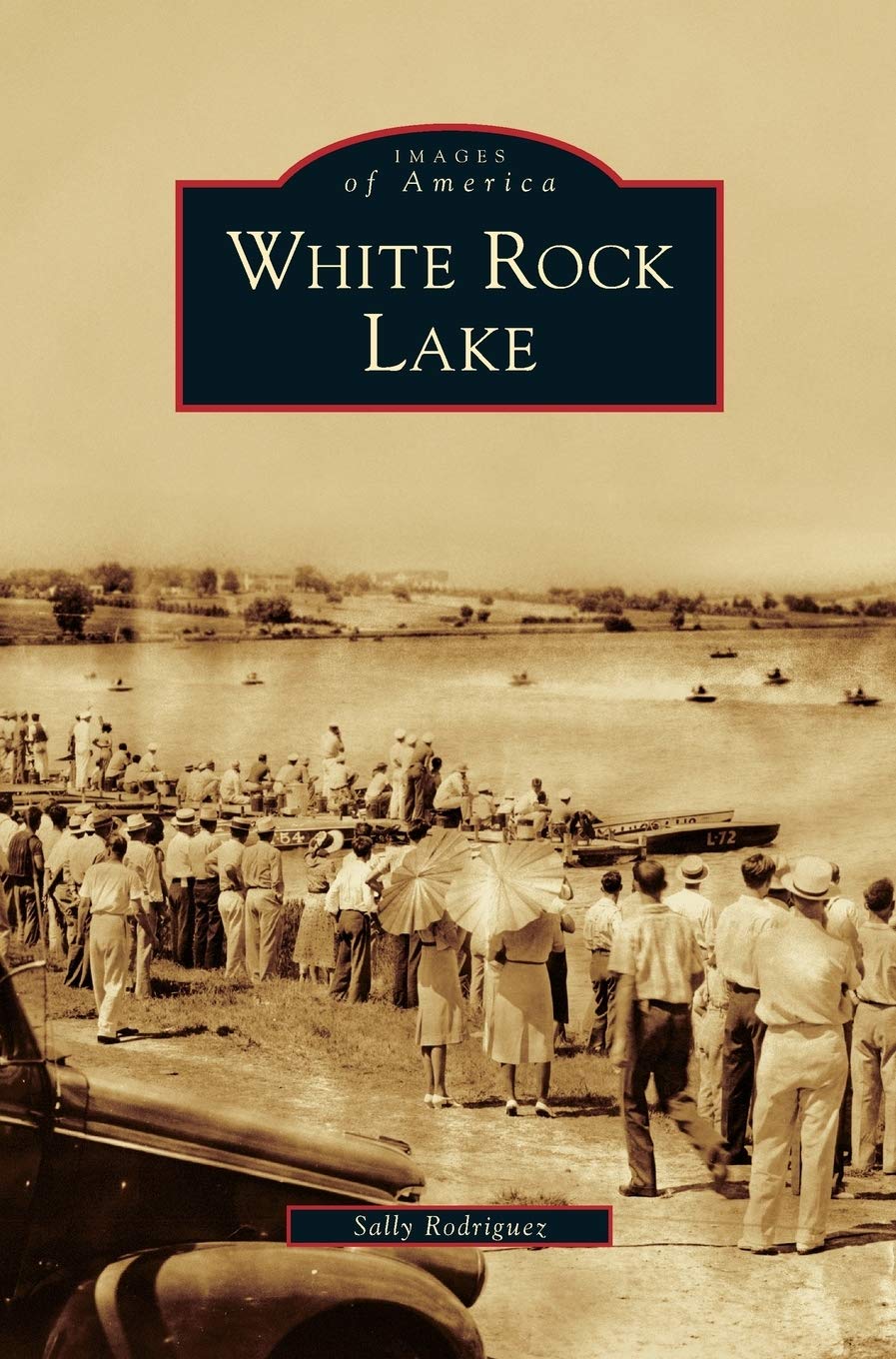



In 1909, Dallas city leaders approved the damming of White Rock Creek to create a new water source for the increasing needs of a growing city. As a result, so much of the life and history of Dallas has echoed through the life and history of White Rock Lake. In the early decades, the lake was home to many private summer homes and boat houses, as well as hunting and fishing clubs. Soon thereafter, a bathing beach, sailing clubs, public boathouses, and picnic facilities were added. The Civilian Conservation Corps and the Works Progress Administration transformed the lake with more recreational and leisure amenities. World War II brought increased military uses that included a POW camp for German officers. Those early city leaders could hardly know that the lake they were creating 10 miles outside of Dallas would become an urban oasis enjoyed by over two million visitors a year. Title: Beloved Puddle Author: Staff Writer Publisher: D Magazine Date: February 2010 It's only about 15 feet deep. It's no Lake Michigan. But we cherish our humble urban oasis. A new book celebrates 100 years of White Rock Lake. In 1909, city leaders realized they needed a water source for dallas' growing population. They honed in on White Rock Creek. Two years later, a little creek 10 miles east of Dallas was primped and primed and ready to become a lake. But a drought would cause a three-year gap between the completion of the dam and the filling of the lake. On April 14, 1914, White Rock Lake became official with a total of 42 inches of water over the spillway. The lake continues to be a wellspring of entertainment and an escape for Dallas residents. Images of America, White Rock Lake, by Sally Rodriguez, out this month, chronicles the creation and growth of our urban oasis. All images are reprinted with permission from the publisher. The book is available online at arcadiapublishing.com or by calling 888-313-2665. Title: Booking History Author: Staff Writer Publisher: Lake Highlands Date: 2/3/2010 Sally Rodriguez knows a thing or two about White Rock Lake and its history. The Dallas Park and Recreation Department project coordinator and unofficial historian collected her knowledge and put it in a book, titled "White Rock Lake," which came out Feb. 1. The publisher -- Arcadia Publishing out of South Carolina, which publishes books on local histories -- contacted Rodriguez based on the depth of her historical knowledge of the lake, its creation, and the various roles it's played in Dallas and U.S. history. Rodriguez, a Lake Highlands resident, began amassing information about the lake in 2001 when the park department was in the throes of its Renaissance Plan, and she worked with historical architects on renovations to some of the city's older landmarks. She later was contacted by the Texas Parks and Wildlife Department for its efforts to conduct a reunion at White Rock of surviving members of the Civilian Conservation Corps, a public works and relief project under a New Deal recovery act after the Great Depression. "When I started at City Hall, I just started looking in closets and found all these historical documents," Rodriguez said. "Most of the information and photos are in the municipal archives." The new book relies heavily on a pictorial history of the lake. She collected more than 200 images that now adorn the pages of the book. She chronicles its genesis as a city water source under control of the Dallas Water Department and its use as a major development site for CCC workers. When World War II broke out the CCC force moved to the military, and its barracks at White Rock became housing for soldiers with sexually transmitted diseases, Rodriguez said. It then converted to a military ferry depot before its stint as a prisoner of war camp for captured Nazi soldiers. The lake later became a recreational site for the region, and Rodriquez said she was surprised to learn of some of the activities. "I think I was most surprised at finding out about the speedboat races. I grew up around here and went to the submarine races," she said with a laugh. The book also contains information about the Pea Patch, which operated as a city jail once located on the west side of the lake until 1935. It includes details of the escalating use of filtration measures to clean the drinking water for Dallas residents and, after it became a public recreational site, to chlorinate the water for swimmers. "The city staff would go out in boats and dump chlorine in the swimming area outside the Bath House before they started pumping it in from the Bath House," Rodriquez said. The book, $21.99, is available at Barnes & Noble, Borders Books, and the Dallas Arboretum gift shop as well as the Arcadia Web site and Amazon.com. Rodriguez has three signings set starting with 11 a.m.-2 p.m., Feb. 13, at Dixie House; followed by 1-3 p.m., Feb. 20, at the Borders Greenville Avenue-Lovers Lane location; and 11 a.m.-1 p.m., March