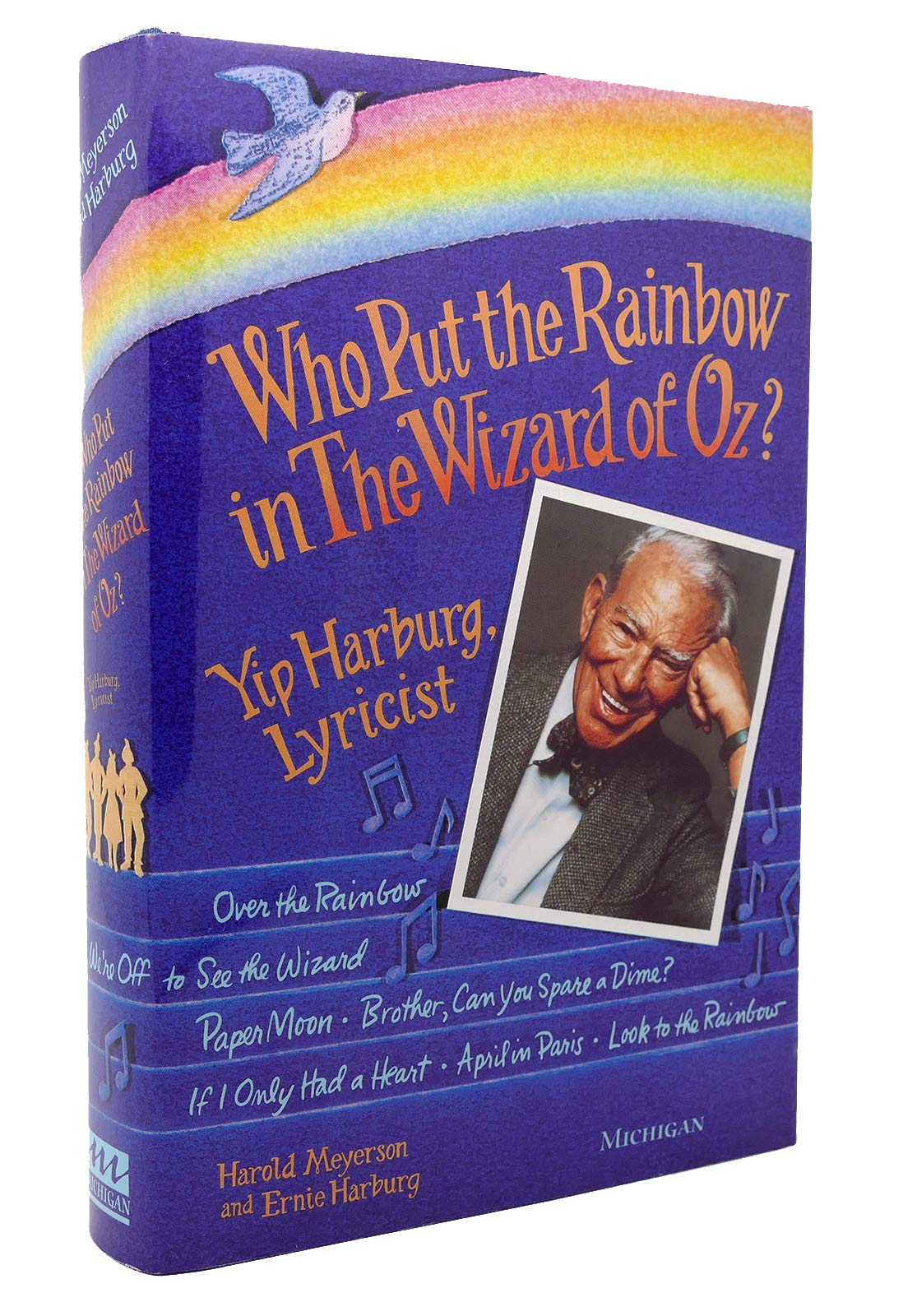



". . . required reading for anyone interested in the great American songs." -New York Times Book Review Many of us can sing along with Dorothy when she imagines a place "Over the Rainbow." And we all remember the Depression-era classic "Brother, Can You Spare a Dime?" But very few can name the man who put the words to these celebrated hallmarks of American music- Yip Harburg. Five hundred songs spanning a fifty-year career bear witness to the brilliance of this until-now obscure figure. Plunge into this scrupulously documented volume and discover how Harburg, once a poet of light verse, played a major role in the transformation of the Broadway revue into the sophisticated musical of the 1940s and 1950s. With extensive and exclusive interviews and lyrical analysis, the authors capture Harburg's wit, distinctive voice, and creative and collaborative methods. Inquiry into Harburg's Jewish, New York City roots, apprenticeship in his craft, and involvement in the radical politics of the 1930s- he was blacklisted in the 1950s- puts into context the seemingly irreconcilable skepticism and optimism that contoured this lyrical genius's life and work. Harold Meyerson is Executive Editor and chief political columnist, L.A. Weekly , and is on the editorial board of Dissent . Ernie Harburg is a social psychologist and epidemiologist at the University of Michigan, coauthor (with Bernard Rosenberg) of The Broadway Musical: Collaboration in Commerce and Art , and Yip Harburg's son. From his Russian-Jewish, New York City roots through his prolific working years as lyricist for such successes as the film The Wizard of Oz and Broadway's Bloomer Girl and Finian's Rainbow, E. Y. ("Yip") Harburg seemed ready for anything but the McCarthyism that blacklisted him in the 1950s for his associations with certain groups and his avowal of "democratic socialist" ideals. Illustrated with lyrics from his entire output, this admiring title adds to the literature on the history of the Broadway musical the perspective of an accomplished wordsmith who collaborated with major composers like Harold Arlen, Burton Lane, Vernon Duke, and Jerome Kern but whose own name has been less well remembered. A worthwhile addition for large musical theater collections. - Bonnie Jo Dopp, formerly with Dist. of Columbia P.L. Copyright 1993 Reed Business Information, Inc. "Brother, Can You Spare a Dime?," "Somewhere Over the Rainbow," "How Are Things in Glocca Morra?" and "April in Paris" are some of the most beloved songs of the American musical theater. Their lyricist, Yip Harburg, was, like so many of his peers, the son of Jewish immigrants, Russian in his case, who settled on the lower-east side of Manhattan. Inspired by the theater at an early age, he did not begin his career until he was in his thirties and had spent a stint managing the family business--an experience he detested. One of the songsmiths who changed the American musical from the revue format into a so-called book show in which song and dance became media for telling a dramatic story, Harburg's most famous collaborators were Harold Arlen, his partner in 111 efforts including The Wizard of Oz , and Barton Lane, with whom his most famous product was Finian's Rainbow . This biography benefits from the collaboration of Harburg's son Ernie; plenty of pictures; appendixes of Harburg's stage, film, and broadcast credits; a list of his song titles; and lots of quoted lyrics. Edward Lighthart Yip Haburg is the man who wrote the words to "Over the Rainbow" and that Depression era classic "Brother, Can You Spare a Dime?" Readers plunging into this scrupulously documented volume will discover how Yip Harburg, lyricist and poet of light verse, played a major role in the transformation of the Broadway revue into the sophisticated musical of the 1940s and 1950s. With extensive and exclusive interviews and lyrical analysis, the authors capture Harburg's wit, distinctive voice, and creative and collaborative methods. Inquiry into Harburg's Jewish, New York City roots, apprenticeship in his craft, and involvement in the radical politics of the 1930s (he was blacklisted in the 1950s) puts into context the seemingly irreconcilable skepticism and optimism that contoured this lyrical genius' life and work of over five hundred songs spanning a fifty-year career. -- Midwest Book Review