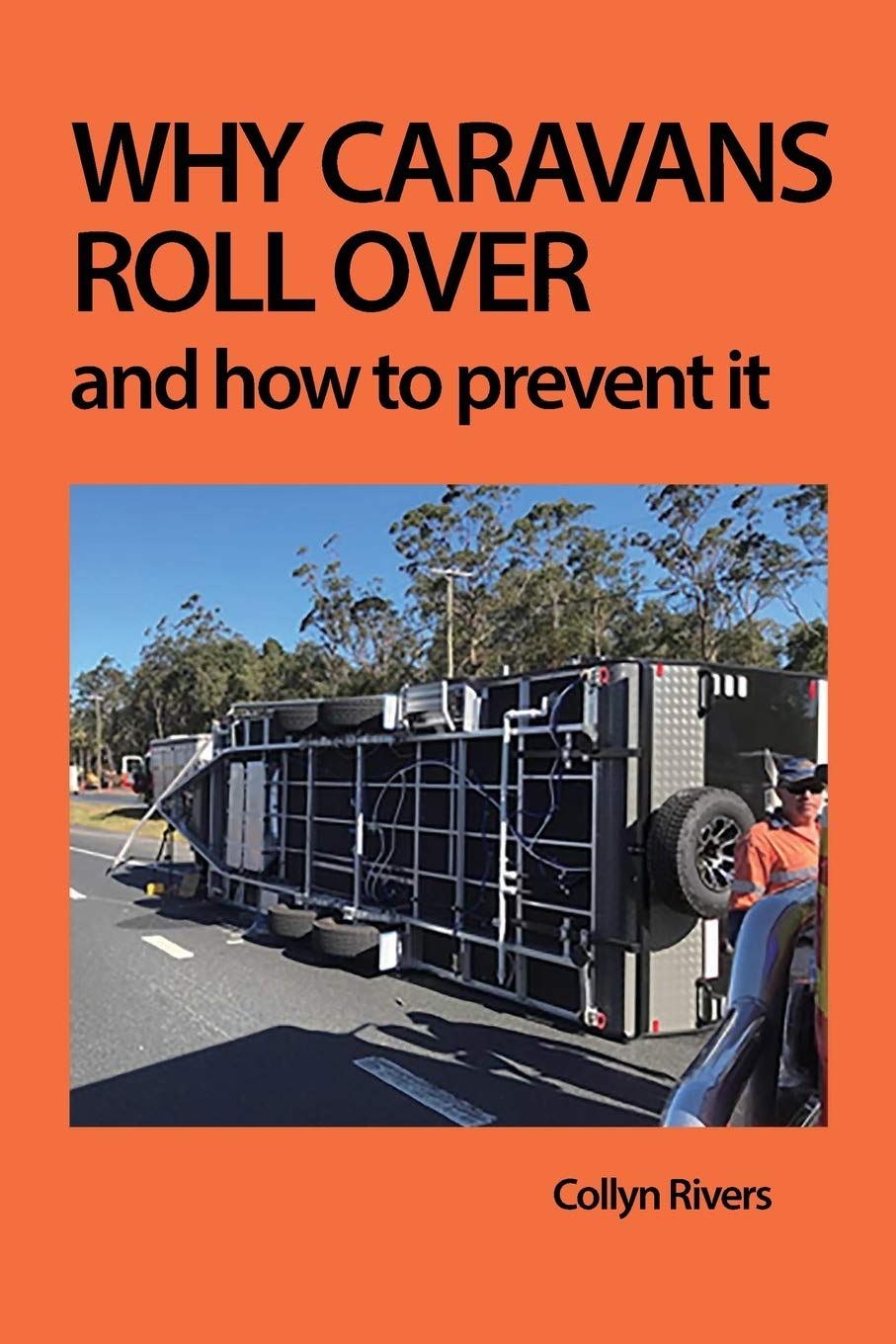



Caravans and their tow vehicles rarely jack-knife and roll over – but when they do the results are catastrophic. The cause, and how to prevent it, is explained here in plain English.The issue is not how your rig behaves in normal driving. It is what it will do in a strong emergency swerve, or hit by strong high side wind at speed.What happens is this. All motor vehicles are designed to automatically turn slightly away from disturbing forces. This also keeps them straight on cambered roads. This effect, called understeer, is totally vital for any vehicle towing a trailer via a tow hitch that is behind that tow vehicle’s rear axle.When a tow vehicle yaws (sways) hitch overhang causes the trailer to yaw in the opposite direction. This causes (not just permits) the tow vehicle to yaw in the opposite direction. Minimising that overhang assists but the issue is inherent. If that rig yaws strongly at speed that vital margin of understeer is lost. The rig is then all-but certain to jack-knife and likely overturn.Totally known and long understood causes of reduced understeer include overloading, incorrect tyre pressures, overly-corrected weight distributing hitches, too-heavy tow loads etc.Also important is the ratio of laden tow vehicle weight to laden trailer weight, and how that trailer is designed and laden. Tow ball mass too is vital – 10% of laden caravan weight is really needed and must stay reasonably constant. Overturning rarely has one single cause, but several minor ones that interact.Why Caravans Roll Over – and how to prevent it explains all in truly plain English. It even includes a simple way of assessing the likely stability of your own – and what you can do to make it very much safer. 'Should be compulsory reading for everyone involved with Caravan: Design / Engineering, Marketing, Journalism (print & electronic), Regulations, Inspections, Driver-Training, Caravan Clubs, Towing and Modifications.' - Colin Young , Founder and CEO, Caravan Council of Australia Caravans and their tow vehicles rarely jack-knife and role over - but when they do the results are catastrophic. This book identifies the cause, and shows how to prevent it....in plain English. Originally trained as an RAF ground radar engineer, Collyn Rivers spent a brief time with de Havilland designing power systems for guided missiles, before becoming a test engineer at the Vauxhall/Bedford Motors Research Test Centre. He migrated to Australia in 1963, where he designed and built scientific measuring equipment. In 1971, Collyn Rivers founded what, by 1976, became the world's largest-circulation electronics publication, Electronics Today International . From 1982 to 1990 he was technology editor of The Bulletin and also Australian Business magazines and in 1999 started two companies: Caravan and Motorhome Books, and Successful Solar Books (now RVBooks and SolarBooks). "Anyone who has been an electronics enthusiast over the past 30 years or so will be well aware of Collyn Rivers. He was the founding editor of " Electronics Today International " (ETI) magazine which went on to have a number of very successful editions in the UK and elsewhere, as well as being very successful in Australia." Silicon Chip Magazine