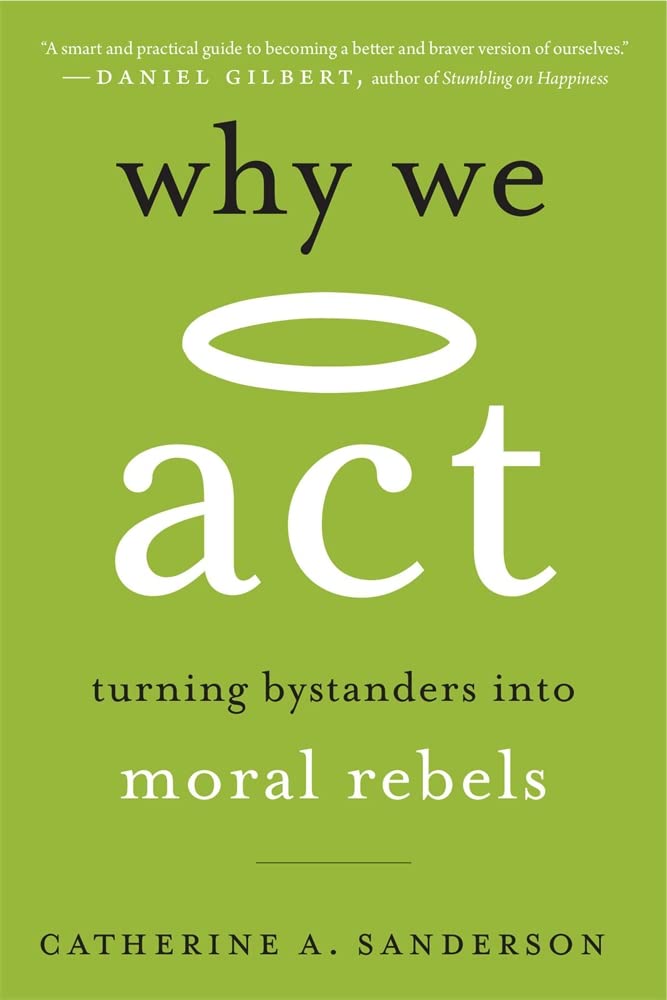



A Washington Post Book of the Year “Makes a powerful argument for building, as early as possible, the ability to stand up for what's right in the face of peer pressure, corrupt authority, and even family apathy.” ― Psychology Today Why do so few of us intervene when we’re needed―and what would it take to make us step up? We are bombarded every day by reports of bad behavior, from the school yard to the boardroom to the halls of Congress. It’s tempting to blame bad acts on bad people, but sometimes good people do bad things. A social psychologist who has done pioneering research on student behavior on college campuses, Catherine Sanderson points to many ways in which our faulty assumptions about what other people think can paralyze us. Moral courage, it turns out, is not innate. But you can train yourself to stand up for what you believe in, and even small acts can make a big difference. Inspiring and potentially life transforming, Why We Act reveals that while the urge to do nothing is deeply ingrained, even the most hesitant would-be bystander can learn to be a moral rebel. “From bullying on the playground to sexual harassment in the workplace, perfectly nice people often do perfectly awful things. But why? In this thoughtful and beautifully written book, Sanderson shows how basic principles of social psychology explain such behavior―and how they can be used to change it. A smart and practical guide to becoming a better and braver version of ourselves.” ―Daniel Gilbert, author of Stumbling on Happiness “Encouraged me to persevere through many moments when it felt far easier to stop trying.” ― Washington Post “Points to steps all of us can take to become ‘moral rebels’ whose voices can change society for the better.” ―Walter V. Robinson, former editor of the Boston Globe ’s Spotlight Team “Sanderson offers sound advice on how we can become better at doing what we know is right.” ―George Conway, cofounder of The Lincoln Project “From bullying on the playground to sexual harassment in the workplace, perfectly nice people often do perfectly awful things. But why? In this thoughtful and beautifully written book, Sanderson shows how basic principles of social psychology explain such behavior―and how they can be used to change it. A smart and practical guide to becoming a better and braver version of ourselves.” ― Daniel Gilbert, author of Stumbling on Happiness “Makes a powerful argument for building, as early as possible, the ability to stand up for what's right in the face of peer pressure, corrupt authority, and even family apathy. Citing case after case revealing how easy it is for people’s moral instincts to be muted, and detailing how that silence is visible on brain scans, Sanderson guides readers toward her inevitable conclusion: We can do better, we know how, and the tipping point to convert a virtue-challenged culture into a virtuous one is closer than we think.” ― Psychology Today “Catherine Sanderson, like no other psychologist, invades our minds. Her riveting storytelling challenges us to rethink why we avert our eyes to evil, tolerate bullying, and excuse unforgivable workplace behavior. She plumbs the depths of social norms that too often prevent good people from being good and points to steps all of us can take to become ‘moral rebels’ whose voices can change society for the better.” ― Walter V. Robinson, former editor of the Boston Globe ’s Spotlight Team “Sanderson’s discussion of the consequences of failing to exhibit moral courage felt ripped from 2020 headlines―all of them. It informed my thinking and conversations with everyone…It encouraged me to persevere through many moments when it felt far easier to stop trying.” ― Christy E. Lopez , Washington Post “Provides lessons from neuroscience to explain how some simple strategies can help us fight the pressure to conform and develop moral courage.” ― Notre Dame Deloitte Center for Ethical Leadership “Challenges readers to become moral rebels, foster empathy, and practice supporting others to do the same…The genius of Sanderson's text lies in offering a recognizable picture of moral compromise and an accessible account of steps to counteract it, a recipe for change that offers hope.” ― Choice “Much of what enables evil people to do evil things is that we stand idly by and let them. In this powerful, well-written book, Catherine Sanderson explains what psychology has taught us about why good people so often do nothing and offers wise suggestions that will enable more of us to step up and be ‘moral rebels’ when the situation calls for it. If you have ever regretted being silent (and who hasn’t?) this is the book for you.” ― Barry Schwartz, author of The Paradox of Choice “In an age of government misconduct, corporate malfeasance, and #MeToo, it’s tempting to believe that bad things happen because of bad actors. But as Catherine Sanderson compellingly illustrates, these events aren’t just due to ‘a few bad apples’