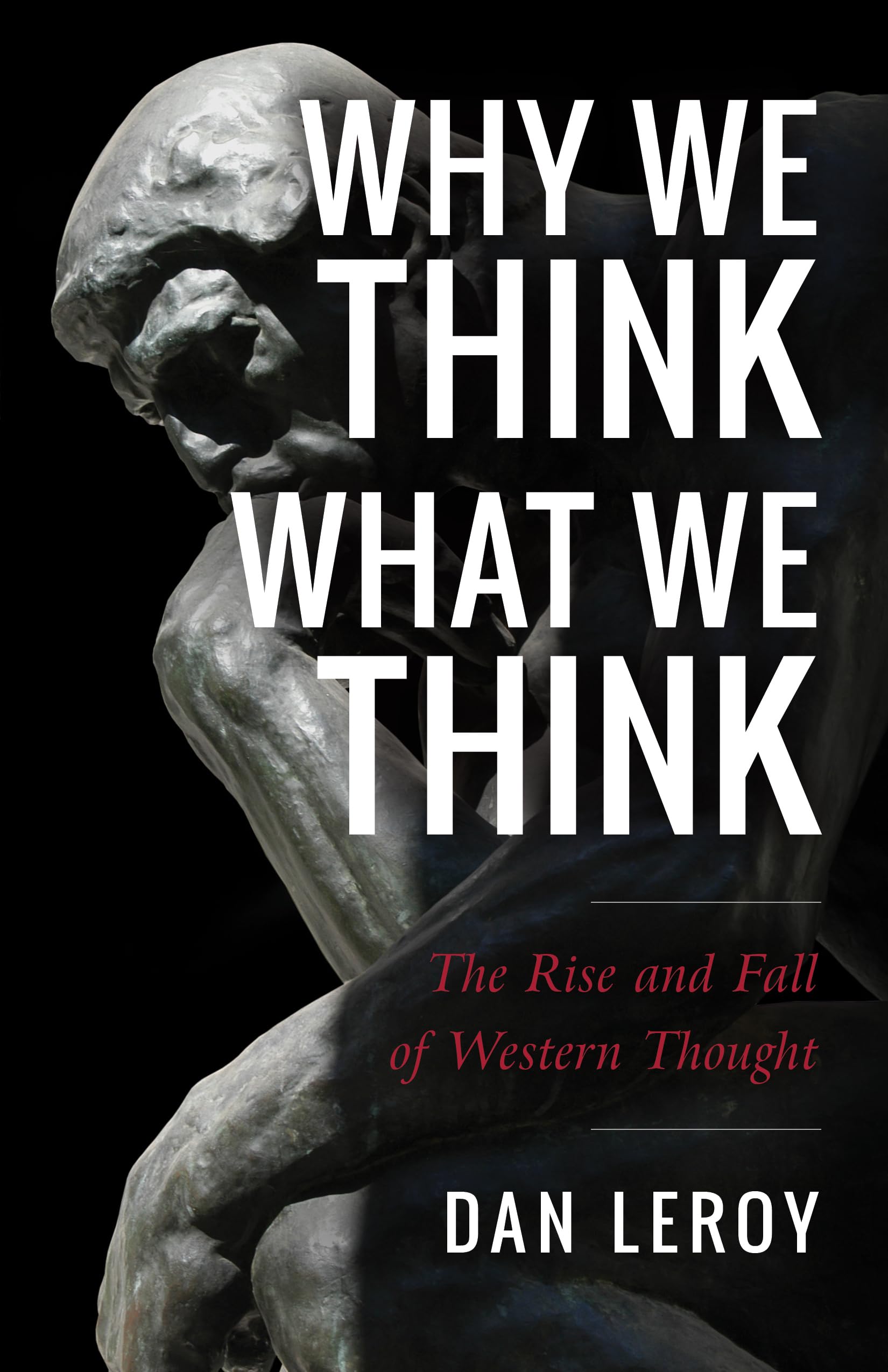



We’re all starting to hear people ask how the world has gotten to be the way it is. Grafted onto the usual complaints about why people are so greedy, self-absorbed, and callous toward one another are new expressions of frustration about even more fundamental concerns. Why can’t we agree on concepts that used to be basic common sense? Why does our very language now seem to be a minefield that only the most wily and tactical (or cynical) among us can navigate? The only way to understand fully how we have arrived at this state — and what, if anything, we might be able to do about it — is to embark on a journey back in time to see where we went off the rails. With candor and occasional humor, Dan LeRoy tells the sweeping story of Western thought from its beginnings to the present, revealing the souls and idiosyncrasies of its greatest thinkers. Through stirring vignettes, he tells the real story of how our customs and thought patterns developed and then relates it to our current moment of rupture. In pages that sometimes read like an Indiana Jones adventure, LeRoy explains the detour that philosophy took nearly a thousand years ago that has led Western society to its current, dire situation. With sharp pen and clear eye, he reveals: The roots of classical philosophy, including empiricism (Ready to wade into the water?) - How views on ethics and morality began to take shape even before Christ - The three ways to attain happiness, according to the Big Three philosophers - Four splinter groups and how their philosophies impact us today - The enduring teachings of Sts. Augustine and Aquinas, among many others You will find out about amazing discoveries during the early days of rationalism, from mathematical equations to intervals between music notes, and how this universal ratio applied to another scientific revelation. Along the way, you will see the relevance of famous (and infamous) beliefs, including the Realm of Forms, the Four Causes, and Pascal’s Wager as well as dualism, humanism, materialism, and pantheism. Additionally, you will learn about how these ideologies provided the basis for modern-day politics, education, and belief in the transcendent, and the bridge between ancient philosophy and Christianity. LeRoy unveils the ways in which the beliefs our society has largely abandoned still affect our everyday lives. Knowing why we think what we think is the only way to recover the ideas — many of them Christian in origin — that can help turn things around and restore belief in the Unmoved Mover. This is a philosophy book not just for philosophers but for all of us. "The temptation when we grow older is to believe that the world will end with us and to dwell on the way things were. But when we are young, it is hard to remember that history did not begin with us. In Why We Think What We Think , Dan LeRoy offers a tonic for both of those tendencies. Using a deep knowledge of the history of philosophy and an engaging writing style, LeRoy places our current debates in their proper context. This book is useful for anyone who wants to be a better citizen and a protector of what’s good in our civilization. In his entertaining, accessible style, LeRoy steers us safely past the competing dangers of unthinking traditionalism and a radicalism born of the ignorance of the past." Chris Stirewalt Author, Broken News: How the Media Rage Machine Divides America and How to Fight Back " Why We Think What We Think is an engaging, thoughtful, often funny exploration of the crisis of the modern world, which it sharply identifies as a crisis of epistemology. From Thales of Miletus to the present day, this book tracks Western man’s climb to the pinnacle of philosophical inquiry — and his tumble back down the slope. LeRoy probes his central questions with a refreshing mix of confidence and curiosity, making Why We Think What We Think a compelling and eminently readable first step for anyone seeking answers to the age-old questions." Declan Leary Senior Editor, The American Conservative Dan LeRoy is an author, journalist and teacher who has been the director of the Writing and Publishing Department at Lincoln Park Performing Arts Charter School in Midland, Pennsylvania, since 2006. His writing about music and politics has appeared in the New York Times, Rolling Stone, Newsweek, the Village Voice, Alternative Press, Esquire, and National Review Online . Why We Think What We Think; The Rise and Fall of Western Thought