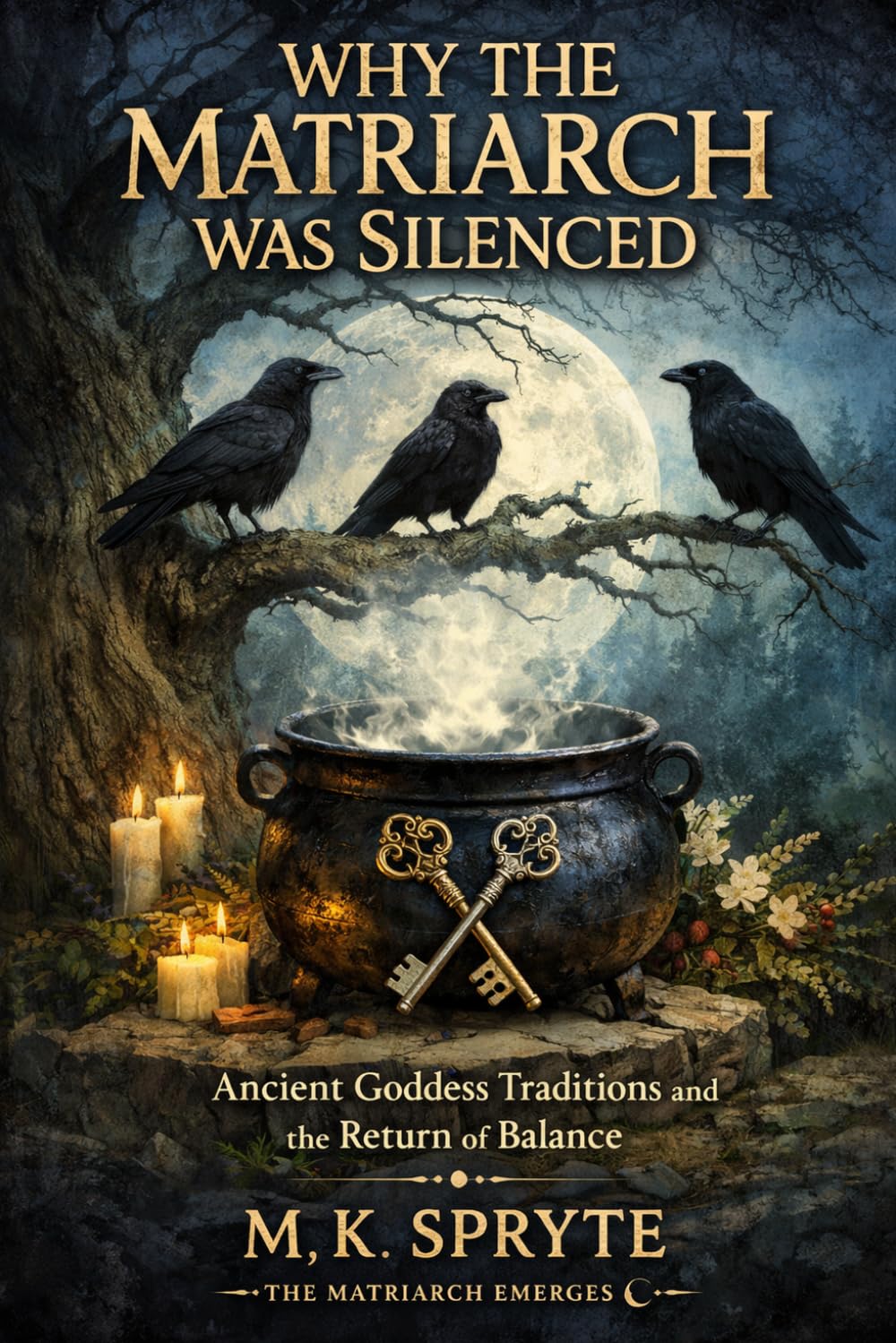
Why the Matriarch was Silenced: Ancient Goddess Traditions and the Return of Balance
$13.13
by M.k. Spryte



Why the Matriarch Was Silenced explores a powerful question about human history: What if the story we were taught about power, religion, and leadership is incomplete? For thousands of years many cultures honored the sacred feminine. Archaeological discoveries across Europe, Anatolia, and the ancient Near East reveal figurines, temples, and myths dedicated to powerful goddesses representing fertility, wisdom, and the cycles of nature. These traditions reflected societies that often valued cooperation, balance, and the rhythms of the earth. Over time, however, major changes reshaped the human world. As agricultural wealth accumulated, warfare increased and political hierarchies formed. Systems of patriarchal authority began to dominate social, economic, and religious life. Spiritual traditions centered on goddesses were gradually rewritten, suppressed, or absorbed into male-dominated belief systems. In Why the Matriarch Was Silenced, author M.K. Spryte examines this transformation through the lens of anthropology, history, and cultural research. Drawing on archaeological findings, historical records, and feminist scholarship, the book explores how ancient traditions honoring the feminine were pushed aside as patriarchal institutions consolidated power. The book examines: • Archaeological evidence of ancient goddess traditions • The spiritual role of women in early civilizations • How warfare, property ownership, and inheritance systems strengthened patriarchy • The persecution of midwives, healers, and wise women during the European witch hunts • The role of religious institutions in reinforcing male authority • The economic and psychological systems that continue to shape gender power today • The modern rediscovery of the divine feminine and movements seeking greater balance This book does not argue that history should reverse one hierarchy for another. Instead, it explores how humanity may benefit from restoring balance between masculine and feminine values, strength and compassion, leadership and cooperation, innovation and care. At a time when the world faces deep social and environmental challenges, many people are looking again at older traditions that emphasized harmony with the earth and respect for life. The voice of the Matriarch has never fully disappeared. It lives in forgotten histories, spiritual traditions, and the growing movement to reclaim women’s voices in shaping our collective future. Why the Matriarch Was Silenced invites readers to reconsider the past and imagine a more balanced future.