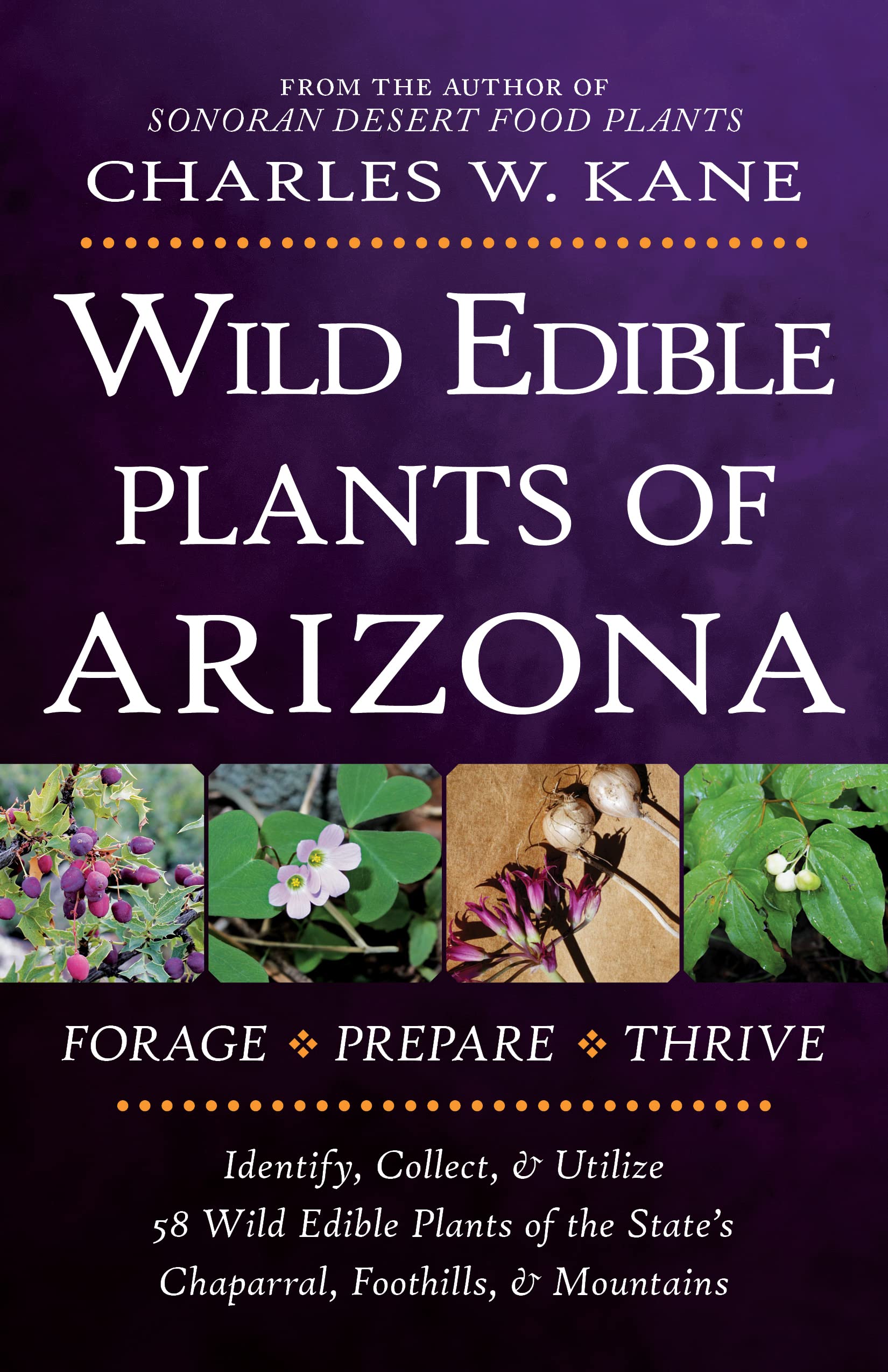



Serving up 58 calorically/nutritionally important wild edibles for the prepper, plant utilitarian, or curious hiker/camper, Wild Edible Plants of Arizona best fits the reader with a penchant for a handy and information-salient state-specific guide. A discussion of each plant's edible use and preparation is the booklet's primary aim, though space is also given to range and habitat, medicinal uses, cautions, and noteworthy special considerations. Helpful additions include sustenance ratings (low, medium, or high), collection timing and desired plant-part indicators, 58 Arizona-only county-location maps, over 160 color photos, and a 450-listing general index. Plant List: American Rocket, Anoda, Apache Red Grass, Arizona Dewberry, Beeplant, Biscuitroot, Black Cherry, Blackberry, Bracken Fern, Chinese Hat, Creeping Hollygrape, Currant, Dayflower, Elder, Emory Oak, Evening Primrose, Fairybells, False Virginia Creeper, Fendler's Sedge, Gooseberry, Greenthread, Hog Potato, Hollygrape, Indian Ricegrass, Jones' Beeplant, Madrone, Manzanita, Mexican Panicgrass, Mountain Parsley, Mullein, Nettle, New Mexico Raspberry, Ox-Eye Daisy, Pinyon Pine, Pinyon Ricegrass, Plantain, Raspberry, Redbud, Salsify, Salt Bush, Serviceberry, Sheep's Sorrel, Smartweed, Sorrel, Spectacle Fruit, Spotted Bean, Spiderwort, Springparsley, Tepary Bean, Thimbleberry, Tumbling Orache, Utah Honeysuckle, Wild Grape, Wild Onion, Wild Potato, Wild Rose, Wild Strawberry, Yampa. For wild edible species found throughout lower elevation Arizona see Sonoran Desert Food Plants. Discover and Utilize Arizona's Wild Edible Bounty Covering 58 wild edible plants of Arizona - Edible uses are fully explored - Over 160 color photos Arizona-specific county maps - Distribution, range, and habitat - Common and scientific names - Synopsis of medicinal uses - Special notes and helpful insights - Cautions list look-alike plants and toxicity issues --From the Back Cover Discover and Utilize Arizona's Wild Edible Bounty Covering 58 wild edible plants of Arizona - Edible uses are fully explored - Over 160 color photos Arizona-specific county maps - Distribution, range, and habitat - Common and scientific names - Synopsis of medicinal uses - Special notes and helpful insights - Cautions list look-alike plants and toxicity issues Author, researcher, and clinician, Charles W. Kane has been utilizing native edible and medicinal plants for 30+ years. He maintains an office practice as an herbal practitioner. His latest titles include: Medicinal Plants of the Western Mountain States (2017) and installments in the Wild Edible Series: Texas, Vol 2 (2024), Missouri (2025), Tennessee (2025), and North Carolina (2025).