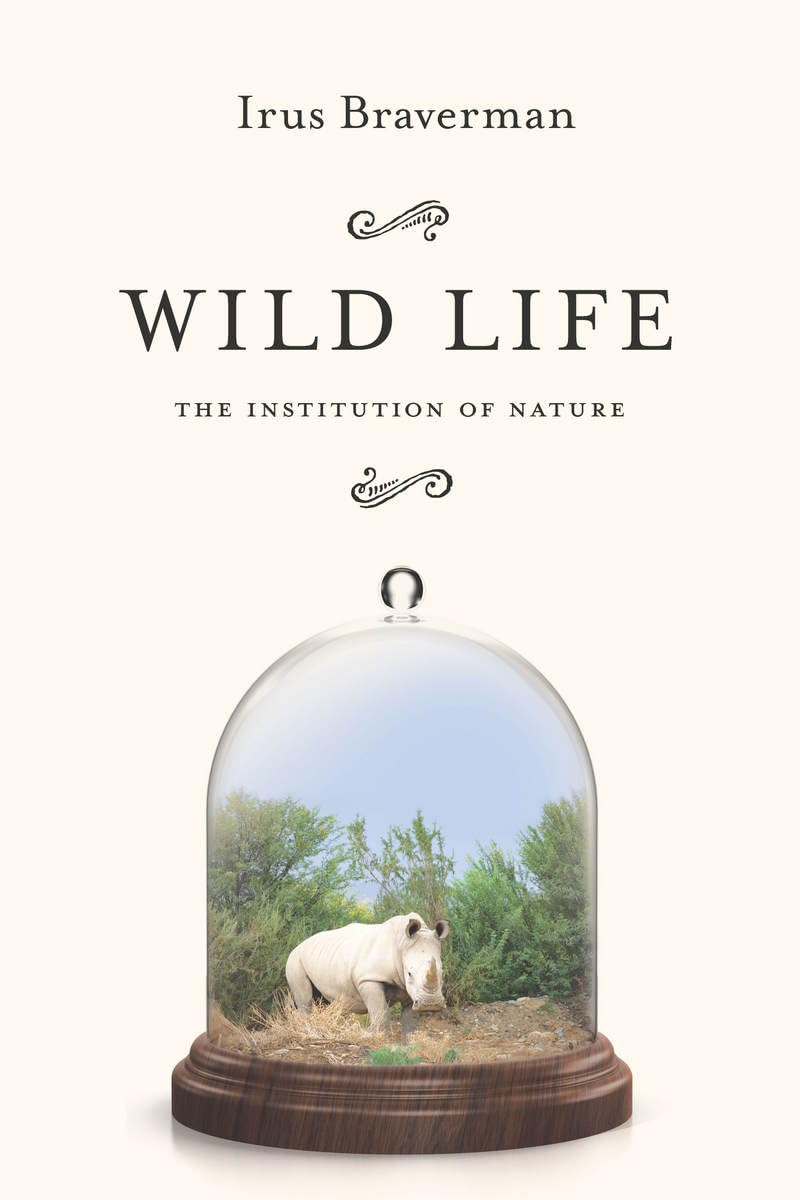



Wild Life documents a nuanced understanding of the wild versus captive divide in species conservation. It also documents the emerging understanding that all forms of wild nature―both in situ (on-site) and ex situ (in captivity)―may need to be managed in perpetuity. Providing a unique window into the high-stakes world of nature conservation, Irus Braverman describes the heroic efforts by conservationists to save wild life. Yet in the shadows of such dedication and persistence in saving the life of species, Wild Life also finds sacrifice and death. Such life and death stories outline the modern struggle to define what conservation should look like at a time when the long-established definitions of nature have collapsed. Wild Life begins with the plight of a tiny endangered snail, and ends with the rehabilitation of an entire island. Interwoven between its pages are stories about golden lion tamarins in Brazil, black-footed ferrets in the American Plains, Sumatran rhinos in Indonesia, Tasmanian devils in Australia, and many more creatures both human and nonhuman. Braverman draws on interviews with more than one hundred and twenty conservation biologists, zoologists, zoo professionals, government officials, and wildlife managers to explore the various perspectives on in situ and ex situ conservation and the blurring of the lines between them. "As I've bounced back and forth between Munich and Santa Barbara over the last 20 years, my reverence for our uniquely American 'wilderness' has deepened. Lately, this allegiance to that American romantic ideal of nature with its pristine wildernesses took a beating as I read Irus Braverman's searing analysis of 21st-century conservation: Wild Life: The Institution of Nature (2015). . . . Braverman's research shows we're already far past the dream of actually 'saving' so much pure wilderness―our romanticized American view of wild 'nature' is misleading and outdated." -- Dan McCaslin ― Noozhalk "Braverman's commitment, equally expressed throughout her book, is to the organisms and populations that are rendered killable in the name of vitality. The less valuable lives let die or killed, whether as surplus, as not-wild-enough, as releasable-to-the-wild-even-if-they-will-die, as better-dead-than-captive, as experimental, as competitor, and so on. The book overflows with stories of animals that are killed in the name of life." -- Becky Mansfield ― Dialogues in Human Geography "Braverman has a legal background, but she demonstrates familiarity with key issues in conservation and has evidently consulted widely with a variety of experts who present a range of different viewpoints . . . Overall, this work presents some important issues that can complicate and detract from the success of conservation initiatives, and it will be of value to graduate students and professionals seriously considering a career in conservation." -- Susan Catherine Cork ― Conservation Biology "The stories Braverman tells about what wildlife conservationists think they are doing, and how puzzling some of their behavior is, and how conflicted they are about the unnaturalness of some of the natures they are creating are quite compelling even absent a layering of Foucaldian deconstruction." -- Geoffrey Wandesford-Smith ― Journal of International Wildlife Law and Policy " Wild Life confronts the conceptual divide between 'natural' and 'unnatural' environments. This false dichotomy informs the often bitter politics of conservation efforts, and has enormous implications for the future impact of climate change, environmental degradation, and the steady depletion of biodiversity on a global scale. An extraordinarily provocative book." -- Eve Darian-Smith, University of California ― Santa Barbara "This is a most thoughtful and well-written book about the difficulty of separating ideas about the lives of nonhuman animals (animals) who are held 'captive' and animals who are considered to be 'wild.' While there are clear distinctions, for example, between an elephant who is held captive in a cage in a zoo and shipped around here and there as a mating machine, and an elephant who is free to move around in large wild areas, even those who are fenced, the latter individuals still are captive but to a lesser degree than their caged relatives. Many other examples make the case that 'wild' does not mean 'free.' I highly recommend this book for those who want a good picture of the complexities of distinguishing between wild and captive and also what the word 'nature' means in an epoch called the 'anthropocene.' There's a smorgasboard of opinions, each of which needs to be openly discussed, as we move into unprecedented times of increased human domination of our magnificent planet - earth, air, and water. We're here, there, and everywhere, and it isn't getting better. Excellent for advanced undergraduate and graduate courses." -- Marc Bekoff, Professor Emeritus of Ecology and Evolutionary Biolog