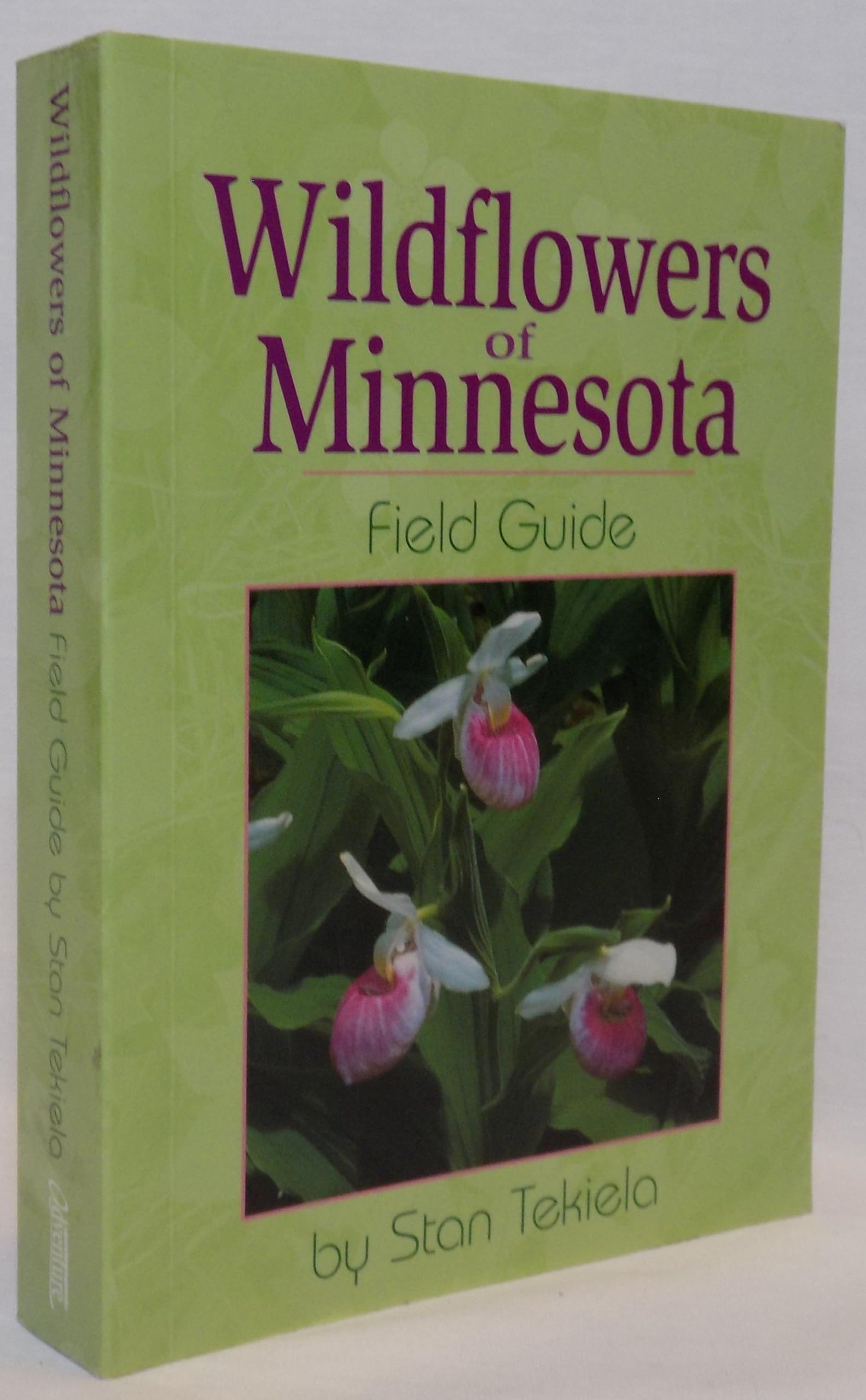



A field guide to 200 of Minnesota’s beautiful wildflowers! Full-page photos and descriptions make this the best guide to Minnesota’s wildflowers organized by color and size - icons make visual identification quick and easy - full-page, professional-quality photographs - easy-to-read format presenting information critical to accurate identification - identifies plants typical of the Boundary Waters Canoe Area and native prairies Naturalist, wildlife photographer and writer Stan Tekiela is the originator of the popular state-specific field guide series. Stan has authored more than 190 educational books, including field guides, quick guides, nature books, children’s books, playing cards and more, presenting many species of animals and plants. With a Bachelor of Science degree in Natural History from the University of Minnesota and as an active professional naturalist for more than 30 years, Stan studies and photographs wildlife throughout the United States and Canada. He has received various national and regional awards for his books and photographs. Also a well-known columnist and radio personality, his syndicated column appears in more than 25 newspapers, and his wildlife programs are broadcast on a number of Midwest radio stations. Stan can be followed on Facebook and Twitter. Alfalfa Medicago sativa Family: Pea or Bean (Fabaceae) Height: 1-3' (30-90 cm) Flower: tight spike clusters, 1-2" (2.5-5 cm) long, of blue-to-purple flowers, each 1⁄4-1⁄3" (.6-.8 cm) long; flowers have 1 large upper petal and 3 smaller lower petals Leaf: 3-part clover-like leaf, 1-2" (2.5-5 cm) long Fruit: green seedpods twist into coils and become nearly black with age Bloom: spring, summer, fall Cycle/Origin: perennial, non-native Habitat: dry, sun, fields, along roads Range: throughout Stan’s Notes: This deep-rooted perennial is usually found along roads or fields where it has escaped cultivation. Alfalfa is often planted by farmers as a food crop for farm animals and to improve soil fertility (it fixes nitrogen from the air into the soil through its roots). A winter-hardy variety of alfalfa, developed by Wendeline Grimm in Carver County, Minnesota, in the late 1800s, was partially responsible for the establishment of the dairy industry in the upper Midwest in the early 1900s. Alfalfa’s thin stems often cause the plant to fall over under its own weight at maturity, leaving it prostrate. Its flower color ranges from light blue to dark purple and it is a prime host plant for the alfalfa butterfly, Orange Sulphur. Cluster type: Spike - Flower type: Irregular - Leaf type: Compound - Leaf attachment: Alternate - Fruit: Pod Used Book in Good Condition