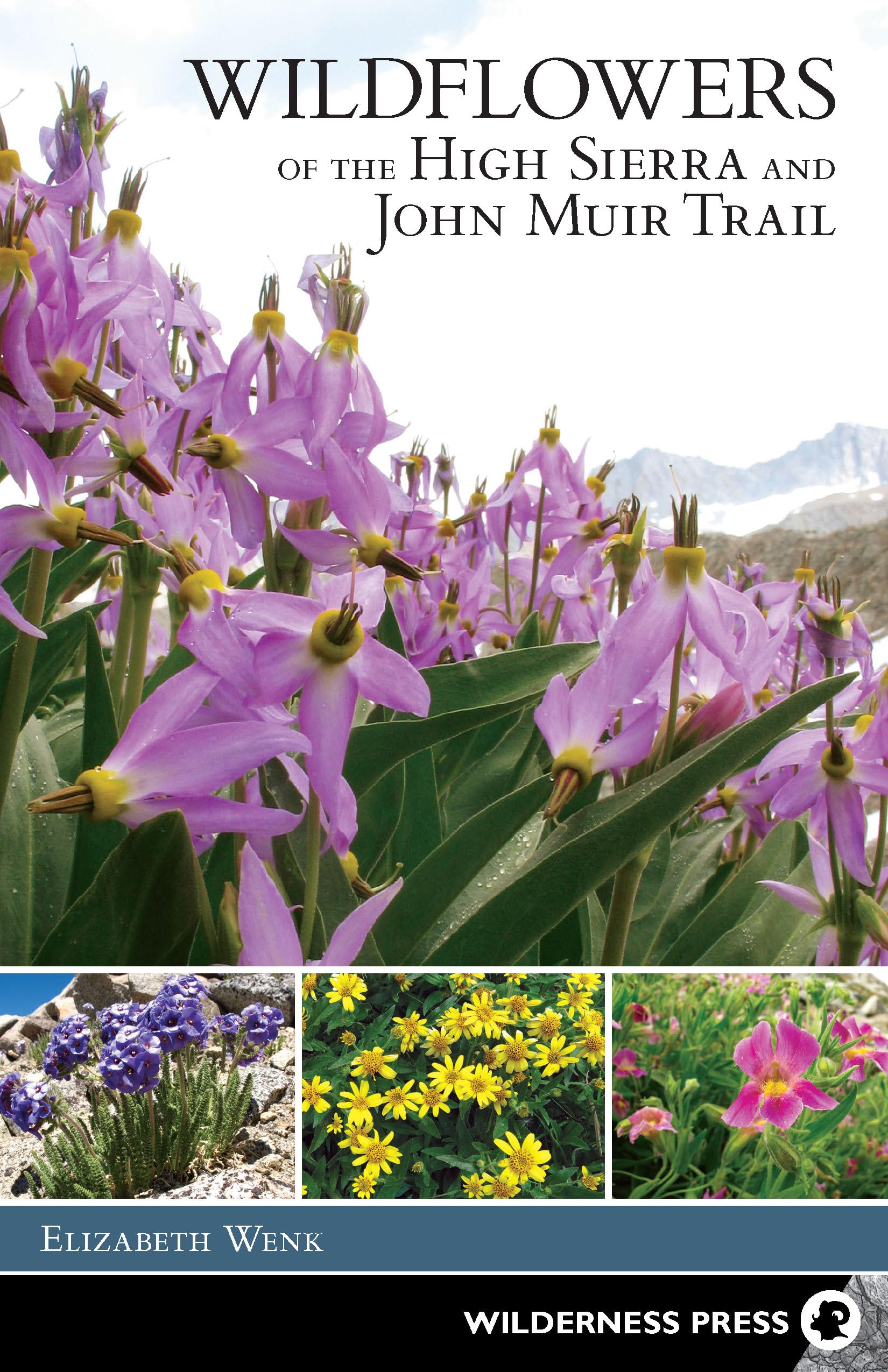



This new book by Sierra expert Elizabeth Wenk includes photos and descriptions of approximately 300 species of wildflowers and flowering shrubs in the High Sierra. Focused on areas above 8,000 feet in elevation from Yosemite south through the Whitney Region, by restricting the collection of species to higher elevations, the book can include all commonly seen species and nearly half of all higher elevation species in a compact guide. Make plant identification more approachable to hikers, this book differentiates between species using features easily identifiable to a non-botanist. Descriptions include the species common and scientific names, family name, growth form, flowering time, elevation range, region, specific locations on popular trails, and how to identify the plant using color, petal number, leaf shape, height, and more. From childhood, Elizabeth “Lizzy” Wenk has hiked and climbed in the Sierra Nevada with her family. Since she started college, she has found excuses to spend every summer in the Sierra, with its beguiling landscape, abundant flowers, and near-perfect weather. One interest lies in biological research, and she worked first as a research assistant for others and then completed her own PhD thesis research on the effects of rock type on alpine plant distribution and physiology. However, much of the time, she hikes simply for leisure. Obsessively wanting to explore every bit of the Sierra, she has hiked thousands of on- and off-trail miles and climbed more than 600 peaks in the mountain range. Many of her wanderings are now directed to gather data for several Wilderness Press titles and to introduce her two young daughters to the wonders of the mountains. For them as well, the Sierra, and especially Yosemite, has become a favorite location. Although she will forever consider Bishop, California, home, Wenk is currently living in Sydney, Australia, with her husband, Douglas, and daughters, Eleanor and Sophia. There she is working as a research fellow at Macquarie University and enjoying Australia’s exquisite eucalyptus forests, vegetated slot canyons, and wonderful birdlife―except during the Northern Hemisphere summer, which she continues to spend exploring the Sierra. Chrysolepis sempervirens (bush chinquapin) Family: Fagaceae Distribution: Common throughout, on both sides of the Sierra Crest - Habitat: Dry, sandy to rocky slopes - Elevation: 4,500'–11,000' - Season: Early July–late August - Locations: Lundy Canyon, Clouds Rest summit, Bear Creek, Lamarck Lakes Trail, North Fork Big Pine Creek Leaves and Stems: Usually less than 2 m in height, this shrub forms imposing thickets on dry, rocky slopes. If, however, you don’t need to fight your way through them, enjoy their showy features. A golden powder covers the young stems and the underside of the leathery leaves. Because the leaves tend to be oriented in all directions, the shrubs are quite beautiful when the sun catches the underside of the leaves early or late in the day. Flowers: The flowers themselves are not showy because, like most other members of the Fagaceae family, they are wind pollinated. They occur in long inflorescences, and notably, male and female flowers have separate inflorescences. The fruits are immediately noticeable because the prickly light-brown balls are up to 3.5 cm in diameter.