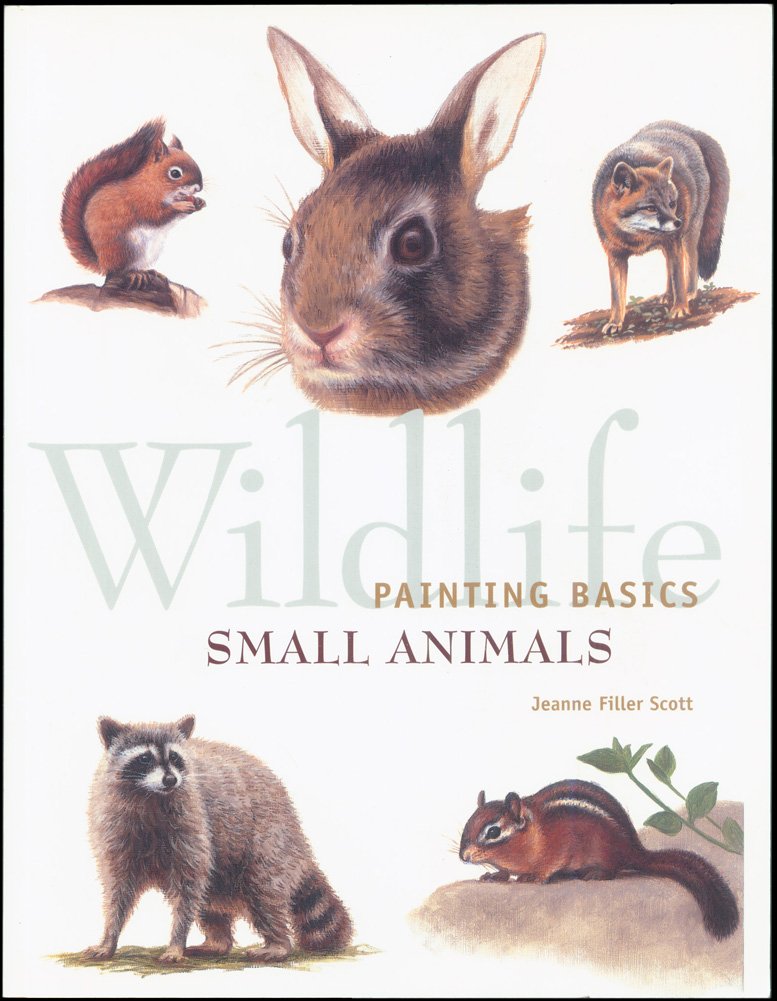



Wildlife Painting Basics: Small Animals provides clear, easy-to-follow instructions for painting startlingly realistic animals, including rabbits, squirrels, woodchucks, mice, raccoons, foxes and more. Basic traits, proportions, faces, distinguishing characteristics and fur textures are detailed for each type of animal. Forty-one mini-demos and sixteen full demonstrations in pencil, oil, acrylic and gouache show how to re-create these adorable creatures. Readers will also find invaluable tips for gathering and using reference materials. Having trouble keeping your ferret still for a portrait? Here are three books for capturing small critters, Hammond's in colored pencils, Scott's in paints, and Wynne's in both. Hammond is a highly accomplished artist with several North Light books to her credit. Here she has developed a special graphing system for beginners, primarily for drawing cats, dogs, horses, and squirrels but for a few bears and tigers, too. It's an excellent system for those intimidated by the variations of eyes, mouths, ears, and feet found on our furry companions. Scott's approach is for the advanced student who wants a more classically based style for painting rabbits, ferrets, mice, raccoons, and foxes. The influence of the Old Masters can be detected in her 41 mini-demonstrations and 16 full treatments in oil, acrylic, gouache, and pencil. Wynne is a British artist who has painted many well-known and royal pets, including the horses at the Royal Mews of Buckingham Palace. Hers is a lovely, loose style using either pencils or watercolors for cats, dogs, rabbits, guinea pigs, and horses. All three books are recommended and should prove popular. For large wild animals, see Cynthie Fisher's Wildlife Painting Basics: Deer, Antelope & Other Hooved Animals; for more narrow detail, see Rachel Rubin Wolf's Keys to Painting: Fur & Feathers. Copyright 2002 Reed Business Information, Inc. A personal connection with her subject matter infuses Scott's animal portraits with an imaginative spark that should fire up students of the genre. Aiming to differentiate between animals, Scott stresses the basic anatomy of wild and domestic creatures while pointing out the importance of individual traits that set subjects apart and create interest. To help beginners get started, she specifies the necessary brushes, pencils, materials, and supplies. Scott then brings a detailed and cogent approach to her instruction, guiding painters to build upon whatever level of skill they possess in mixing colors, using value to define form, or adding textural effects. Pencil, oil, acrylic, and gouache techniques are delineated in a variety of projects. Alice Joyce Copyright © American Library Association. All rights reserved Jeanne Filler Scott's equine and wildlife art has won many awards and honors. Her work has been juried into the Society of Animal Artists, Southeast Wildlife Exposition, National Wildlife Art Show, NatureWorks and the American Academy of Equine Art. She has had nine nationally distributed limited edition prints published, and her work has appeared in feature articles in U.S. Art, Wildlife Art News, Kentucky Living, Attraction and various other publications. She lives in Nicholasville, Kentucky. Used Book in Good Condition