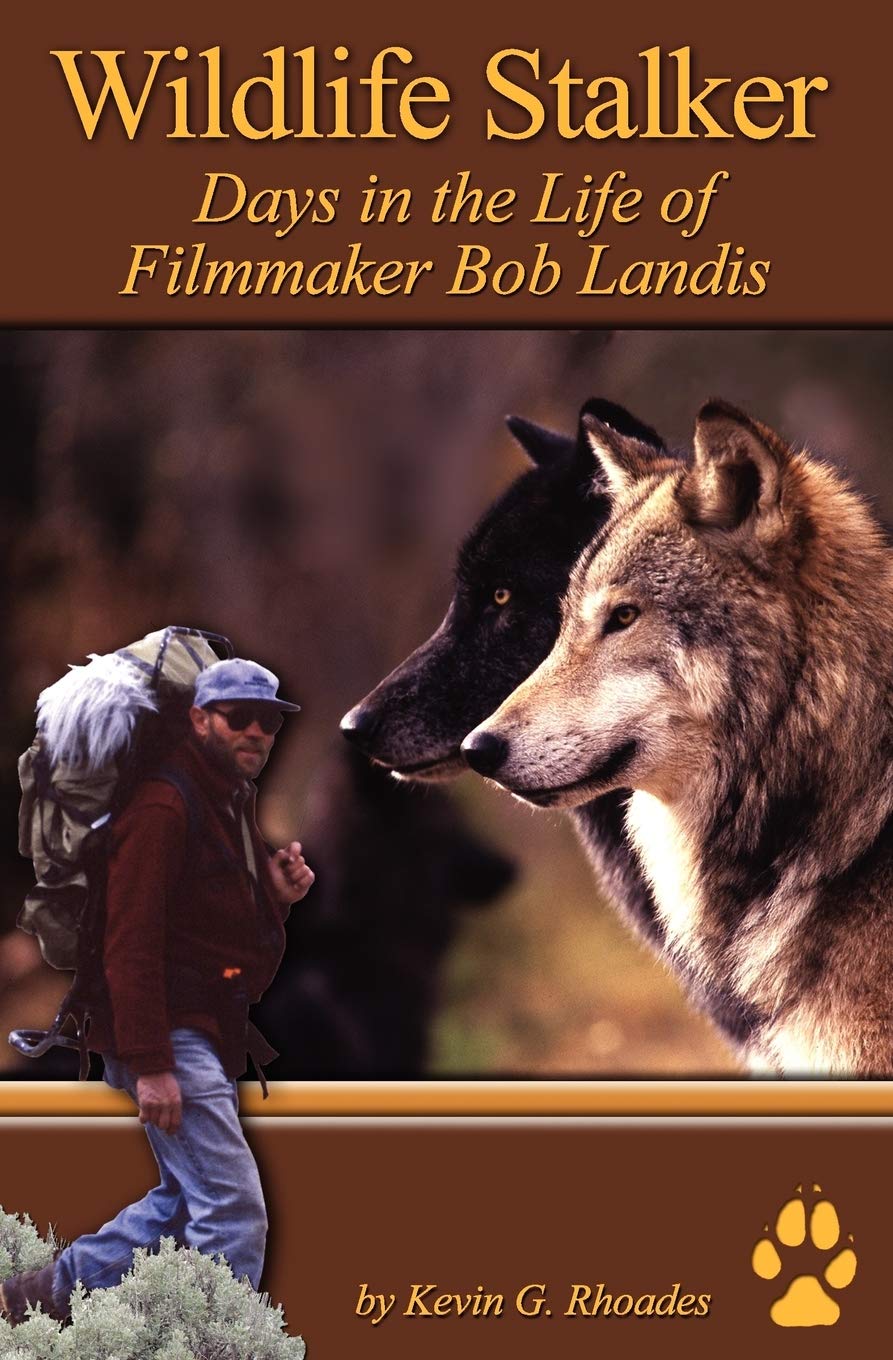



Recording incredible wildlife behavior on movie film and video is the hallmark of Bob Landis’ films. He has filmed wildlife in Yellowstone for over 40 years – a place dear to his soul. This book is comprised of two stories wound into one: a depiction of days afield with a wildlife cinematographer who has filmed and co-produced stories about Yellowstone’s iconic species – the bear, the wolf, the bison – films that have aired on PBS, Nature and on National Geographic Television. This book also is a collection of flashbacks to Landis’ past – growing up as a small-town Wisconsin boy where he followed his destiny to become a football player, teacher, and wildlife filmmaker. He has created more than 20 wildlife films, many of them winning awards and airing on television around the world. Bob Landis is one of America’s premier wildlife filmmakers. Bob Landis is so honest, I think it hurts. He has made his filmmaking work hard, but that's the way he wants it. He'll stay out there and stay out there, and he captures great wildlife behavior on film that way. --Dr. Charles Jonkel, greatbear.org/ Bob Landis is a great example of an ethical wildlife filmmaker who treats his wild subjects with respect. --Rick McIntyre , Author of Society of Wolves and War Against the Wolf Bob Landis gets up at three in the morning and sits out there in freezing conditions for days on end. That's why he gets absolutely incredible imagery. -- Ray Paunovich , Wildlife Cinematographer How important is Bob Landis' passion for making films about wildlife? "Number one, with flashing lights and neons and bells and whistles. It's his life. It's his mind. It's his body. It's all of that. -- Connie Landis , Professor, MSU Billings Why did you write this book? While a graduate student at The University of Montana's school of journalism, I was searching for a topic for my thesis. Plus I have always been a photographer and for a long time had been interested in wildlife and wildlife films, and had attended a Bob Landis' filmmaking seminar years before. It was sort of natural to put him at the top of my list. The original idea was to make my thesis into a book, but my advisor recommended "a paper" might help me finish school rather than a full-blown book. When did you start the Landis project? My thesis became the seeds of Wildlife Stalker - Days in the Life of Filmmaker Bob Landis. I wrote more than half of Bob Landis story in 1998 and the remaining in 2010. It was fun to see how his life and filmmaking had evolved since those early interviews of a decade before. Did you interview Landis at home or in the field? A little bit at his Gardiner, Montana, cabin. But mostly while he toted me around in his car, often in the black of night, to filming sites in Yellowstone National Park. When Landis was behind his tripod and camera, if things were slow while he waited for wildlife behavior, I would get a few questions in, but mostly the interviews took place while he drove. If I could see my notepad, I would jot down Landis' responses to my questions. If dark, I used my recorder. What is your educational background? High school and undergraduate school in Indiana. As a grade-school student, teachers would put on my report card that I had a problem gazing out the school window. Often, I daydreamed about caving and climbing mountains and exploring wild country in the West. Years later, eight hours after graduating from college, I was in the car at midnight and driving West to work in Yellowstone National Park. Nineteen years after first going to Yellowstone I completed a master's degree in journalism at The University of Montana. What type of work did you do in Yellowstone? The summer after my senior year in college I earned minimum wage picking up dirty linen from tourists' cabins, but I spent nearly every free moment either hiking or backpacking into Yellowstone's wild places. That was back in 1980. Two years later I was able to use some of my biology/environmental science education after I was hired by the Interagency Grizzly Bear Research Team, basically a field technician recording data for bear projects. Were you aware of Landis' films during your Yellowstone bear-working days? No, but without knowing it then I was laying the foundation for the biography because before I met Landis - - probably two years later -- I was fascinated by Yellowstone's iconic species, particularly the bear and the bison. Of course, the wolves didn't come around until 10 years later. But with every mountain summit or while exploring some of Yellowstone most remote places, like the Thorofare or Flat Mountain Arm along Yellowstone Lake - with each and every step my admiration and respect for Yellowstone grew. Those memories helped develop the background details when I started writing the book, some 13 years later. You worked with bears in Yellowstone while Landis filmed there. Did you work with other species? In Yellowstone I tracked and