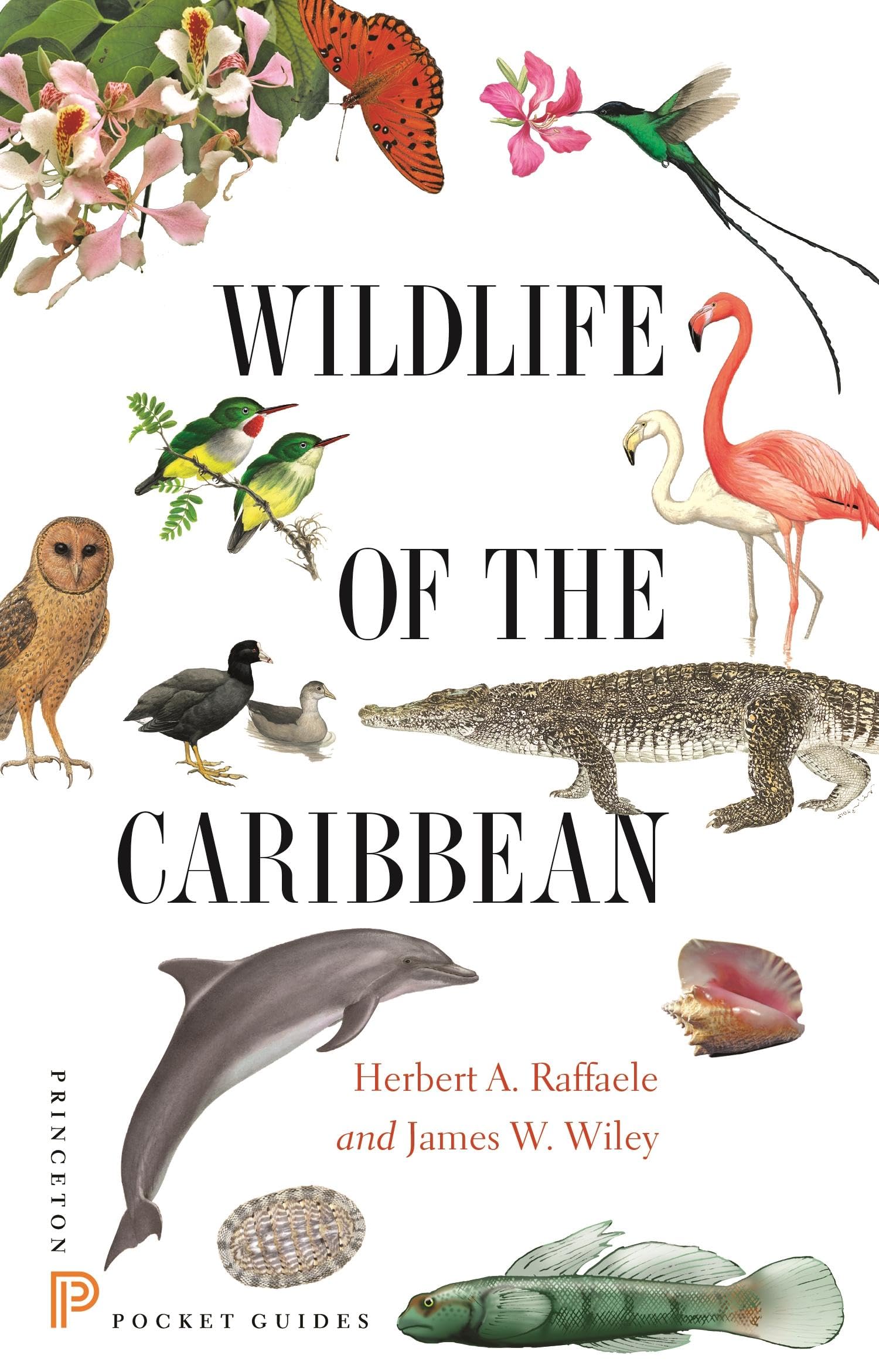



The essential guide to the living wonders of the Caribbean islands This is the first comprehensive illustrated guide to the natural world of the Caribbean islands. It contains 600 vivid color images featuring 451 species of plants, birds, mammals, fish, seashells, and much more. While the guide primarily looks at the most conspicuous and widespread species among the islands, it also includes rarely seen creatures―such as the Rhinoceros Iguana and Cuban Solenodon―giving readers a special sense of the region's diverse wildlife. Each species is represented by one or more color photos or illustrations; details regarding its identification, status, and distribution; and interesting aspects of its life history or relationship to humans. In addition, an introductory section focuses on the unique characteristics of the Caribbean’s fauna and flora, the threats faced by both, and some of the steps being taken to sustain the area’s extraordinary natural heritage. Wildlife of the Caribbean is the essential field guide for learning about the living wonders in this area of the world. The only guide of its kind for the Caribbean islands - 600 detailed color images feature 451 amazing species - Straightforward descriptions suitable for general audience - Compact size makes the guide easy to carry "A fun all-on-one naturalist's guide to many of the plants, animals, and sea creatures that one may encounter in the Greater and Lesser Antilles of the Caribbean region. . . . The species accounts contains many interesting tidbits on natural history and conservation." ---Jeff Wells, Birds of Aruba site "This delightful pocket guide is a must-read for anyone planning a trip to the Caribbean region." ---Lisa Miller, Reference Reviews "This well-organized book is an exemplary resource on Caribbean wildlife. It fills a major gap in the literature for lay audiences and is most welcome." ―Catherine Levy, Windsor Research Centre, Jamaica "This well-organized book is an exemplary resource on Caribbean wildlife. It fills a major gap in the literature for lay audiences and is most welcome." --Catherine Levy, Windsor Research Centre, Jamaica Herbert A. Raffaele has worked in the Caribbean for over four decades. He directed wildlife conservation for Puerto Rico's Department of Natural Resources and served as chief of Latin American and Caribbean programs for the U.S. Fish and Wildlife Service. James W. Wiley has conducted ornithological research throughout the Caribbean since 1972. Raffaele and Wiley are coauthors of Birds of the West Indies (Princeton). WILDLIFE OF THE CARIBBEAN By Herbert A. Raffaele, James W. Wiley PRINCETON UNIVERSITY PRESS Copyright © 2014 Princeton University Press All rights reserved. ISBN: 978-0-691-15382-7 Contents Acknowledgments, 4, Introduction, 4, The Islands, 8, Environmental Threats and Conservation, 17, Species Accounts, Terrestrial Life, 29, Marine Life, 229, References and Additional Reading, 292, Glossary, 296, Photograph, Illustration, and Text Edit Credits, 297, Index, 300, CHAPTER 1 THE ISLANDS GEOGRAPHY The Caribbean islands fall into several groups. The four largest islands—Cuba, Jamaica, Hispaniola, and Puerto Rico—comprise the Greater Antilles; all are long and narrow and stretch from east to west. To the north of the Greater Antilles are the Bahamas, or Bahamas Bank, a cluster of more than seven hundred small, lowlying islands and cays, which includes the Turks and Caicos. To the east of Puerto Rico are the virgin Islands, followed by the southward-arching Lesser Antilles, stretching from Anguilla in the north to Grenada in the south. CLIMATE The islands of the Caribbean are characteristically warm, sunny, and humid year round. The average annual temperature is approximately 26°C (79°F), though it varies moderately with season. The northeast trade winds blow steadily at 16–32 km (10–20 mi.) per hour, providing a pleasant cooling effect. Temperatures drop with increased elevation; thus high mountain areas often require a sweatshirt and rain gear. Rainfall is decidedly more variable than temperature, this especially being the case on mountainous islands. The mountains serve as barriers to clouds moving in from the northeast. They stack up over the eastern parts of the islands and deposit most of their moisture as rain and mist. Parts of the island of Dominica receive 900 cm (350 in.) of rain per year due to this phenomenon. The leeward sides of the mountains, contrarily, are dry, the southwest portions of each island generally being the driest. Such areas are semiarid and may receive but a few centimeters of rain per year. Flat islands tend to be semiarid. The second half of each year is wetter than the first, the hurricane season ranging from July through October. BIOGEOGRAPHY GEOGRAPHIC ISOLATION AND THE COLONIZATION OF ISLANDS The Caribbean, with Barbados and the Bahamas being major exceptions, are of volcanic origin and o