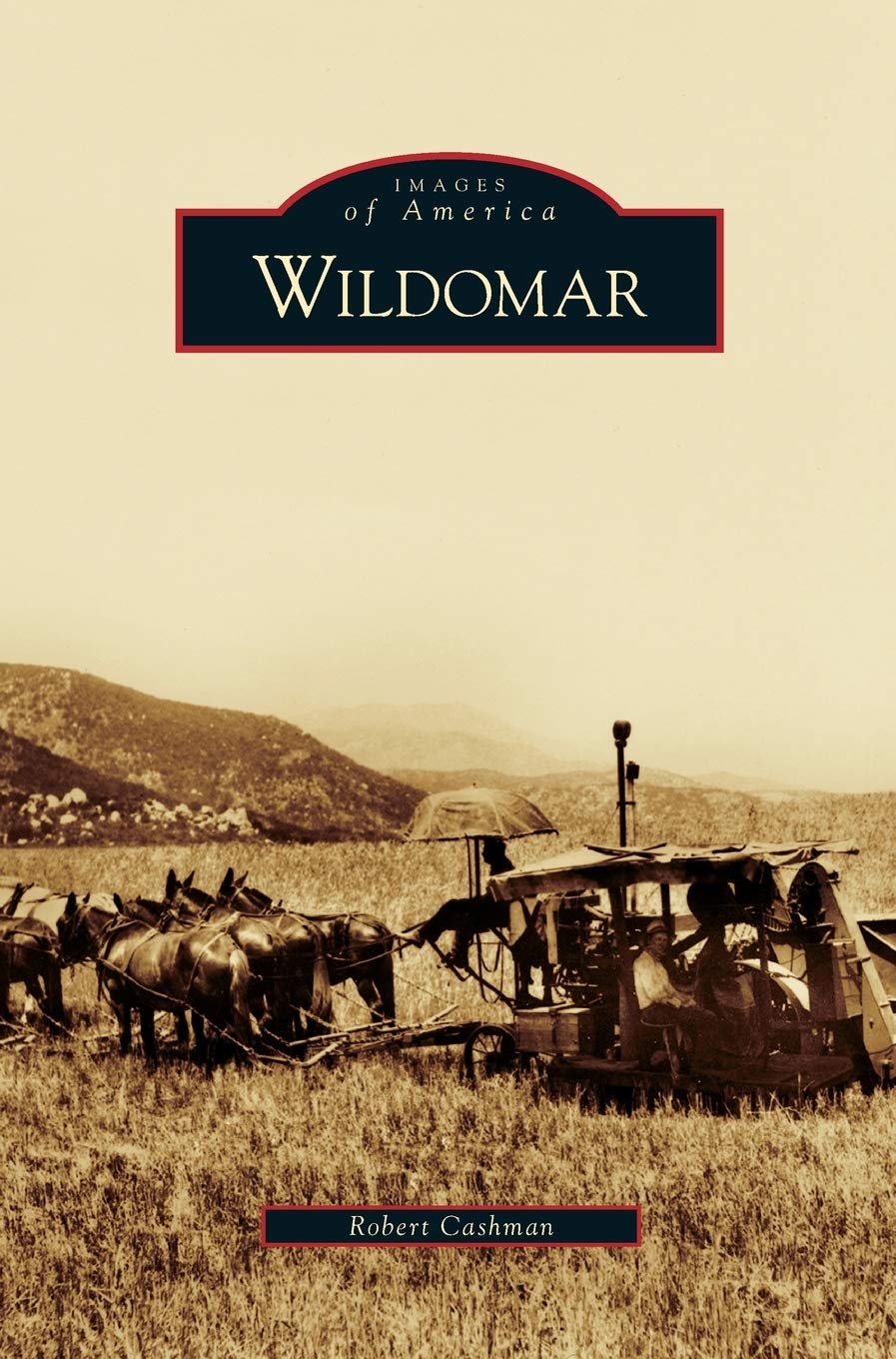



Wildomar is a semirural community located in an inland valley of Riverside County, about 60 miles northwest of San Diego. In 1886, the three founders of the town site cleverly coined its unique name from a combination of their own first names--WILliam Collier, DOnald Graham, and MARgaret Collier Graham. The community began to grow when settlers traveled by road and railroad into the area to farm the land and raise their families. Today Wildomar is a community of nearly 28,000 people. An independence movement ultimately led to an application for cityhood, and on July 1, 2008, amidst fireworks and music, the city of Wildomar was officially born. Title: A Look Back: Hotel Wildomar Author: Vanessa Ebbeling Publisher: The Press-Enterprise Date: 5/29/10 A hotel constructed in Wildomar in the late 19th century played an integral role in the town's growth into a farming community. The Hotel Wildomar, built in 1887, offered temporary accommodations to new settlers looking to buy land in town, said Robert Cashman, a Wildomar city councilman and author of a new book on the town's history, "Images of America: Wildomar." Wildomar was one of many towns that began to grow because of the transcontinental railroad. Many new settlers came from the Midwest, he said. Guests and residents celebrated the grand opening of the 20-room hotel, located at the intersection of Dunn Street and Central Avenue, on May 13, 1887. Three names were listed on the formal invitation sent to guests: town founders Donald Graham and William Collier and the hotel proprietor E.E. Wilson, Cashman said. Founders and other residents invited friends and family to visit Wildomar and possibly settle here. The railroad made the journey convenient. "It looked pretty good, and a lot of their friends and relatives moved out here," Cashman said. The hotel offered a place to stay while they searched for farmland where they could grow popular local crops including apricots, walnuts, pecans, watermelons and strawberries. After that, the hotel became a social center for the town. Dances took place there and, for some events, formal invitations were used, despite the fact that Wildomar was still a frontier town, Cashman said. "The hotel is described in the brochure as a substantial and comfortable hotel with 20 rooms open for the accommodation of guests," he said. Along with Wildomar's Presbyterian Church and school, the hotel was a central point in town for several decades. But sometime during the Great Depression, railroad use died down and the hotel eventually closed. A businessman purchased the building with plans to haul it to Riverside, Cashman said. Its history gets fuzzy around this point, but it's believed the hotel burned down before it could be moved, he said.