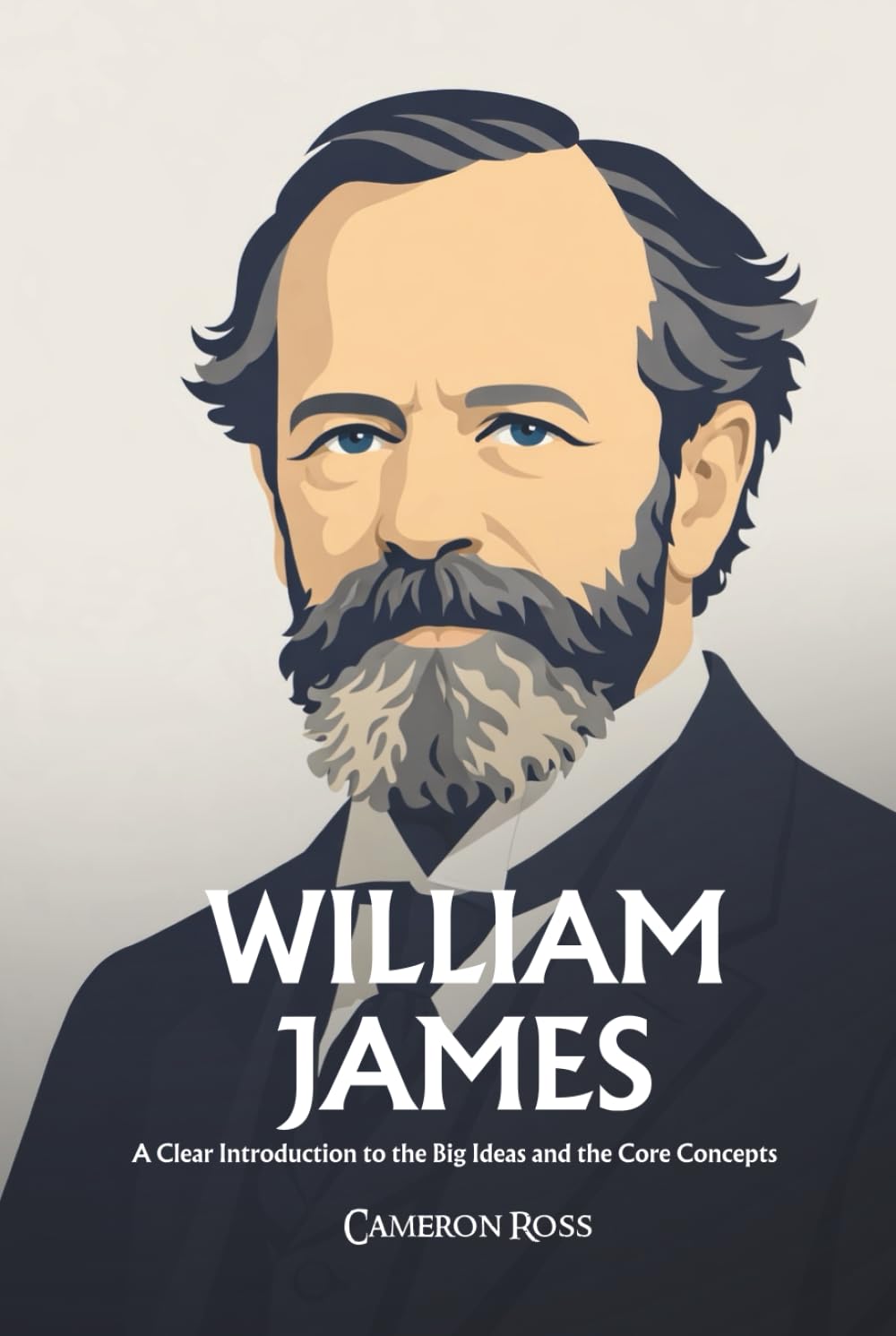
William James: A Clear Introduction to the Big Ideas and the Core Concepts
$25.90
by Cameron Ross



William James writes from within experience rather than above it. Trained as a psychologist and shaped by personal struggle, he resists philosophies that treat truth as static or detached from life. Ideas matter, he insists, because they guide action, shape commitment, and alter how the world is lived. Pragmatism emerges here not as reduction but as clarification. Beliefs are tested by their consequences, by how they hold up when put to work in the stream of experience. Truth becomes something that happens over time, earned through resistance and revision rather than revealed all at once. James embraces pluralism without surrendering rigor. The world admits many perspectives because experience itself is unfinished. Moral and religious beliefs are judged not by transcendence but by whether they sustain meaning, courage, and coherence under pressure. Action often precedes certainty, and commitment becomes unavoidable. James’s philosophy remains restless, experimental, and humane. It refuses despair without promising guarantees. To read him is to encounter a vision of thought that accepts risk as the price of vitality and treats philosophy not as a refuge from life, but as a companion within its uncertainty. What you will find in this book: Pragmatism as a new way of doing philosophy This book explains how William James redefined truth by linking it to practical consequences rather than abstract certainty. You will discover how pragmatism evaluates ideas by their effects in lived experience, making philosophy responsive to real human needs and situations. - Radical empiricism and the richness of experience You will explore James’s claim that experience includes not only sensations but also relations, meanings, and feelings. The book clarifies how radical empiricism challenges narrow scientific models and opens philosophy to the full complexity of mental life. - The will, belief, and human freedom This section examines James’s famous argument that belief can be a legitimate choice when evidence is incomplete. You will understand how he defends moral and religious commitment without dogmatism, grounding freedom in lived decision rather than abstract proof. - Psychology and the stream of consciousness The book presents James’s pioneering work in psychology, including his analysis of habit, attention, emotion, and the stream of consciousness. You will see how his psychological insights reshape our understanding of the self as dynamic rather than fixed. - Religion, meaning, and individual experience This book explains James’s approach to religion as a personal and experiential phenomenon. You will discover how he studies faith, conversion, and mystical states without reducing them to illusion, treating them as meaningful human responses to existential questions. Add this book to your cart now to discover how William James transformed philosophy and psychology by placing lived experience at the center of thought.