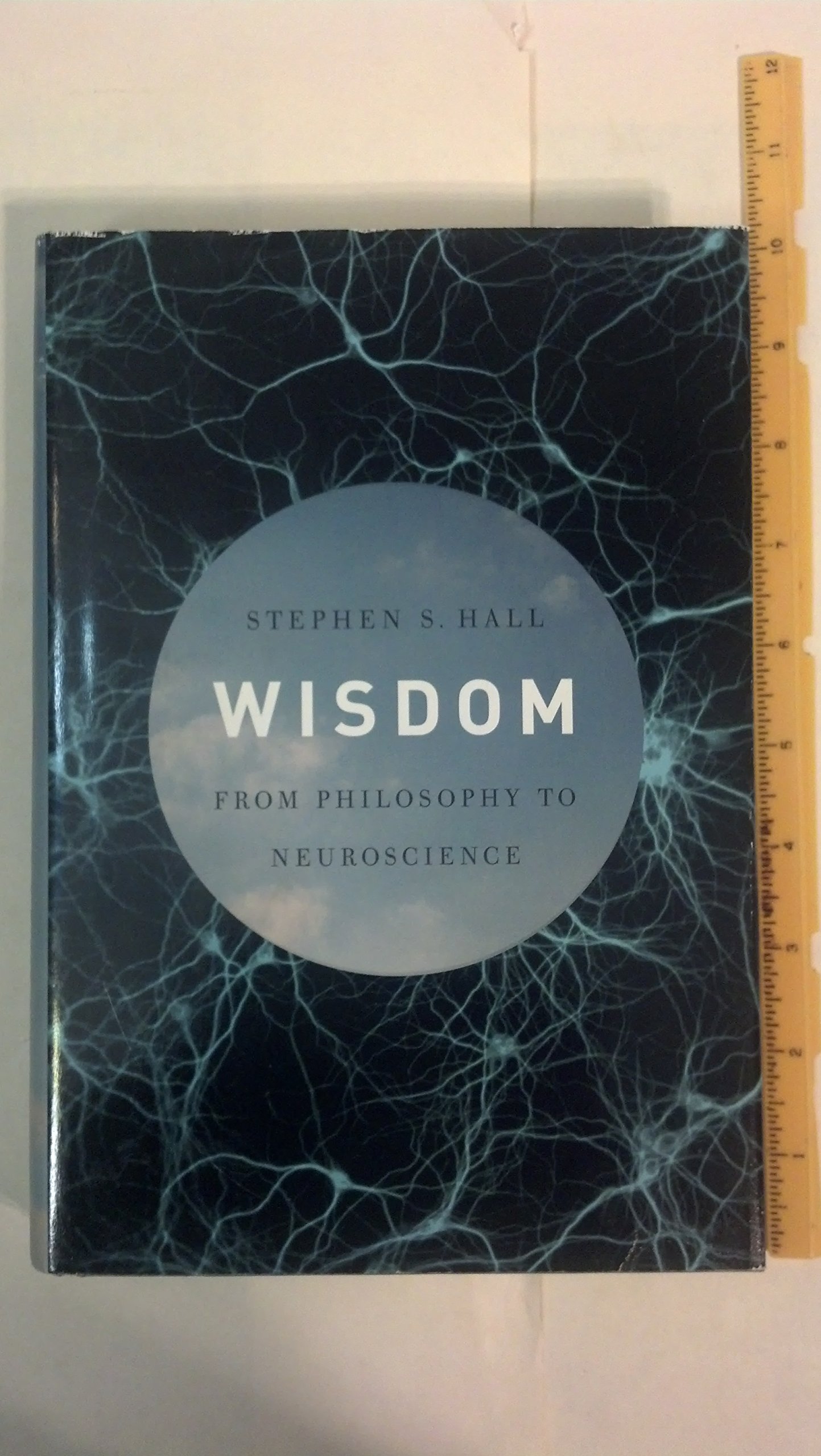



A compelling investigation into one of our most coveted and cherished ideals, and the efforts of modern science to penetrate the mysterious nature of this timeless virtue. We all recognize wisdom, but defining it is more elusive. In this fascinating journey from philosophy to science, Stephen S. Hall gives us a dramatic history of wisdom, from its sudden emergence in four different locations (Greece, China, Israel, and India) in the fifth century B.C. to its modern manifestations in education, politics, and the workplace. We learn how wisdom became the provenance of philosophy and religion through its embodiment in individuals such as Buddha, Confucius, and Jesus; how it has consistently been a catalyst for social change; and how revelatory work in the last fifty years by psychologists, economists, and neuroscientists has begun to shed light on the biology of cognitive traits long associated with wisdom—and, in doing so, begun to suggest how we might cultivate it. Hall explores the neural mechanisms for wise decision making; the conflict between the emotional and cognitive parts of the brain; the development of compassion, humility, and empathy; the effect of adversity and the impact of early-life stress on the development of wisdom; and how we can learn to optimize our future choices and future selves. Hall’s bracing exploration of the science of wisdom allows us to see this ancient virtue with fresh eyes, yet also makes clear that despite modern science’s most powerful efforts, wisdom continues to elude easy understanding. Definitions of wisdom abound in Hall’s exploration of the concept, which he reports is no longer the exclusive domain of theology and philosophy. Clinical psychology and neurobiology have elbowed their way into the subject in recent decades, and their investigations and investigators make up much of Hall’s work. An author of several books about human physiology (Size Matters: How Height Affects the Health, Happiness, and Success of Boys, 2006), Hall details brain-scan experiments intended to elucidate at a neuronal level components of wisdom such as ethics and also cites studies that rely on interviews with older people about their life experiences. From the author’s accounts, it doesn’t seem as though the scientist in the lab coat offers better definitions of wisdom than the sage in the toga. An essential ineffability about wisdom dogs both the empiricist and the theorist, according to Hall, but, not willing to concede futility in the hunt for wisdom, he suggests it is to be sought in family life and interpersonal relationships—a practical proposition on which his readers can reflect. --Gilbert Taylor "Wisdom is a golden-ticket tour of the human mind, in all its dimensions, led by one of the most insightful and trustworthy science journalists we've ever had. This book is a feast, not a snack. Get ready to digest more smart brain science than you ever thought possible." -David Shenk, author of The Forgetting and The Genius in All of Us . "Astonishingly wise, incredibly well written and most importantly wonderfully synthetic. One can disagree with some of the parts but few will disagree with the whole. Wisdom is still with us." —Michael Gazzaniga "Steve Hall has done it again. He masterfully explains how 'wisdom' comes out of the brain without oversimplifying this enormously complex topic." —Joseph LeDoux “An attractively fluent, ebullient style…he has tackled a highly interesting but difficult topic with gusto.” –Barnes and Noble review “Compelling…Hall knows how to hook a reader, set up his subject, and most importantly, follow through in a smart, entertaining manner. Wisdom is straightforward, but always engaging and entertaining...Hall manages this quite neatly, intertwining science reporting, philosophy, and just plain great writing to make readers feel, if not wise themselves, then at least as if they understand what wisdom might be.” –bookotron.com “A fascinating attempt to understand one of our most cherished—but least well-understood-aspirations.” – Seed Magazine “A sharply honed work of ‘biographical journalism’ unique in its multiplicity of perspectives, contextual richness, and astute analysis…a spectacularly encompassing, analytical, and dramatic portrait.” –Booklist, starred review “Utterly engaging…Hall’s work as a translator and intermediary between the humanities and the hard neurosciences is in itself a feat of extraordinary mental balance and understanding.” – The Post and Courier “With the flair of an experienced science journalist, Hall takes us on a rollicking interdiscinplinary journey through the ages, blending modern science, history and philosophy…an engaging gallop through the centuries and across world cultures…highly readable.” – Nature Neuroscience For twenty-five years, Stephen S. Hall has written about the intersection of science and society in books, magazine articles, and essays, primarily in The New York Times Magazine .