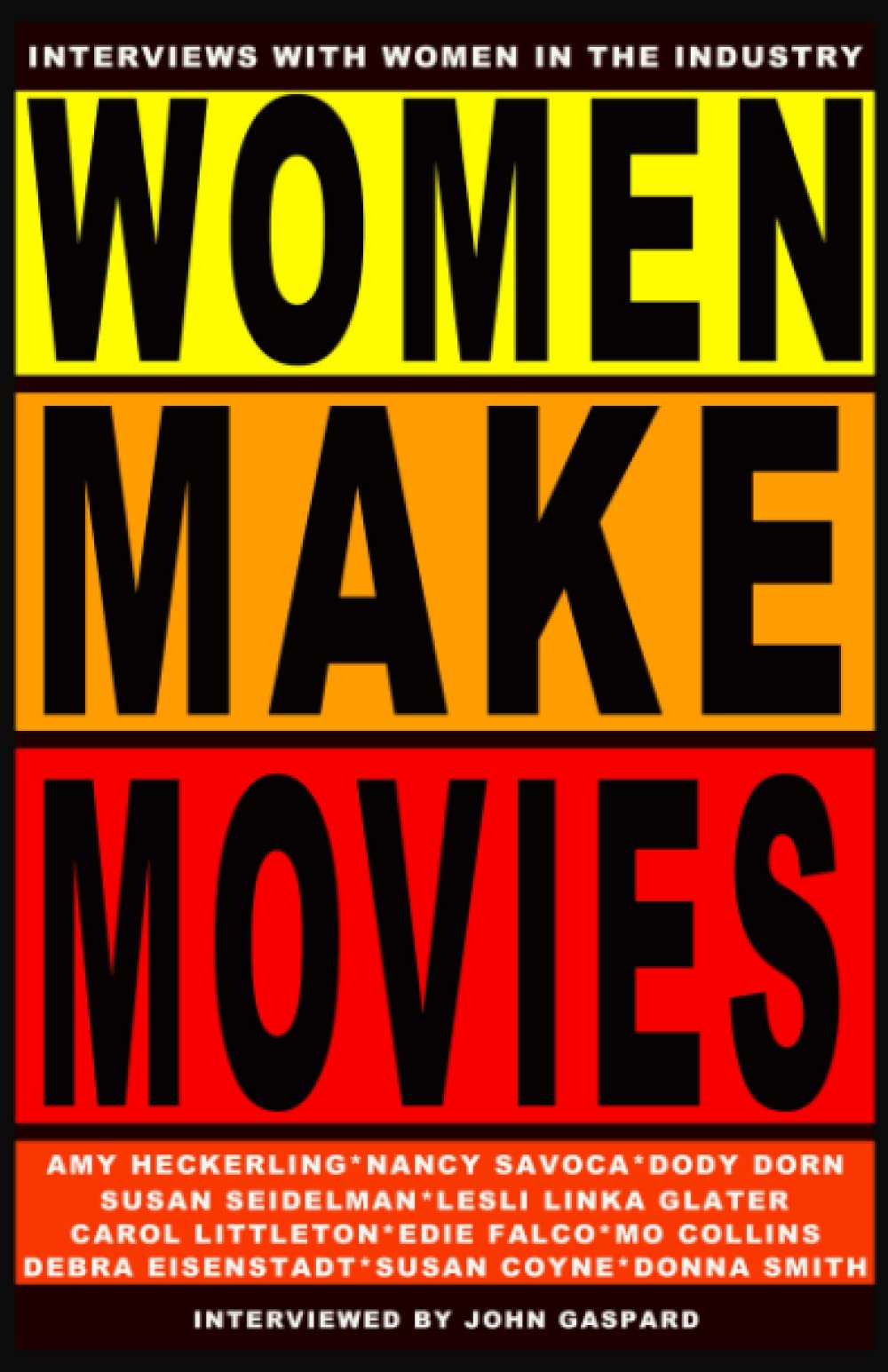
Women Make Movies: Interviews with Women in the Industry (Fast, Cheap Filmmaking Books)
$12.99
by John Gaspard



Advice from the Trenches Are you looking to break into the film business? Read valuable lessons from these formidable women about the art and craft of making movies: How to break in, stay in and rise to the top. Eleven women who've found success in the film and television industry (directors, actors, writers, editors, executives) talk about what it took to get them to where they are today. Amy Heckerling (Director, Clue, Fast Times at Ridgemont High ) - Susan Seidelman (Director, Desperately Seeking Susan ) - Lesli Linka Glater (Director, Homeland, The West Wing, Twin Peaks ) - Carol Littleton (Editor, The Big Chill, Body Heat) - Nancy Savoca (Director , True Love, Household Saints ) - Dody Dorn (Editor, Memento, Insomnia ) - Susan Coyne (Actress, Co-Creator, Slings & Arrows ) - Mo Collins (Actress, MadTV, Fear The Walking Dead ) - Edie Falco (Actress, The Sopranos, Nurse Jackie ) - Debra Eisenstadt (Actress, Oleanna and Director, Blush and Before the Sun Explodes ) - Donna Smith (Production Manager and the first women to run production at a major studio) This book provides great insight and information on the real story behind working in the film business. Grab it today! ★★★★★ INTERVIEW WITH JOHN GASPARD By The Angry Filmmaker KELLEY BAKER: How did you get into filmmaking? JOHN GASPARD: When I was a teenager, my uncle gave me his old wind-up Reg-8 camera. I soon graduated to a Super-8 camera, and the rest was history. I made my first feature (in Super-8 single-system sound) in 1976 and then made another one in 1977. In college I did a couple features on video (U-matic video cassettes) and then after college did a couple features in 16mm. My last few features have been shot on digital video. KB: Can you tell me a little about your feature "Beyond Bob"? What it cost, shooting schedule, and how long you worked on it from beginning to end? JG: "Beyond Bob," a romantic comedy ghost story, was shot on 16mm for about $28,000 in 1991. We shot over the course of four consecutive weekends, followed by some b-roll and silent pick-ups while in post. From script to finished movie, it took about 2 years. The movie was released on VHS back in the day and is now available on DVD and streaming video. KB: In your book, "Fast, Cheap & Written That Way," you emphasize the script. How many drafts did you do on your films and how long did they take to write? JG: "Beyond Bob" went through multiple script drafts and was also revised after rehearsals with the actors. It was originally written as a Hollywood spec script and was designed to be shot with a much higher budget. We re-wrote it to fit a smaller budget and I think it's better in that format. KB: So many filmmakers feel that if they are not "on the set" then somehow they aren't making a movie. How important is pre-production to you? JG: It's all about pre-production! You can save yourself a fortune with smart pre-production. KB: Are there filmmakers that were a big influence on you? What did you learn from them? JG: Although I don't love all his films, I am a big fan of Henry Jaglom, for his passion about getting it done his way. I love the intelligence that Sidney Pollack brought to his films. Hal Ashby was a big influence, with his use of music and montage. Brian DePalma (and his early editor, Paul Hirsch) still make me smile with his wicked sense of humor on film. And of course, Woody Allen in the mid-70s (Sleeper, Love & Death, Annie Hall). KB: "Fast, Cheap & Under Control" was published in 2006. With all of the changes in digital filmmaking that have happened since then, are there still lessons to be learned from your book? JG: Absolutely - in fact, the whole premise of the book was the tendency of filmmakers to unnecessarily re-invent the wheel every time a new technology comes about. The key lessons of filmmaking - strong script, smart pre-pro, tricks for keeping production costs low - are valid regardless of whether you're shooing with the Red camera ... or making a feature with your iPhone. KB: A lot of our readers are making films on really tiny budgets. What is your advice to them? JG: Simple math: The less you spend, the less you have to make. If you can remove economics from the equation - create films that don't HAVE TO make money - you open up a whole world of possibilities.