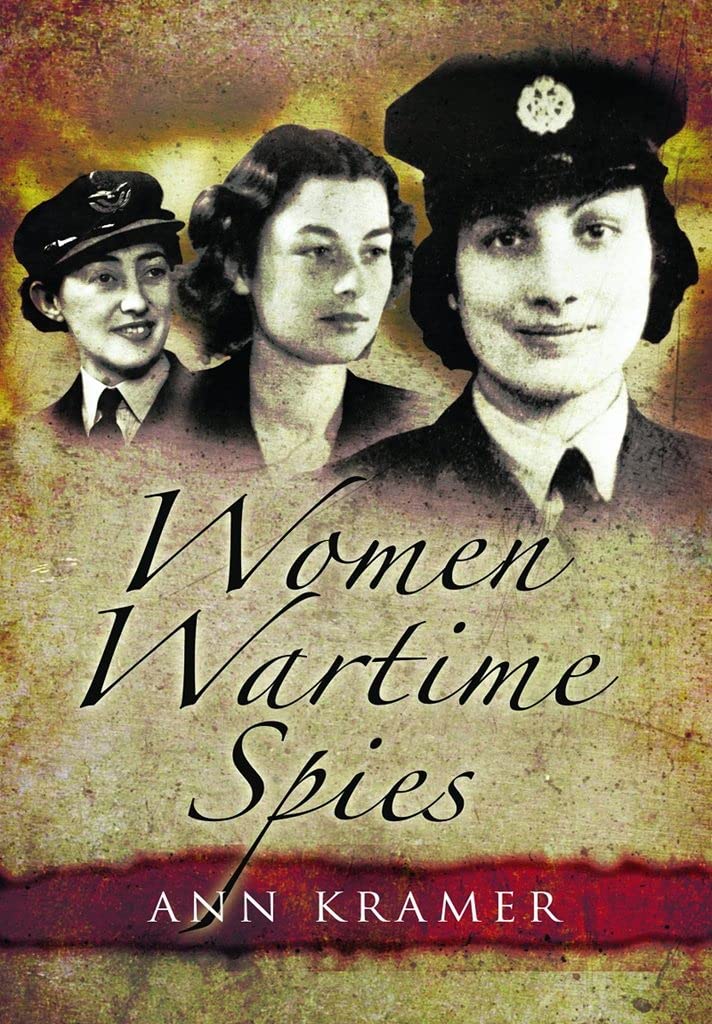



From Mata Hari through to Noor Inyat Khan, women spies have rarely received the recognition they deserve. They have often been trivialized and, in cinema and popular fiction, stereotyped as vamps or dupes. The reality is very different. As spies, women have played a critical role during wartime, receiving and passing on vital information, frequently at considerable risk. Often able to blend into their background more easily than their male counterparts, women have worked as couriers, transmitters and with resistance fighters, their achievements often unknown. Many have died. Ann Kramer describes the role of women spies during wartime, with particular reference to the two world wars. She looks at why some women chose to become spies, their motives and backgrounds. She looks at the experience of women spies during wartime, what training they received, and what skills they needed. She examines the reality of life for a woman spy, operating behind enemy lines, and explores and explodes the myths about women spies that continue until the present day. The focus is mainly on Britain but will also take an international view as appropriate. ANN KRAMER is a well-known writer, who has written extensively on women’s roles during the two world wars, a subject that fascinates her. Her recent books include the successful Land Girls and their Impact (Pen & Sword, 2008), which was very well received. Born and educated in London, Ann Kramer now lives in Hastings. Women Wartime Spies By Ann Kramer Pen and Sword Books Ltd Copyright © 2011 Ann Kramer All rights reserved. ISBN: 978-1-84468-058-0 Contents List of Plates, Acknowledgments, Timeline, Introduction, Chapter 1 Women and War, Chapter 2 Spy Paranoia and The First World War, Chapter 3 Spying Under Occupation, Chapter 4 Backroom Women, Chapter 5 Special Operations Executive, Chapter 6 Behind Enemy Lines, Chapter 7 Missing, Chapter 8 Setting the Record Straight, Appendix, References, Bibliography, CHAPTER 1 Women and War 'Upon women the burden and horrors of war are heaviest.' MARGARET SANGER War impacts profoundly on women's lives, whether on the home front, in occupied territories, or on the battlefield. With the advent of total war and the mass mobilization of civilian populations during the twentieth century, women's formal involvement in war increased enormously. The two World Wars had an impact on women's lives that was far greater than in previous wars, not least because aerial bombardment, invading armies and the enlistment of whole populations brought war directly into the home, affecting civilians on the home front – a term that was coined during the First World War – just as much as soldiers on the frontline. During both World Wars women were involved in myriad roles: maintaining homes and families, doing war work, in caring roles as nurses and doctors, working within the armed forces – and as information gatherers, spies and resistance fighters. Many, although not all, were roles previously only held by men, or believed to be suitable only for men. Opening the Doll's House: women's war work Writing in 1917 about women's involvement in the war, American journalist and feminist Mabel Potter Daggett declared: 'I think we may write it down in history that on 4 August 1914, the door of the Doll's House opened ... For the shot that was fired in Serbia summoned men to their most ancient occupation – and women to every other'. To some extent she was correct; between 1914-1918 and even more so between 1939-1945, the demands of war meant that women were pulled out of their more traditional roles as homemakers and carers and plunged into activities previously dominated by men. In Britain, when the First World War broke out, large numbers of women, including several who had spent the pre-war years fighting the British government for the right to vote, now demanded the right to be involved in the war effort. Leading suffragist, Millicent Fawcett writing in The Common Cause urged: 'Women your country needs you ... let us show ourselves worthy of citizenship whether our claim to it be recognized or not.' Emmeline Pankhurst too, charismatic leader of the militant Women's Social and Political Union (WSPU), called an end to suffragette activities and threw her influence behind the British government, actively helping to recruit men – she and her supporters were reputedly involved with the appalling white feather movement – and urging the government to use women in the war effort. These calls on women to back the government split the women's movement but even so as increasing numbers of men were left to die in the trenches, an estimated two million women entered the labour force, working for the first time as bus and tram drivers, painters and decorators, postal workers, bank clerks, butchers and munition workers producing thousands of shells while their faces and hair turned yellow from the DDT. Women worked as chimney sweeps, d