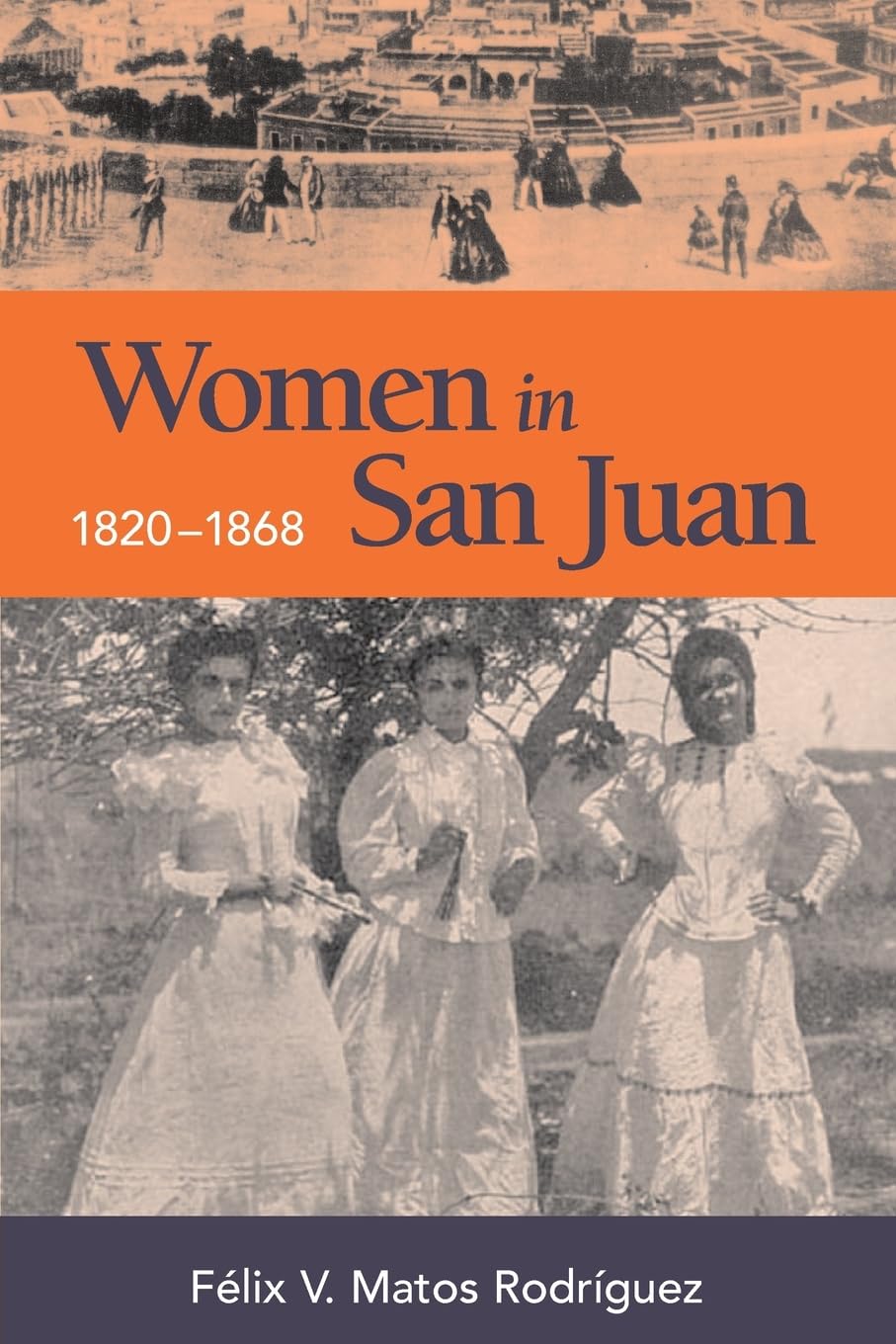



Matos Rodríguez uses the lens of women's experiences to shed light on key problems in nineteenth-century Puerto Rican historiography. The author provides an overview of the city's spatial, economic, and demographic development since the late eighteenth century. San Juan emerges as a dynamic city full of contradictions, whose population tripled between 1776 and 1874. Up until the 1850s and early 1860s, San Juan was a city in which women and nonwhites constituted a majority of the population. Elite and middle-class women shaped the economic life of the city; they were landladies, professionals, and artisans, and had an active role in the slave trade, using the courts and other resources to claim rights and oppose patriarchal practices. They struggled to keep their businesses open, to protect their rental properties, and to receive fair pay for their services. Less advantaged women labored as street vendors, peddlers, and domestic servants, carrying their children to work, inventing new ways to carry out their tasks, and learning when to combat and when to acquiesce to those who enjoyed more power. "The often-romanticized ambiance of San Juan, Puerto Rico, can overshadow the everyday struggles of its diverse population across time. Indeed, historians have often paid more attention to the capital's architecture than to its people. Women in San Juan thus presents a refreshing perspective of the city's peoples, physical land-scape, and socioeconomic growth. Matos Rodriguez depicts nineteenth-century San Juan as a site of intense social transformation and spatial reconstruction. It is also a site of cultural transgression, where women "found ways to circumvent the system in order to improve the quality of their lives or just to survive" (p. i). In this environment, women from different class and racial backgrounds faced the new moral order of modernity promoted by colonial authorities, the elite minority, and the church. The book uses the lens of women's experiences to examine the social history of San Juan from 1820 to 1868 and to shed light on some of the key problems in nineteenth-century Puerto Rican historiography. His refreshing analysis is based in meticulous primary research and bolstered by a broad conceptual framework. In an effort to address "how women in mid-nineteenth-century San Juan participated in, were affected by, and took advantage of the attempts to create a modern, respectable, and progressive city" (p. 2), Matos Rodriguez gives an overview of the city's spatial, economic, and demographic development since the late eighteenth century. San Juan emerges as a dynamic city, full of contradictions, whose population tripled between 1776 and 1874. One of the delights of these first two overview chapters is the author's care in locating people's actions in particular social spaces. Where did people of different economic backgrounds live? How did they cross the invisible barriers that seemed to separate them? How did they create innovative everyday living spaces that violated the social assumptions of class division? The question of modernity pervades this urban history. Although he does not provide a detailed dis-cussion of people's conceptions of, and experiences with, the new and discrepant modernities of the early nineteenth century, he does discuss how modernization transformed public policy and economics and affected women's lives in complex ways. His demographic analysis also challenges the prevailing conceptions of life in the city, concluding that "up until the i85os and early i86os, San Juan was a city where a. majority of the population was women and nonwhites" (p. 56). Chapter 3 presents elite and middle-class women's participation in the eco-nomic life of the city, examining the effects of marriage in real estate patterns, women as landladies, professionals, and artisans, and their role in the slave trade. Women used the courts and other resources to claim rights and to oppose some patriarchal practices in civic life; they struggled to keep their businesses open, to protect their rental property, and to receive fair pay for their services. Chapter 4 addresses the lot of women who worked as street vendors, peddlers, and domestic servants. These women confronted a modernizing system that was imposed upon them while simultaneously relating to and negotiated with women of other social strata. The author takes us on a tour of the city's barrios, where women made all kinds of accommodations to enter the new urban economy. They carried their chil-dren to work, invented new ways to do their tasks, and learned to sometimes com-bat, and sometimes acquiesce to, those who enjoyed more power than they did. The book ends with a discussion of elite women's participation in education and beneficence, which opened new spaces of public participation for benefactors and beneficiaries, but not without a degree of ambivalence and contradiction. While the modernizing agenda promoted elite women's dedica