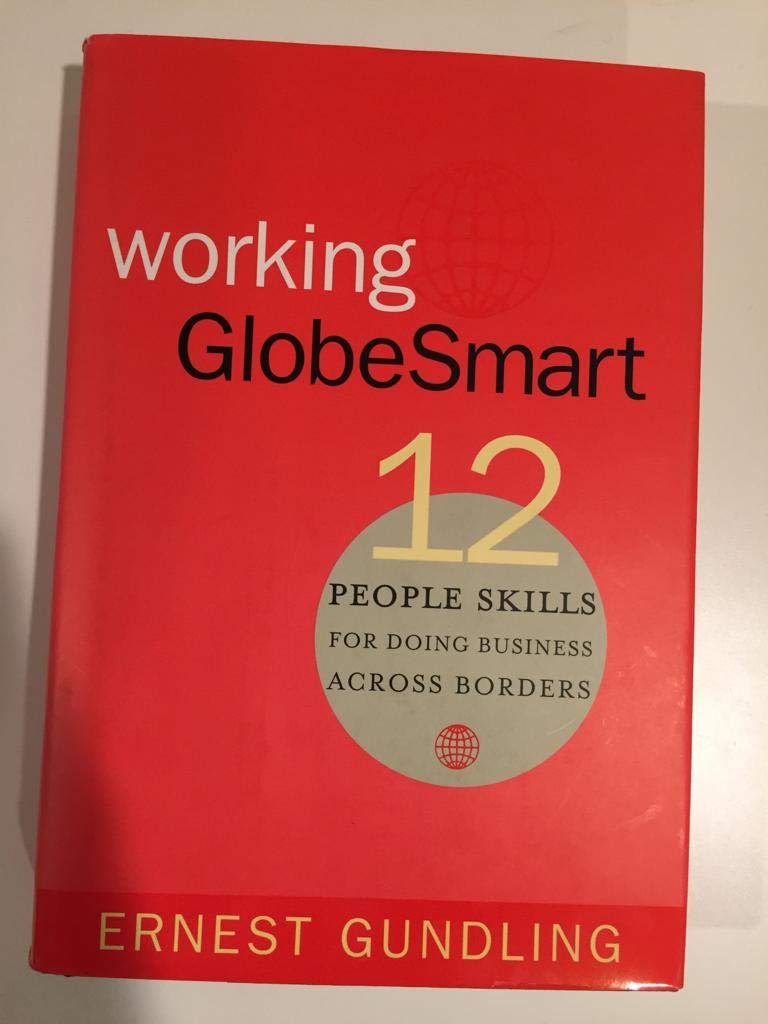
Working GlobeSmart: 12 People Skills for Doing Business Across Borders
$34.18
by Ernest Gundling



Whether working on a virtual team that spans the globe or in a multicultural workplace in your own community, this field guide to global citizenship details what it takes to add value to the business of global enterprise. Engaging, thought-provoking. A good read even if you don't work globally. Many of the concepts apply right here at home. -- Training, December 2003 Managers who understand why these skills are important find partners more likely to respond and work together for beneficial results. -- Soundview Executive Book Summaries, Sept. 2003 Offers practical, skills-based advice. Provides a road map for developing competence at the organizational, group and interpersonal levels. -- Fort Worth Star-Telegram, July 28, 2003 This book aims to equip business executives with maps for navigating the often choppy waters of international business. -- Triangle Business Journal What you may not know about conducting yourself in international business would fill a book--this one. -- getAbstract, December 2003 Zeroes in on one part of international business often overlooked until it's too late--people skills. -- Half Moon Bay Review, July 2, 2003 My goal in writing this book has been to provide people with a systematic, practical guide to working across borders that is both accessible to the general reader and rich enough in content and specific examples to serve the experienced professional. Over many years doing business overseas, I've watched people struggle with a variety of obstacles, and wrestled with similar issues myself. Cross-border friction emerges relatively consistently and predictably, and we can take steps to avoid common pitfalls and increase the chances for a successful business outcome. Lots of books describe "Do's and Don'ts" for various countries. While such lists are one useful reference point, most people run through their list during their first day in a new country and ask "Now what?" Other books focus on the standard communication skills or cultural dimensions. While these are again somewhat useful, they often fail to address the concrete tasks that are the highest priority for global businesspeople. My book is arranged so that a person who is interested in accomplishing a particular task can go directly to the chapter on the relevant skill. I want readers to feel that a single chapter alone is worth the price of the book, and then come back to it repeatedly for suggestions and advice as new tasks arise. Familiarity with the twelve global people skills will help readers save considerable time and trouble, accomplish their business goals more effectively, and grow professionally and personally through deeper and more satisfying relationships with counterparts abroad. By any measure, business success is no longer solely about hard work, good intentions, and technical expertise. Relationship building, communication, and the ability to forge cooperation across organizational lines are key--especially when operating across borders, spanning time zones, and crossing cultures. Whether you are working for a global corporation in a foreign office, on a virtual team that spans the globe, or in a multicultural workplace in your U.S. headquarters, you will find in WORKING GLOBESMART a field guide to global citizenship. From India to Italy, Turkey to Thailand, the author has gathered the insights of more than two dozen country and regional experts who have helped thousands of global managers succeed in complex multicultural business environments. With numerous examples, sample dialogue, and the author's unique GlobeSmart model, the book offers practical, skills-based advice on how to develop or participate on a global team, create effective training and development programs for multicultural learners stationed anywhere around the world, and gather the collective wisdom of your organization into a strategic vision that brings out the natural links between communication and change, culture and commerce. Demonstrating how global people skills add value to global business, WORKING GLOBESMART provides a road map for developing competencies at the organizational, group, and interpersonal level and details the twelve key skills critical for success--from establishing credibility, teamwork, and negotiation to knowledge transfer, change management, and innovation. Ernest Gundling, Ph.D., is cofounder and managing director of Meridian Resources Associates, Inc., working with such clients as AT&T, Cisco, Deutsche Bank, Ford, GlaxoSmithKline, and Hewlett-Packard to develop strategic global approaches to leadership development, organizational change, and innovation. Author of THE 3M WAY TO INNOVATION, he is also lecturer at the Haas School of Business at the University of California, Berkeley. Used Book in Good Condition