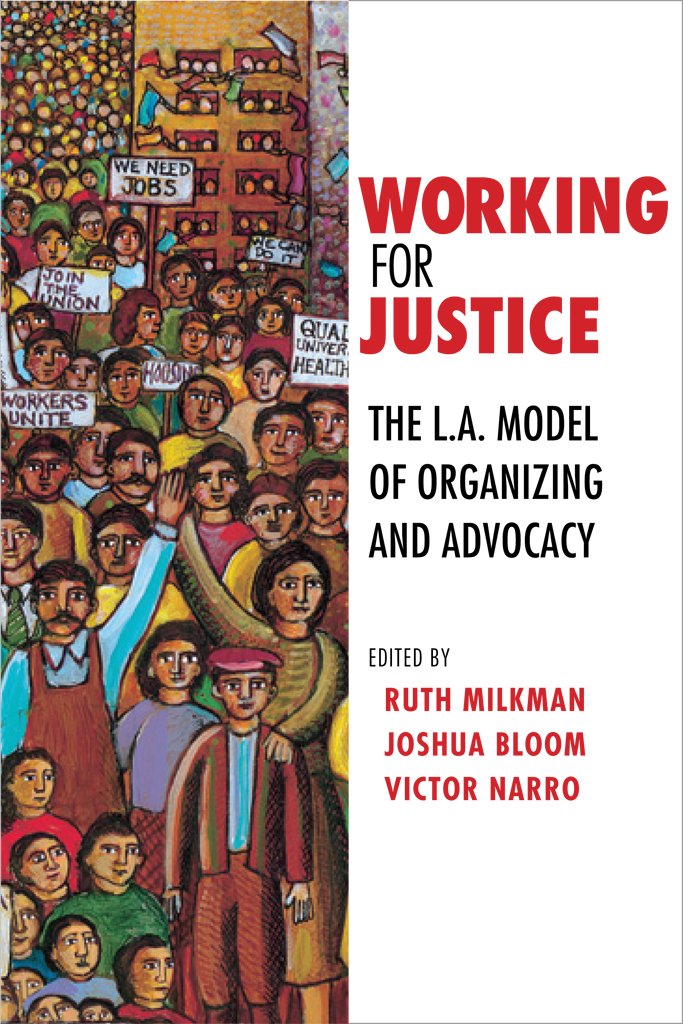



Working for Justice, which includes eleven case studies of recent low-wage worker organizing campaigns in Los Angeles, makes the case for a distinctive "L.A. Model" of union and worker center organizing. Networks linking advocates in worker centers and labor unions facilitate mutual learning and synergy and have generated a shared repertoire of economic justice strategies. The organized labor movement in Los Angeles has weathered the effects of deindustrialization and deregulation better than unions in other parts of the United States, and this has helped to anchor the city's wider low-wage worker movement. Los Angeles is also home to the nation's highest concentration of undocumented immigrants, making it especially fertile territory for low-wage worker organizing. The case studies in Working for Justice are all based on original field research on organizing campaigns among L.A. day laborers, garment workers, car wash workers, security officers, janitors, taxi drivers, hotel workers as well as the efforts of ethnically focused worker centers and immigrant rights organizations. The authors interviewed key organizers, gained access to primary documents, and conducted participant observation. Working for Justice is a valuable resource for sociologists and other scholars in the interdisciplinary field of labor studies, as well as for advocates and policymakers. "Insightful .... The authors are 'giving voice' to their subjects in a manner which was outlined by the Chicago School's understanding of early urban based sociological research in the 1930s." -- Mobilization "Critical and compelling." -- Social Forces If there is to be a paradigm shift toward public sociology, Working for Justice could serve as the exemplar. Community leaders and activists helped shape the questions that scholars pursued, provided access academics can rarely achieve, reviewed drafts and offered feedback, and in the process enriched scholarship and advanced theory. These are cutting-edge studies of little-known campaigns based on the Los Angeles model of intimate connections between unions and worker centers. -- Dan Clawson, University of Massachusetts Amherst Ruth Milkman is Professor of Sociology at the CUNY Graduate Center and Academic Director of CUNY's Murphy Labor Institute. She is the author of several books, including the prizewinning Gender at Work and L.A. Story: Immigrant Workers and the Future of the U.S. Labor Movement. She is the coauthor of Unfinished Business, editor of Organizing Immigrants, and coeditor of Rebuilding Labor and Working for Justice, all from Cornell. Joshua Bloom is a Fellow at the Ralph J. Bunche Center at UCLA. He is first author of Black against Empire: The History and Politics of the Black Panther Party. Used Book in Good Condition