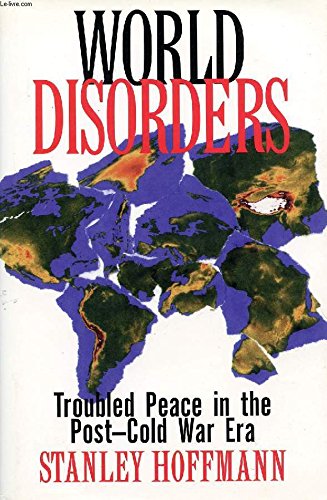



(ACADEMIC PAPERBACK DESCRIPTION) Long one of the field’s most distinguished thinkers, Hoffmann brings together in this volume his important recent work on international politics. Many published here for the first time, these essays offer incisive reflections upon the reemergence of nationalism and ethnic conflicts in Europe, the redefined role of military intervention, and other uncertainties brought on by the demise of the Cold War. New to this edition is a current analysis of the Kosovo conflict. Woven throughout are his clear-eyed assessments of contending approaches to the study of international relations. (LONG TRADE CLOTH) Stanley Hoffmann has remarked that “It wasn’t I who chose to study world politics. World politics forced themselves upon me.” A rootless child of World War II; Austrian, French, and later American, he has always maintained a unique balance and perspective on global affairs. Long one of the field’s most distinguished thinkers, Hoffmann brings together in this volume his important recent work on international politics. Many published here for the first time, these essays offer incisive reflections upon the reemergence of nationalism and ethnic conflicts in Europe, the redefined role of military intervention, and other uncertainties brought on by the demise of the Cold War. Hoffmann weighs the influence on theory and policy of such disparate figures as John Rawls, Hedley Bull, and George Schultz. Woven throughout are his clear-eyed assessments of contending approaches to the study of international relations. Nuanced meditations on the nature of world politics in the post–Cold War era. . . . [Hoffmann is] unfailingly insightful and compassionate, attributes often missing in the discipline of political science. Overall, he has two concerns here: to examine the state of current international relations, to critique the methods and approaches used to understand these relations. . . . Sophisticated and provocative, Hoffmann's writing gives the reader much to consider. ( Kirkus Reviews ) This collection of remarkable essays addresses the great complexities of post-Cold War world politics. . . . [Hoffmann] is at his best in illuminating the shaky foundations of modern world politics and underscoring the limitations of the theoretical and policy constructs in vogue today. (Ikenberry, G John Foreign Affairs ) Stanley Hoffmann, a sober idealist in the tradition of Hedley Bull, shows how a foreign policy that blends interests and values—as well as order and justice—is not only desirable but possible. Along the way, he elegantly but ruthlessly skewers proponents of both narrow realism and liberal internationalism. The thoughtful essays that constitute World Disorders make clear why Hoffmann enjoys a reputation as one of this country's leading analysts of world affairs. (Haas, Richard N.) In this seminal work, Hoffmann takes on the 'realists' by questioning whether their appreciation of power is too narrow and leaves out the influence of domestic politics and ideals. He also challenges the growing academic influence on those who would make a science of politics, pointing out that they have forgotten the value of common sense and looking things up. Finally, he does again what he has done so brilliantly many times before: He helps us put in place the major jigsaw pieces of the international puzzle. (Leslie H. Gelb) The essays make the case for an ambitious agenda: to focus state craft on the problems of governance for the future. ( Foreign Affairs ) Nuanced meditations on the nature of world politics in the post?Cold War era. . . . [Hoffmann is] unfailingly insightful and compassionate, attributes often missing in the discipline of political science. Overall, he has two concerns here: to examine thestate of current international relations, to critique the methods and approaches used to understand these relations. . . . Sophisticated and provocative, Hoffmann's writing gives the reader much to consider.... ( Kirkus Reviews ) This collection of remarkable essays addresses the great complexities of post-Cold War world politics. . . . [Hoffmann] is at his best in illuminating the shaky foundations of modern world politics and underscoring the limitations of the theoretical and policy constructs in vogue today.... (Ikenberry, G John Foreign Affairs ) There is no better guide to the riddles and puzzles of international relations after the Cold War than these collected essays by America’s (and Europe’s) leading philosopher of world politics. Without a trace of dogma or pretension of retrospective omniscience, Stanley Hoffmann offers us a wide-ranging portrait of our times. The essays illuminate the most troubling issues of nationalisms old and new, humanitarian intervention, the collapse of states and economies in the developing world, and the arrogances and complacencies of the developed world. Ten years’ worth of the collected wisdom of this deeply learned and generously humane critic, this vo