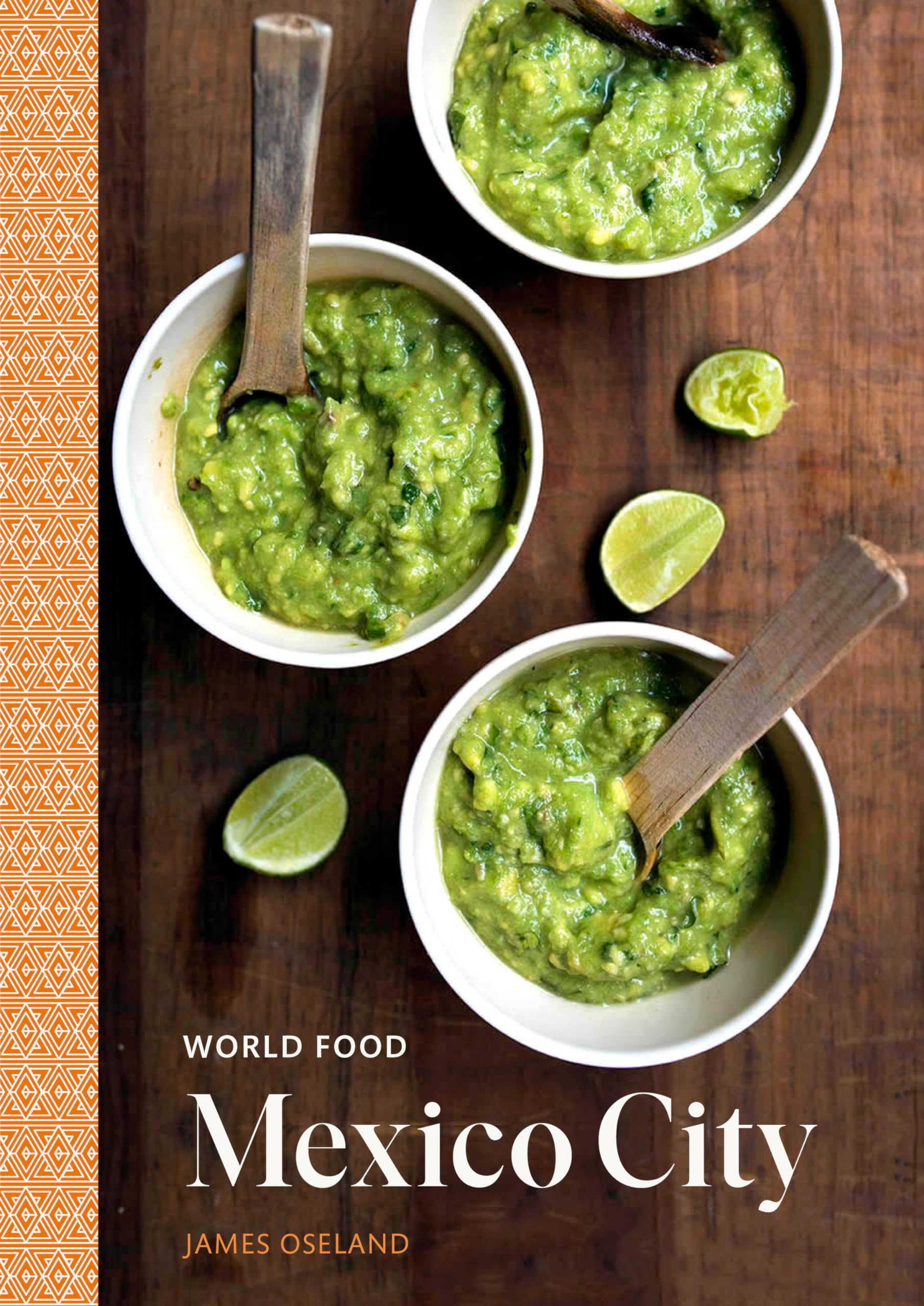
World Food: Mexico City: Heritage Recipes for Classic Home Cooking [A Mexican Cookbook]
$18.96
by James Oseland



Introducing World Food, an exceptional new cookbook series in the classic tradition, taking readers on a journey to the world’s greatest cuisines and the remarkable cultures they come from. NAMED ONE OF THE BEST COOKBOOKS OF THE YEAR BY THE ATLANTA JOURNAL-CONSTITUTION AND TOWN & COUNTRY Whether you’re an absolute beginner at Mexican cooking or already a pro, World Food: Mexico Cit y is for you. This definitive and beautiful user’s guide unlocks the secrets to real Mexican cuisine with more than fifty authentic, reliable recipes, while the compelling stories and photography tell the tale of the vibrant culinary capital of Latin America. You’ll be taken to home kitchens, markets, and restaurants, where you’ll get to know exemplary local cooks and learn how to master Mexican culinary traditions and techniques. Every recipe—from the vivid salsa with pan-roasted tomatoes to the soul-satisfying pork stew with corn, potatoes, and green beans—provides a cook’s-eye lens into real Mexico City culture. Explore easy party food such as authentic guacamole and homemade tortilla chips; satisfying first courses such as cantina-style garlic soup and beer-infused “drunken” rice; or slow-cooked masterpieces such as Mexican-style stewed zucchini. Learn how to make family-friendly meals including ancho chiles stuffed with cheese, as well as standouts such as fall-apart tender roasted lamb with pasilla chiles, or tuna tostada garnished with chipotle mayonnaise and avocado—a modern classic from the beloved restaurant Contramar. With more than 150 photographs and a comprehensive illustrated reference chapter that tells you how to find, use, and store all the necessary ingredients, from cilantro to Mexican cheeses, World Food: Mexico City satisfies an appetite for new recipes, new ways to cook, and a new way of understanding one of the most exciting food destinations on the planet. James Oseland travels extensively in search of the world’s best restaurants, street food stalls, markets, and home cooks. He has been writing about international cultures and their cuisines for decades and was editor-in-chief of Saveur for eight years, where his work garnered many accolades, including from the James Beard Foundation, the International Association of Culinary Professionals, and the American Society of Magazine Editors. His cookbook Cradle of Flavor was named one of the best books of the year by the New York Times and Good Morning America. He was also a judge for five years on Bravo’s Top Chef Masters . Food from Hearth and Heart Victoria Hernández, a grandmother still stylish in her mid-sixties, stirs the bubbling stew with a wooden spoon and glances out the kitchen window. Back in the village in Veracruz state, where she was raised, the morning stillness was broken by the crowing of roosters and the clopping of horses’ hooves. Here in the Mexico City neighborhood of Tepito, where she lives now, the cars are already honking, and the street teems with sellers hawking their wares. A pushcart vendor is righting a toppled stack of papayas. Under a clothesline heavy with the week’s washing, a couple of young boxers are throwing practice punches, and children have gathered to watch. The youngest girl among them spies Hernández at the window and raises her arm in greeting. She’s one of the seven people that call the three-room apartment home. Hernández waves back at the girl, making her smile, then places a few pasilla chiles onto the hot comal, a circular grill. Since antiquity, chiles have been a fundamental component in Mexican cuisine. They are used not only as a condiment but also as a primary ingredient, and a recipe often contains more than one variety. Indeed, the meal that Hernández is making today calls for two types of dried chile: The pasilla, with its glossy, crinkled skin, contributes an earthy flavor and a mild heat to dishes. The ancho, known as a poblano when fresh, is sweeter and adds a vibrant red hue. Ground into a paste, they will fortify the mole de olla, a rich stew made of bone-in pork and chunks of corn on the cob, zucchini, carrots, chayote, and potatoes. Tepito has been crowded with itinerant street markets for nearly seven hundred years. The neighborhood has had a reputation for being a rough and lawless place since the Aztec era, and in that regard, little has changed. But while Hernández has lived here for five decades, she’s proud to bring the quietness and simplicity of her Veracruz upbringing to her cooking style. The chiles toasting on the comal pop and release their sharp, smoky fragrance into the air. In a blue enamel stockpot, the pork is getting tender. She places the toasted chiles into hot water to soften. A pair of small dogs comes bursting through the door, with Flora Ayala, Hernández’s neighbor and friend, close behind. Ayala, beautiful and poised in her twenties, has come for some of her companion’s sage advice and perhaps a bit of gossip. But she knows Hernández, who