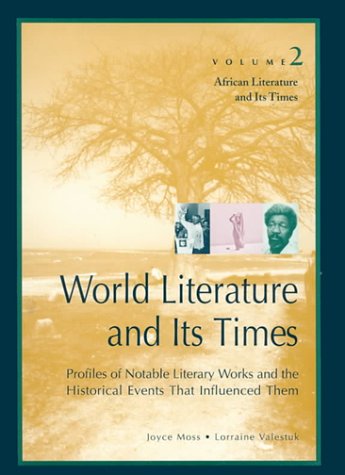



World Literature and Its Times helps students and researchers make connections between political/social climate during which books were written and the works themselves. Each volume focuses on major fiction, poetry and nonfiction from a particular country and region, representing approximately 50 works. The detailed essays are approximately 10 pages in length and offer the following features: Introductory profile -- an overview that discuss genre, time, place and other important elements with a synopsis and introduction that places the work in the context of the authors life - Events in history -- a report on the social, political and cultural climate relevant to the work, including primary source documents, charts, timelines and other illustrative materials - Literary work in focus -- three sections that place the work in context with an in-depth summary, related history and historical sources - Sources for more information -- full citations offering additional sources of information Additional features include illustrations; maps; author and title tables of contents; sidebars; timelines; advisor information; and an alphabetical index of authors, titles, events and personalities. The series contains eight volumes covering the following literatures: Latin American literature African literature - British & Irish literature (2 volumes - The Victorian Era to the This remarkable addition to Gale's "World Literature and Its Times" series is the second of a planned 12 volumes and follows the acclaimed Latin American Literature and Its Times (LJ 1/00). This sturdy, handsome book contains comprehensive information on 50 works set in Africa and written by 50 diverse African authors (e.g., Chinua Achebe, Naguib Mahfouz, Nadine Gordimer, and Doris Lessing), giving equal treatment to novels, short stories, plays, speeches, essays, and poetry. The works were selected by scholars for their frequency of study, importance, and popularity among both scholars and students, and only works written in, or translated into, English are included. Each of the ten- to 12-page entries, which are alphabetical by title, contains five parts. An introduction lists the work's genre, time period, geographical setting, publication and translation dates, a one-sentence plot summary, and a brief situation of the work in the author's life and remaining body of work. The second and third sections provide succinct, encyclopedic accounts of relevant historical and social events surrounding the work, a summary, the work's historical or social inspiration, and a discussion of its impact. The fourth section looks at the author's life in relation to the work and its reception. Finally, a list provides sources cited and suggestions for further reading. The clear, straightforward writing is appropriate for high school honors or academic students. The unique focus of this book gives students a well-rounded approach to studying and writing about the included works and will supplement class or book group discussions. Recommended for all academic libraries and public libraries serving a large college population.DLeah J. Sparks, Bowie P.L., MD Copyright 2000 Reed Business Information, Inc. African literature reflects the complexities of African society. In this new volume in the World Literature and Its Times series, the literature-history connection is explored in 50 entries that are alphabetically arranged from Doris Lessing's African Laughter: Four Visits to Zimbabwe to Pepetela's Yaka . Works that are included represent perspectives and experiences from all regions of the continent, from female as well as male authors working in a variety of genres, in English or translated from European or African languages. Selection of writings was based on the frequency with which the work is studied, its connection to history, and its influence. Nelson Mandela's Rivonia Trial Speech is treated, as are Thomas Mofolo's Chaka; Alan Payton's Cry, The Beloved Country; Amos Tutuola's The PalmWine Drinkard and His Dead PalmWine Tapster in the Dead's Town; and Frantz Fanon's The Wretched of the Earth.Entries, which vary in length from 10 to 13 pages, are preceded by a chronology that shows events in African history and literary works set in corresponding time frames and lists of contents by title and by author. Each entry is arranged in five sections. The introduction identifies the work's genre and briefly summarizes its contents and its places within the author's life. This is followed by a section describing social and political events that relate to the plot or contents. The next section, "The Literary Work in Focus," summarizes the contents in more detail and shows how the work illuminates history. "Events in History at the Time the Literary Work Was Written" describes social, political, and literary events in the author's lifetime. Concluding the entry are a list of cited sources and suggestions for further reading. Primarysource m