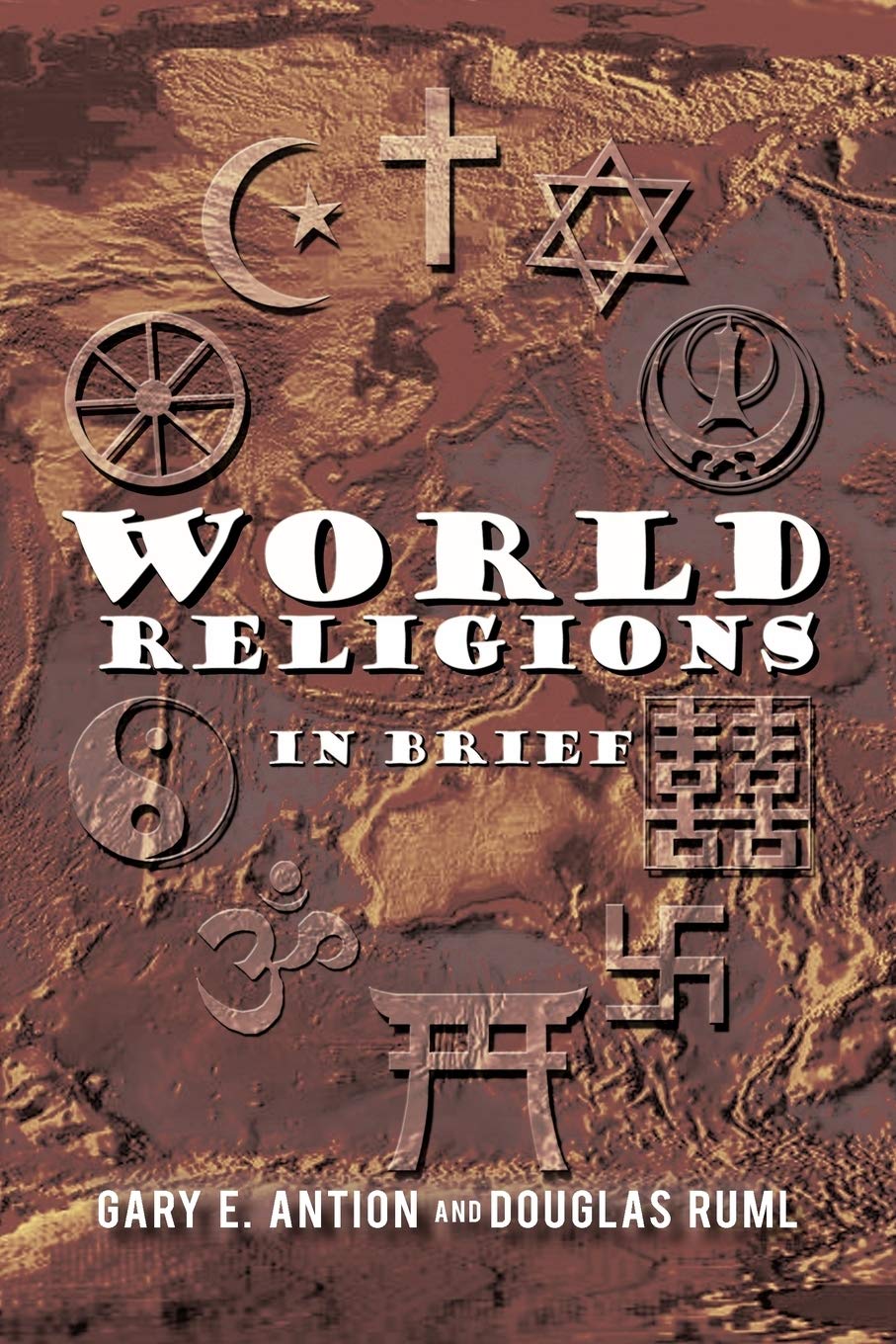



Designed as a handbook to better understand civilizations and cultures by better understanding the religions which underlay each. This compendium of World Religions serves as a valuable reference work for layman and scholar. The authors devoted several years in researching, analyzing and organizing this work. Their research involved extensive travel and combing through volumes of manuscripts and conversations with the faithful of various religions. The material is presented in an unbiased and objective manner that allows the reader to easily compare the teachings of a particular religion with their faith. Furthermore, the material is organized systematically enabling the reader to easily navigate the principal tenants of each religion. Along with the theological and philosophical foundations, the authors present in logical sequence the historical, social and cultural backgrounds that influenced the development of each religion. "For although religion does not explain everything about a people's behavior, as the mother of morals and definer of justice it has ever been a chief arbiter of man's conduct." (Anon., The Path of Buddhism, 20). Our goal in writing this book is to make the religious beliefs of the majority of humanity understandable to those who do not come from the same religious background. They are each greatly summarized. Thus, the point needs to be made that each section consists of what could be called "orthodox generalizations", and that the personal beliefs of individuals or of sects within the various religious traditions will be quite different in some areas covered. In the main section of this book, we have striven to use material from each religion about itself (such as denominational pamphlets, correspondence courses, conversations with believers and interviews with clergy), with our own additional commentary supplied only in order to make ideas foreign to the North American mind more easily grasped. If we have confused, or rendered anything inaccurate it is our own misunderstanding of the material that we consulted, and the fault is ours alone. In addition, several appendices have been added in order to examine some areas of special interest (at least for us) in greater depth. These appendices are written from our own perspectives. After spending so much time overseas (Douglas) and with so many international university students (Gary), we became intrigued by how much better we could understand and be accepted by people of other cultures if we got to know a little about their religions (or the religion that influenced the culture that they were raised in). Rather than just knowing geography and perhaps a bit of political news (as you would tend to get from the media or a modern/western program, article or book about a place), knowing religion helps in being able to relate to others culturally, even if they are not practicing a religion. It seems that religions and cultures are very tightly interrelated. So tightly, in fact, that having knowledge of the 3 general categories of religions which came out of the 3 areas of the world (China, India, Near East) gives a person a real advantage in better understanding both people and cultures. Although we are largely dealing with generalizations, we have sought to find a tentative starting point in discussing things that a novice might otherwise lack. The first half of this book is devoted to religions beyond Christianity. As the world increasingly becomes a smaller place, a basic understanding of the different religions of others that one increasingly meets at work and socially will become more important. We have spent much of the book describing the many branches of Christianity. This was not only because it happens to be the authors' religious background, but also because it gives a perspective of how much variation exists in the largest religion in the world today. The Orthodoxy of the Middle Ages can no longer be seen in the lives of individual Christians, let alone their hundreds and hundreds of church organizations. People used to think that religions were monolithic, but they turn out to be much more heterodox than was originally assumed. It is our prayer that this book will prove helpful and useful to the reader in better understanding all the varied beliefs of humanity and that it may be a tool for the user to also come to better understand other people of whatever religious background. Gary Antion, MA Douglas Ruml, CFM, MA "This compendium of World Religions serves as a valuable reference work for layman and scholar. The authors devoted several years in researching, analyzing and organizing this work. Their research involved extensive travel and combing through volumes of manuscripts and conversations with the converts of various religions. The material is presented in an unbiased and objective manner that allows the reader to easily compare the teachings of a particular religion with their faith. Furthermore, the