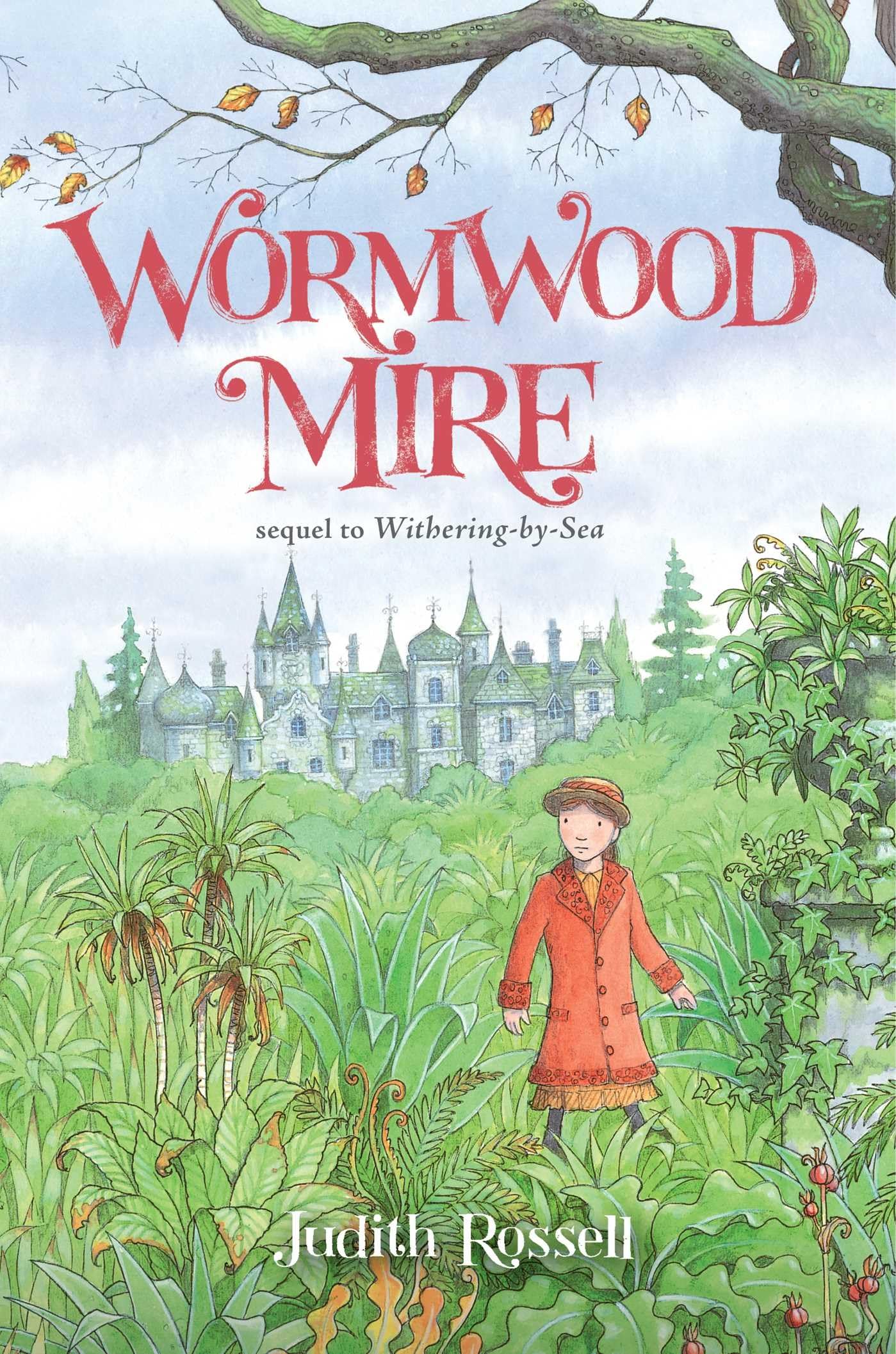



This spine-tingling sequel to Withering-by-Sea sees Stella sent away to the moldering old family estate, where she discovers two odd cousins—and a mystery. Eleven-year-old Stella Montgomery has always wondered about her family. What happened to her mother? And could she have a long-lost sister somewhere? Stella’s awful Aunts refuse to tell her anything, and now they have sent her Stella away to the old family home at Wormwood Mire, where she must live with two strange cousins and their governess. But dark secrets slither and skulk within overgrown grounds of the moldering house, and Stella must be brave if she’s to find out who—or what—she really is… “A gratifying continuation of Stella’s story.” -- Kirkus Reviews ― 5/15/17 "Rewarding, poetic, old-fashioned, warm but never treacly, and packed with dramatic tension, and although major plot points are resolved, there’s still room for another look at this world and Stella’s evolving place within it—fingers crossed." -- BCCB ― June 2017 “Shades of Lemony Snicket’s own Dr. Montgomery, herpetologist guardian of the Beaudelaire children, are present here, and Rossell’s eccentric characters and tragedy-tinged mystery will likely attract similar readers. Danger, hidden rooms, revelations, and a dash of fantasy make this an entertaining and satisfying sequel.” -- Booklist ― June 14th, 2017 Judith Rossell worked as a government scientist (not a mad scientist, a normal kind of scientist), for a cotton spinning company (which made threads for t-shirts and tea bags), and studied textile design in Scotland before becoming a full-time author and illustrator. She has illustrated or written nearly a hundred children’s books, including some by such internationally bestselling authors as Garth Nix and Jackie French. Jude lives in Melbourne, which is down in the bottom right corner of Australia, with a cat the size of a walrus. Visit her at JudithRossell.com. Wormwood Mire One Stella Montgomery gazed out of the window of the train as it trundled slowly through the bleak countryside. It had been drizzling all day, and now evening was approaching. The empty compartment was cold and shadowy and dispiriting. In the lamp overhead, dregs of yellowish oil and several dead moths sloshed to and fro. Stella’s new boots pinched her feet, and her new dress was stiff and uncomfortable. Pulling her coat more tightly around herself and burrowing her hands into the pockets, she stared out at the wintry trees. She had never felt more lonely. She wished she had a friend for company. Even Ada, Aunt Deliverance’s bad-tempered maid, would have been better than nobody. But after a grudging currant bun and a cup of tea at the station, Ada had pushed Stella into the second-class compartment, said, “Behave yourself, miss,” and given her a silver shilling and a grumpy pat on the head. Then she had stalked away down the platform without looking back, and that was that. Stella felt her eyes pricking with tears. She looked down at the little book that lay open on her lap. It had gold writing on its cover: A Garden of Lilies: Improving Tales for Young Minds, by Prudence A. Goodchild. The book had been a going-away present from the Aunts. It was full of depressing stories of children who did wrong and met with tragedy. In the first story, Agnes, a servant girl, wore vulgar, brightly colored ribbons in her hair and went to a fair, and so lost her position, became a beggar, and finally drowned in a river. The moral of that story was: Modesty should be your aim, Or you will surely come to shame. In the next story, Beatrice stole a preserved damson, tried to wash the incriminating stains from her pinafore, and later died of a fever, brought on by the damp fabric. Greedy children always tend To meet with a disastrous end. Cornelius and Drusilla disobeyed their parents and were trampled by a flock of angry sheep. Always do as you are told, Or you will soon be dead and cold. It was not a cheerful book, and the pictures were vivid and rather unpleasant. Stella had read it all the way through three times. She sighed and tried to think of something encouraging, but she was too miserable and forlorn. It had been a very long day. She had changed trains twice. The first change had occurred at an enormous, smoke-filled station, where she had been almost overwhelmed by the noise. A helpful porter had rushed her through the crowd at a desperate pace and bundled her into her train just as it was leaving. Despite this, she had somehow missed her second connection and had waited for several hours on a lonely country platform, with only the cold rain, a row of empty milk cans, and a station cat for company. This train was the slowest so far. It wound its way through the woods and fields and tiny huddled villages, sometimes stopping at stations where nobody seemed to get on or off, and sometimes stopping between stations for no reason at all. The railway bun had been many hours ago, b