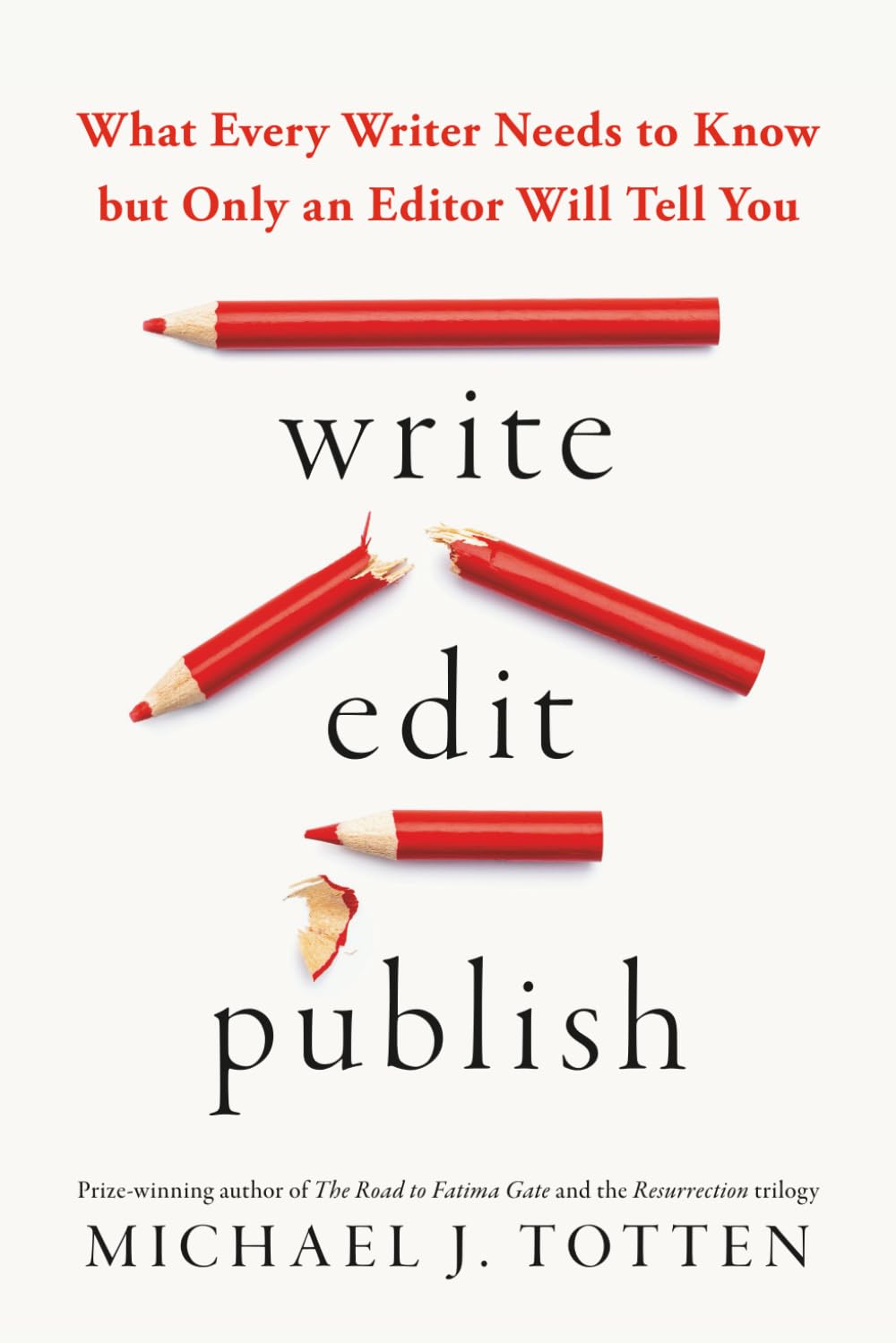
Write, Edit, Publish: What Every Writer Needs to Know but Only an Editor Will Tell You
$19.99
by Michael J. Totten



Literary agents and publishers reject 99 percent of manuscripts before finishing the first page, and readers are just as impatient. If your opening doesn’t grab them by the throat, they’re gone. Award-winning author and veteran editor Michael J. Totten will show you—in the first two chapters alone—how to craft a killer first sentence and a gripping first page. Most books about writing are written by writers, not editors. They don’t see the troubled manuscripts that Totten sees, so the dozens of crippling mistakes that sink so many otherwise promising manuscripts, both fiction and nonfiction, aren’t well covered in most books about writing—until now. In Write, Edit, Publish , you will learn how to: • Correct all the most common mistakes that expose you as an amateur. • Hook your audience and compel them to keep reading. • Avoid the top two fatal errors most self-publishers make. • Tap into readers’ innate capacity for empathy so they truly sympathize with the characters and people you’re writing about. • Give readers exactly what they want—even if they don’t consciously know what that is. • Fast-forward through the boring parts and ratchet up the suspense. • Spellbind readers using real rather than vacuous descriptions—and, just as importantly, know precisely where and when to include that description. • Turn your muddled story into a focused, structurally sound narrative. • Declutter your sentences so they land like hammer blows, not slaps with a Nerf bat. • Remove friction from your prose so readers can relax and glide through it. • Write dialogue that actually sounds spoken rather than written. • Repair fractured, backward, and bloated information flow so your writing is as clear as a still pool of water. • Craft an ending that haunts readers long after it’s over. Read this book, show readers you have an expert command of the craft, and write so well the world can’t ignore you. Praise for Michael J. Totten “This book is game-changing for writers. Michael J. Totten gives great advice about writing that only a seasoned editor could convey. I'm including this book as required reading in my editing course and plan to have other folks in my department read it as well.” —Allyson Longueira, professor in the graduate program in creative writing at Western Colorado University “I’ve admired Michael J. Totten’s work as a writer for years, but it turns out he is also a superb editor.” —Judith Deborah, author of A Falling Knife: An Evan Adair Mystery “As an accomplished writer, journalist, and editor, Michael is second to none. He has helped me with two books and enormously improved both.” —Fred Litwin, author of I Was a Teenage JFK Conspiracy Freak “If you’re looking for an editor to help you take your book to the next level, look no further than Michael J. Totten. I’ve always found his astute insights invaluable.” —Scott William Carter, author of The Gray and Guilty Sea Excerpt from Chapter One How to Write a Killer First Sentence I'm about to tell you one of the most important things you'll ever learn as a writer: Agents, acquisitions editors, and magazine editors can determine (with greater than 90 percent accuracy) if a manuscript was written by a seasoned professional, a semiprofessional, or an amateur after reading as little as the first sentence and at most the first paragraph. The vast majority of manuscripts are rejected before the agent or editor gets to the bottom of the first page. It ought to go without saying then that the first sentence in a book, story, article, or essay has more work to do than any other. There will be a brief moment in time when readers will have read that, and only that, sentence. They won't be able to judge your work based on anything else. And if they're in a hurry, if they have hundreds of submissions to wade through, or they're scrolling the news feed on their phone, or they're standing in a library aisle, or they're sampling the opening pages of ebooks because they don't know what they want to read next, you need to grab them by the throat and refuse to let them go. And if you fail to do so, they're outta there, and they'll forget you ever existed. Some readers are more forgiving. If you're writing the eagerly awaited thirty-seventh installment in your beloved Buck Digler series about a lovable zombie who moves from town to town and helps local law enforcement and plays matchmaker on the side, you probably don't need to worry as much about your first sentence or your first page. You hooked your audience thirty-six years ago. But if readers, agents, and acquisitions editors have never heard of you, you have one sentence (and one page at the absolute most) to make an impression. With that in mind, tell me what's wrong with this sentence. "Bob took off his coat, sat at his desk, and booted up his computer." I read that to my wife and asked her what she'd think if it were the first sentence in a book, and she made a face. "It's lame." How