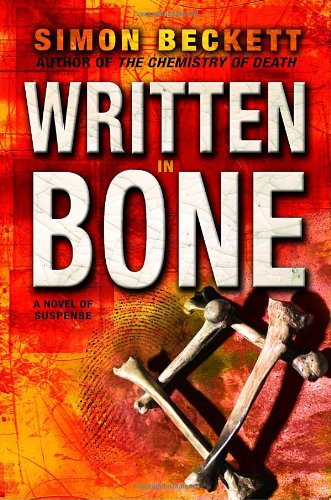



“I took the skull from its evidence bag and gently set it on the stainless steel table. ‘Tell me who you are. . . .’ ” With this silent plea, forensic expert Dr. David Hunter ignites a harrowing murder investigation on a windswept Scottish island, and a tale of menace, sexuality, and revenge unravels—along with the chilling message that a killer has… Dr. David Hunter should be in London with the woman he loves and a past he can’t quite shake off. Instead, as a favor to a beleaguered cop, Hunter travels to a remote island in the Outer Hebrides to inspect a baffling set of remains. A forensic anthropologist, he has seen bodies destroyed by all forms of violence, but even he is surprised at what he finds: human remains burned beyond recognition—all within the confines of an otherwise undamaged, unoccupied cottage. Local police want to rule the death accidental. But Hunter’s examination of the victim’s charred skull tells him that this woman, no doubt a stranger to the close-knit island of Runa, was murdered by someone nearby. Within days, two more people are dead by fire. Hunter’s job is to coax the dead into telling their stories—but now that he’s beginning to hear them, he is staggered by the truth. Working with only the barest of clues, he peels back the layers of mysteries past and present, exposing the tangle of secrets at the heart of this strange community—from the deceptions of a wealthy couple to the bitterness of an ex-cop and the secrets of a lonely single mother—as a tale of rage and perversion comes full circle…then explodes in a series of violent acts and shocking twists. Beckett's dynamite follow-up to The Chemistry of Death (2006) takes David Hunter back to his roots as a forensic anthropologist. This go-round is both better written and a good deal more intriguing, with twists and turns up to the very last dramatic page. Called in to examine a badly burned body found in a deserted hut on a small island in the Hebrides, David hopes he won't be delayed long. His relationship with Jenny, whom he met in the first book, is deteriorating, and he's feeling burned out. Unfortunately, what he discovers is murder, and when a killer storm prevents promised help from arriving, he's left to find out what he can with only a bad-tempered, alcoholic local copper and a retired officer who lives on the island to help. Dark secrets and long-held resentments erupt in the small community, putting David's life at risk and impeding his efforts at every turn. Forensic details never overwhelm the story, and Beckett is on solid ground when it come to plotting and ratcheting up the tension. His ending is a stunner. Zvirin, Stephanie “Exceptional.... [Beckett] is especially adept at blending first- and third-person narratives to heighten the tension.”— Publishers Weekly , starred review “Well-drawn characters and a highly atmospheric closed setting, this is a traditional detective ... updated for modern tastes and with a likable detective.”— Denver Post Simon Beckett is a freelance journalist and the author of The Chemistry of Death . He is married and lives in England, where he is at work on his next thriller featuring Dr. David Hunter. Chapter One GIVEN THE RIGHT temperature, everything burns. Wood. Clothing. People. At 250° Celsius, flesh will ignite. Skin blackens and splits. The subcutaneous fat starts to liquefy, like grease in a hot pan. Fuelled by it, the body starts to burn. Arms and legs catch first, acting as kindling to the greater mass of the torso. Tendons and muscle fibres contract, causing the burning limbs to move in an obscene parody of life. Last to go are the organs. Cocooned in moistness, they often remain even after the rest of the soft tissue has been consumed. But bone is, quite literally, a different matter. Bone stubbornly resists all but the hottest fires. And even when the carbon has burned from it, leaving it as dead and lifeless as pumice, bone will still retain its shape. Now, though, it is an insubstantial ghost of its former self that will easily crumble; the final bastion of life transformed to ash. It's a process that, with few variations, follows the same inexorable pattern. Yet not always. The peace of the old cottage is broken by a footfall. The rotting door is pushed open, its rusted hinges protesting the disturbance. Daylight falls into the room, then is blocked out as a shadow fills the doorway. The man ducks his head to see into the darkened interior. The old dog with him hesitates, its senses already alerting it to what's within. Now the man, too, pauses, as though reluctant to cross the threshold. When the dog begins to venture inside he recalls it with a word. 'Here.' Obediently, the dog returns, glancing nervously at the man with eyes grown opaque with cataracts. As well as the scent from inside the cottage, the animal can sense its owner's nervousness. 'Stay.' The dog watches, anxiously, as the man advances further into the derelict cottage. The odour of damp