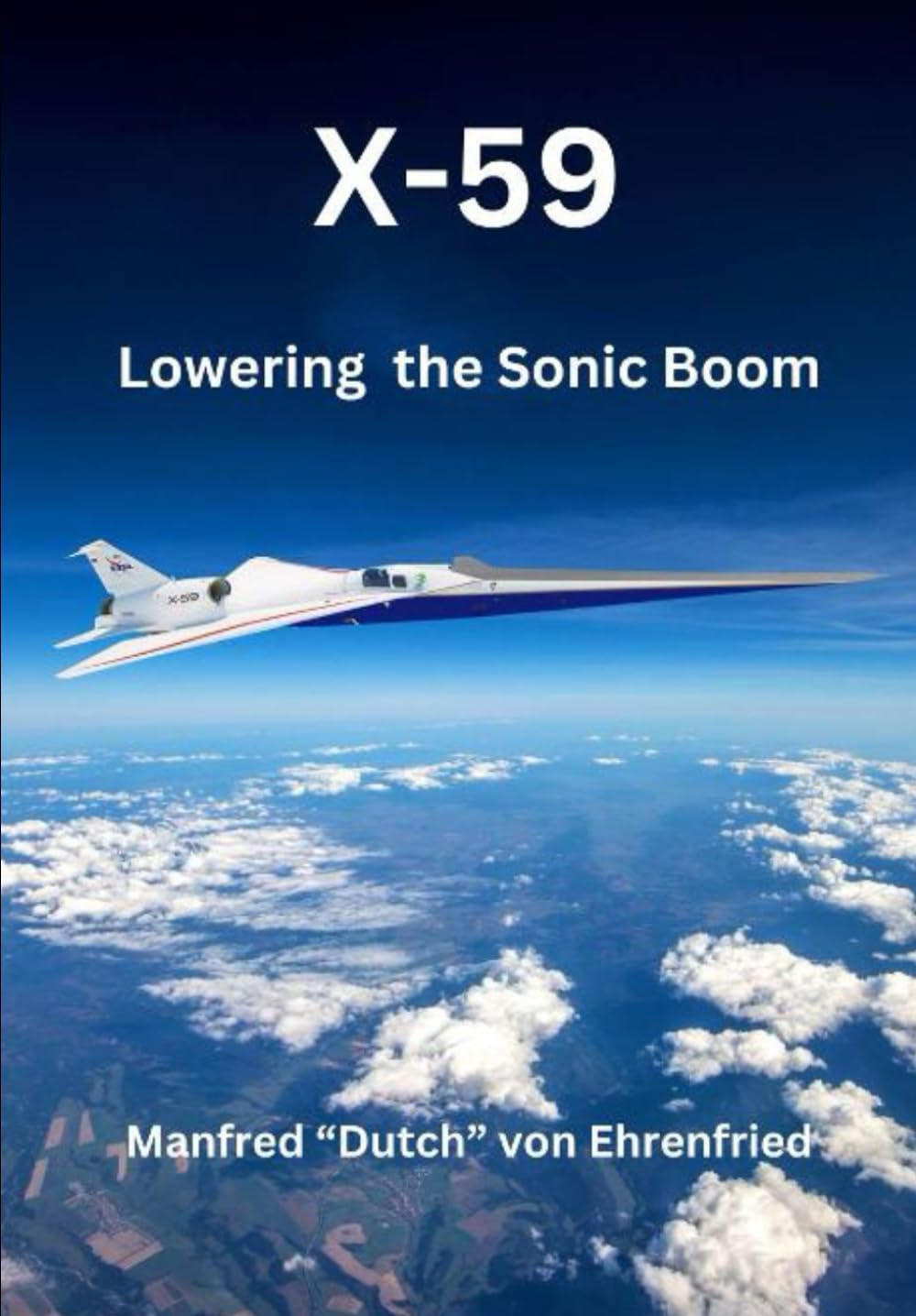



NASA’s Quesst Mission involves an advanced low-boom aircraft called the X-59 that will be used to emulate and test the noise generated by future supersonic transport designs. The Quesst team will conduct community response testing across a wide variety of environments and locations to build up a database of noise levels and acceptability metrics. This database will then be used by the Federal Aviation Administration (FAA) and International Civil Aviation Organization (ICAO) to set noise level requirements for supersonic overland flight, replacing the blanket ban that is currently in effect. The Quesst Mission’s technical goals are to: Demonstrate that the X-59 Quesst test aircraft can produce a predictable range of sonic boom signatures that help to validate low-noise sonic boom design tools, and that improve the understanding and prediction of atmospheric effects on low-noise sonic boom signatures; - Deliver the X-59 Quesst that is capable of successfully supporting flight campaigns to generate community response data that assists regulators with developing a noise-based standard for commercial supersonic flight over land . There are three Flight Test Phases Phase 1: Aircraft Development 2018-2024 NASA anticipates that initial flights to prove performance and safety (also known as “envelope expansion”) will take about nine months. At the successful conclusion of these flights, NASA will officially take delivery of the aircraft from Lockheed Martin. Phase 2: Acoustic Validation 2025 NASA will fly the X-59 within the supersonic test range over NASA’s Armstrong Flight Research Center and Edwards Air Force Base in California to prove the quiet supersonic technology works as designed, aircraft performance is robust in real atmospheric conditions, and the X-59 is safe for operations in the National Airspace System. Phase 3: Community Response Study 2026-2027 The agency will use the X-59 to gather data on how effective the quiet technology is in terms of public acceptance. This will be done by flying over select U.S. cities beginning in 2026 and asking residents to share their response to the sound the X-59 produces. The X-59 was introducted to the public on January 12, 2024 at the Lockheed Martin Skunk Works in Palmdale, CA.